Bab al-Mandab disruption could raise petrol, airfares and grocery costs across Asia
Fuel may rise within weeks, while grocery costs could take months to reach households.
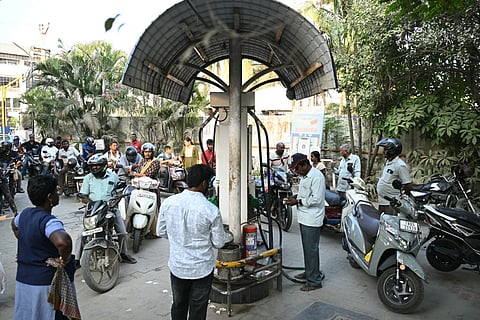
Dubai: Consumers across Asia could begin paying more for petrol within weeks if disruption at Bab al-Mandab continues, while higher airfares and grocery costs may take longer to reach household budgets.
Oil prices and financial markets would react immediately, but the pace at which consumers feel the impact would differ across countries depending on fuel pricing systems, subsidies, energy sources and the duration of the disruption.
Get updated faster and for FREE: Download the Gulf News app now - simply click here.
Markets with liberalised fuel prices could see a faster increase at the pump, while regulated prices and subsidies may delay the impact in other economies.
“Financial markets and, in particular, oil prices react immediately, which affects petrol prices," explained Louis Guy Detata, Founder of UEXO.com. "However, retail fuel prices would typically respond with a lag depending on each country's pricing mechanism.”
Airfares could rise before grocery bills
Airlines could adjust fares relatively quickly if jet fuel costs increase and remain elevated, while food prices would take longer to move through transport networks and retail supply chains.
“A significant disruption in the waterway could be felt immediately in energy markets, while consumers would typically see higher petrol prices within a few weeks, depending on domestic pricing mechanisms," noted Jawaher Rashed, Owner and founder of SKOUB company. "Airfares could rise if oil and jet fuel prices increase and stay at elevated levels, while grocery prices would likely increase more gradually over multiple months as higher transport costs filter through.”
Electricity bills would depend on how individual countries generate power. Economies with greater reliance on renewables, nuclear energy or coal could face a more limited impact than those dependent on imported oil and gas.
Grocery costs would likely take the longest to reach consumers because higher fuel, freight, insurance and inventory expenses would need time to move through supply chains.
Many Asian buyers would likely seek to diversify crude imports by increasing purchases from producers such as the United States, Brazil and West Africa as Russian oil remains sanctioned. However, global spare production capacity and logistical constraints limit how quickly these alternative suppliers can replace Middle Eastern exports.

Asian oil importers face greater exposure
Large net energy importers would face the greatest pressure, particularly India, Japan, South Korea, Pakistan, Bangladesh, Sri Lanka and several Southeast Asian countries that depend heavily on imported crude oil and refined products.
Economies with limited domestic energy production and weaker public finances could find it more difficult to protect households and businesses from sustained increases.
Lower-income families would face greater pressure because transport, food and electricity account for a larger share of their spending. Manufacturing, aviation, shipping and logistics businesses would also contend with higher operating costs.
“Fuel subsidies and oil reserves can provide an effective short-term buffer. However, sustained shortages can blunt any relief as reserves dwindle and prolonged subsidies can place considerable strain on government budgets,” Detata said.
Rashed said such measures could limit the first impact but would not fully protect consumers during an extended disruption.
“Fuel subsidies and strategic reserves can cushion the initial shock, but they are generally designed to provide temporary relief and cannot offset a prolonged disruption.”
Longer voyages would raise shipping costs
Ships avoiding Bab al-Mandab could be rerouted around the Cape of Good Hope, extending journey times and increasing fuel use, vessel operating expenses and pressure on available shipping capacity.
War-risk insurance premiums could also increase for vessels operating near areas considered exposed to greater risk.
Longer shipping routes combined with higher insurance fees and other costs could raise freight costs on affected routes. The cumulative effect across fuel, transport, and imported products could contribute to broader inflationary pressures.

The direct effect on retail fuel prices could remain smaller than the movement in crude oil because transport represents only one part of the final price. Imported food and manufactured goods could face a broader build-up of freight, insurance and inventory costs.
“Longer shipping routes combined with higher insurance fees and other costs could raise freight costs on affected routes. The cumulative effect across fuel, transport, and imported products could contribute to broader inflationary pressures,” Rashed said.
The final increase paid by households would depend on the severity of the disruption, how long it continues and the level of import dependence in each market.
Government support could last several weeks
Governments could use subsidies, tax changes and strategic reserves to absorb part of the increase during a temporary disruption lasting several weeks.
Maintaining those measures for several months would become more expensive, particularly for countries already facing pressure on public finances.
Essential sectors such as power generation, public transport and critical industries could receive priority if the disruption continues, while a larger share of the costs may eventually be passed to companies and households.
Detata said restrictions or conservation measures would generally be considered only if the disruption led to physical supply shortages.
“A short-lived disruption would likely have a manageable economic impact, whereas an extended disruption could generate sustained inflation, slower economic growth and increased fiscal pressures across Asia.”
Middle East oil would remain central
Asian buyers could seek more crude from the US, Brazil and West Africa, with Russian oil remaining under sanctions. Global spare capacity and shipping constraints would limit how quickly alternative suppliers could replace Middle Eastern exports.
Higher fossil fuel costs could also encourage greater investment in renewable energy, nuclear power and energy efficiency as governments seek more secure long-term energy supplies.
Middle Eastern producers would still remain central to Asia’s energy mix because of their spare capacity and established supply relationships.