Food security is a concerted effort: IFFCO head
Domestic manufacturing, resilient supply chains work together to strengthen food security
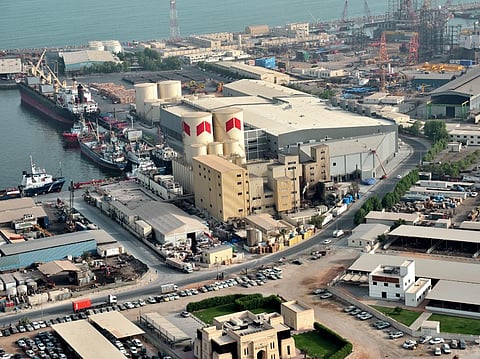
Founded in the UAE in 1975, IFFCO has grown into a multinational food and consumer goods group, employing 15,000 people across 95 operations in more than 50 countries. With manufacturing and distribution facilities across the world, the group has gone from strength to strength, establishing popular brands such as Tiffany, Noor, London Dairy, Igloo, Al Baker and more.
We sat down with Mohammed Azad Khan, Executive Director of IFFCO Group, to learn how the company overcame recent disruptions in supply chain and sustained production and why a concerted effort is required to strengthen UAE’s food security.
What does food security mean for IFFCO, beyond producing food locally?
For us, food security means being able to keep producing and supplying food when the normal way of doing things is disrupted. Local production, imports and reserves all matter, but none works in isolation.
Our activities connect agri-business and food manufacturing with ingredients, oils and fats, flour and food service, alongside packaging, logistics, sales and distribution. That breadth matters because a factory can have capacity and still be unable to supply customers if an ingredient has not arrived, packaging is unavailable or finished products cannot leave the warehouse.
Our responsibility is to keep those connections working by sourcing inputs, maintaining manufacturing and moving products to customers. We do that as one private-sector contributor within a wider UAE system, alongside government, ports, carriers, suppliers, local manufacturers and other partners. Food security is not something a single company can deliver alone. Our contribution is the practical ability to help keep everyday foods available.
When the regional conflict and the situation around the Strait of Hormuz put traditional shipping routes under pressure, what did IFFCO do?
We had to change how materials reached our factories, not simply wait for the usual routes to recover. Keeping production supplied required several responses at once.
During the disruption, we received more than half-a-million tonnes of edible oils and grains for our regional refineries and mills through ports including those on the UAE’s east coast and the Red Sea. We redirected shipments through alternative ports and routes and moved goods by road where required.
We also chartered cargo aircraft for critical inputs, increased the share of packaging sourced from local manufacturers and adjusted inventory where needed. Procurement, logistics, manufacturing, quality, warehousing and commercial teams worked together, with ports, national carriers and other partners, to keep inputs and products moving.
Those changes helped us maintain production and product availability. The normal supply chain was under considerable pressure; keeping factories operating and customers supplied required a different way of working.
Chartering seven cargo aircraft exclusively for IFFCO was an extraordinary step. What was at stake?
The issue was what an unavailable input could stop. An emulsifier or antioxidant may account for a small part of a product, but its absence can hold up an entire production line and everything scheduled behind it. Packaging can create the same problem when a missing wrapper or carton prevents a product from being completed.
Working with national carriers, we air-freighted more than 800 tonnes of critical raw materials and food ingredients over about four months.
How does operating in more than 50 countries help you protect supply here in the UAE?
The advantage is having options when an established arrangement no longer works. Our presence across more than 50 countries gives teams access to relationships and operating experience beyond a single market. But geography alone does not deliver a consignment.
During the disruption, we secured critical ingredients from multiple origins and changed routes where required. Procurement teams needed to know which suppliers to approach, logistics colleagues needed to understand which routes would work, and manufacturing and quality teams needed to judge what changes were suitable.
For the UAE business, that means international reach can support domestic manufacturing rather than replace it. Local factories still need the right inputs, and a wider network gives us more ways to find and move them.
Has the disruption changed how you think about local sourcing and manufacturing in the UAE?
It reinforced the importance of local suppliers, particularly for packaging. We increased the share of packaging materials sourced from local manufacturers. That was not separate from keeping our factories running; it was one of the ways we supported production when established logistics routes were under pressure.
The experience strengthened the case for looking at local manufacturing as a connected network. Food factories need packaging suppliers, transport links and warehousing, as well as ingredients. Building capability in one area without considering the others can leave a gap.
That does not mean every input must be made locally. Local sourcing and diversified international sourcing should work together, supported by inventory planning and workable transport options. For the UAE, strengthening that supporting network matters alongside strengthening food manufacturing itself.
With products sold in more than 100 markets, what does IFFCO’s growth say about the kind of business that can be built from the UAE?
It shows that the UAE can be a base for making and developing food products, not only a market for imported goods.
For me, the broader UAE story is about creating value here by making products, developing them and building the capability to supply beyond the domestic market. Serving local needs and growing internationally need not be separate ambitions.
What should the industry learn from this period, and where should the UAE focus its food-security efforts next?
My main lesson is that food security should be tested against the whole supply chain, not just the output of a factory.
For the UAE, I believe the next phase should connect domestic food manufacturing more closely with ingredient sourcing, packaging, logistics and inventory planning. That means strengthening local capabilities while keeping alternative international suppliers and routes available. The aim should be a production base that can adapt without losing sight of safety, quality or customers’ needs.
We also need to recognise the people who make this work. Much of what our teams and partners did was out of sight, whether this was finding a supplier, arranging a different route or working through a material change. Those practical decisions kept the system moving.
No company can provide food security on its own. Government, manufacturers, ports, carriers and suppliers all have a part to play. Our responsibility is to make our contribution dependable.
EKTIFA and IFFCO sign MoU to strengthen food security
Sharjah Agriculture and Livestock Production Establishment (EKTIFA) and IFFCO Group have signed a Memorandum of Understanding (MoU) to strengthen cooperation in food security, support local agricultural development and explore opportunities to advance sustainable food manufacturing in Sharjah.
Signed by Dr Khalifa Musabah Al Teneiji, Chairman and CEO of EKTIFA, and Mohammed Azad Khan, Executive Director of IFFCO Group, the MoU aims to connect EKTIFA’s agricultural and livestock production capabilities with IFFCO’s expertise in food manufacturing, product development, quality management and supply chain operations.
“Our collaboration with IFFCO Group reflects the importance of partnerships between government institutions and the private sector in supporting local agricultural production and creating greater value from our resources,” said Dr Al Teneiji.
Khan explained that the MoU was an opportunity to bring IFFCO’s industrial expertise, technical capabilities and international experience together with EKTIFA’s agricultural strengths. “We look forward to exploring opportunities in product innovation, manufacturing, packaging and knowledge exchange that can add value to local agricultural production and support sustainable food development,” he said.
The MoU establishes a framework for exploring potential areas of collaboration. Any future manufacturing, commercial or investment projects will be subject to technical and commercial assessments, necessary approvals and separate agreements between the parties.
- In association with IFFCO Group


