Zenith Multi Trading bets on next-gen aerospace technology
Zenith has signed the LoI with Barcelona-based aerospace tech company, Singular Aircraft
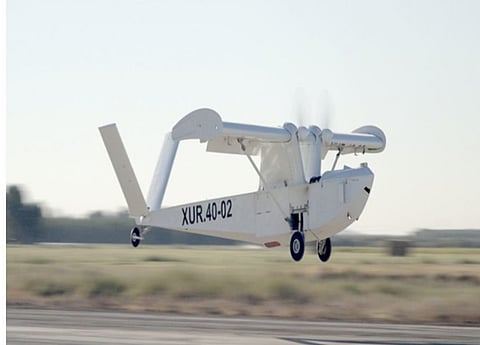
Zenith Multi Trading DMCC has signed a Letter of Intent (LoI) with Singular Aircraft S.L., a Barcelona-based aerospace technology company specialising in light aircraft and unmanned aerial systems (UAS). The agreement marks a decisive and deliberate entry by the Dubai-based investment platform into the global drone and autonomous aviation sector, a move being driven by the strategic conviction of Hari Shankar Tibrewal.
"The world has already arrived at drone technology. What we are doing with Singular Aircraft is positioning Zenith at the heart of a sector that will define the next decade of global infrastructure, agriculture, defence, and logistics. This is a structured conviction, not a speculative bet," said Hari Shankar Tibrewal.
A debt-free foundation
What distinguishes Singular Aircraft in a market crowded with early-stage ventures is not its technology alone — it is the financial discipline behind it. The company operates as a special purpose vehicle under its parent entity Singular Ideas, which has invested over €24 million in proprietary aerospace technology over 14 years — entirely through promoter equity, with zero external debt. This rare balance sheet strength in a capital-heavy sector provides a compelling foundation for institutional investors.
Singular currently maintains an annual production capacity of 25 to 28 aircraft, with 60 to 70 percent of its manufacturing driven by in-house proprietary IP. Quality systems and production tracking are fully controlled internally, backed by a multidisciplinary team of over 45 full-time professionals spanning software, hardware, avionics, and manufacturing.
The investment structure
The proposed transaction is structured as an equity participation model, with an indicative strategic allocation of 51 per cent, subject to dilution based on syndication and capital deployment scale.
While non-binding in its current form, the LoI reflects serious institutional intent, with Zenith's entry framed as a multi-year commitment. The syndication architecture is designed to allow co-investors to participate alongside the lead strategic position, broadening the capital base as the deal matures.
Why drones, why now
The timing is deliberate. The global drone market — spanning precision agriculture, border surveillance, disaster response, and dual-use defence logistics — is projected to surpass $55 billion by 2030, with some of the highest compound annual growth rates across any technology-adjacent asset class. Regulatory frameworks across the Middle East, South Asia, and Europe are rapidly maturing, removing long-standing barriers to commercial-scale UAS deployment.
"Precision agriculture, border security, disaster management — these are not niche applications. They represent the backbone of how nations will operate over the next two decades. Singular is already building the technology at the centre of all of it," said Tibrewal.
Singular's product portfolio aligns precisely with this thesis, targeting emerging markets with cost-efficient aircraft and UAS platforms supported by deep engineering capability and proven manufacturing infrastructure.
A strategic milestone
For Tibrewal, this transaction reflects a consistent investment philosophy: back businesses with durable structural moats — 14 years of R&D, zero debt, and manufacturing IP that competitors cannot easily replicate — and deploy institutional capital at the stage where it accelerates rather than merely validates growth.
Both parties are expected to move towards definitive agreements in the coming months, with due diligence and syndication discussions running in parallel. If the LoI converts as anticipated, it will mark one of the more consequential cross-border aerospace investment entries from a Gulf-based platform — and a clear signal that Tibrewal's long-held thesis on autonomous aviation is now entering its execution phase.


