EDB backs UAE businesses with more than Dh30 billion in financing
Bank CEO outlines the bank’s plans to boost manufacturing, food security and innovation
Emirates Development Bank (EDB) has surpassed Dh30 billion in cumulative financing approvals since 2021, marking a significant milestone in its efforts to strengthen the UAE’s industrial capabilities, support economic diversification and enhance national resilience.
The milestone reflects EDB’s continued focus on financing businesses across five priority sectors: manufacturing, advanced technology, food security, healthcare and renewable energy. Beyond providing finance, the bank is helping businesses expand local production, adopt advanced technologies and strengthen the UAE’s supply chains.
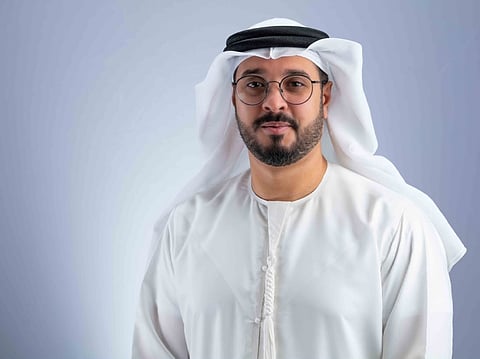
Speaking to Gulf News in an exclusive interview, Ahmed Mohamed Al Naqbi, Chief Executive Officer of Emirates Development Bank, highlighted the importance of measuring success beyond financing volumes.
“Our focus is on financing projects that strengthen productive capacities, enrich local value chains and deepen their specialisations, while helping existing UAE-based companies compete in both domestic and international markets.”
He emphasised that EDB would continue to direct financing towards sectors that contribute to the UAE’s long-term economic resilience and competitiveness.
Below is the full interview:
Beyond the financing target
1. EDB has approved more than AED 30 billion in financing since 2021. How do you measure whether this capital is creating a more competitive industrial economy, rather than simply increasing lending volumes?
Since 2021, EDB has approved more than Dh30 billion in financing, supporting over 50,000 industrial jobs, contributing more than Dh14 billion to the UAE’s industrial GDP and helping attract over Dh9 billion in foreign investment.
But the real achievement lies in what businesses have been able to do with that financing. We have helped manufacturers establish new facilities, expand production, adopt advanced technologies and develop products that were previously imported. Our financing has also supported the production of more than 1,500 products, strengthening local manufacturing capabilities and reducing reliance on imports.
A good example is our support for the expansion of King's College Hospital London – Dubai. The project, expected to be completed in 2028, will increase the hospital's bed capacity and introduce a dedicated Oncology Centre with radiation therapy services, allowing patients to access more comprehensive cancer treatment under one roof. It will also expand specialist care in areas such as complex liver diseases, critical care and advanced surgery.
This is the kind of impact we look for: financing that helps businesses expand while improving access to essential services in the UAE.
As a development bank, our mandate goes beyond lending. We measure our success by the businesses we help grow, the industrial capabilities we help build and their contribution to a more competitive and diversified UAE economy.
A risk relief package
2. Recent geopolitical tensions have exposed vulnerabilities in international trade routes and supply chains. How have these disruptions affected demand for EDB financing, particularly for working capital and domestic production?
As a development bank, EDB plays a countercyclical role by ensuring businesses continue to have access to financing during challenging periods. In response to recent disruptions, we introduced a Risk Relief Package offering additional working capital, repayment deferrals and more flexible financing terms. We also adjusted our risk appetite and accelerated credit decisions to respond more quickly to customers' needs.
Beyond immediate support, EDB is working with the Ministry of Industry and Advanced Technology on the Dh1 billion National Industrial Resilience Fund (NIRF). The fund is designed to strengthen domestic manufacturing capacity, support the localisation of critical industries, enhance the resilience of national supply chains and accelerate the adoption of advanced manufacturing technologies, including industrial AI and automation.
The online application portal has been launched through EDB's website, where eligible industrial companies can access the application process and review the eligibility criteria. The fund supports new factories and existing industrial companies looking to expand or develop integrated manufacturing projects. Priority is given to investments that support import substitution, strategic and critical industries, and stronger national supply chains.
The fund targets strategic sectors and products on an approved eligibility list, including food industries; pharmaceutical industries, active pharmaceutical ingredients and medical supplies; and mechanical, electrical and chemical industries and infrastructure.
The five-year fund provides financing for capital expenditure, including new factories, production lines, machinery, expansion and integration projects, and storage infrastructure in targeted industrial sectors. It also provides facilities for strategic inventories, supplier payments and working capital to increase production.
Financing is available at 0% interest until the end of the programme period, subject to an annual service fee of 0.75%. Financing is capped at AED 100 million per group, while capital expenditure financing can cover up to 80% of eligible project costs, subject to the fund's terms and conditions and EDB's credit assessment criteria.
Importantly, the fund links financing to confirmed market demand, helping support commercially viable projects that strengthen national supply chains and create opportunities for UAE manufacturers.
Food security and strategic imports
3. Food security requires more than reliable imports. Where do you see the strongest commercial opportunities for domestic production, and how does EDB balance supply chain resilience against the higher costs that local production can sometimes entail?
Food security is a strategic priority for the UAE, and we see strong commercial opportunities in advanced agriculture, food manufacturing, processing and aquaculture.
Since 2021, EDB has provided more than Dh1.8 billion in financing to support the UAE's food security sector. Technologies such as hydroponics, vertical farming and controlled-environment agriculture are helping businesses improve productivity, use resources more efficiently and make local production more competitive.
We recognise that producing locally can be more expensive, particularly given the UAE's climate and resource constraints. Our approach is to support projects that are strategically important but also commercially viable, helping businesses invest in technologies that reduce costs and improve efficiency over time.
For example, through our AgriX Accelerator, we have supported more than 27 farms, providing over Dh2 million in financing. We have also introduced our Dh100 million AgriTech Loans Programme to help farmers and agribusinesses adopt modern agricultural technologies.
Our priority is not to replace all imports, but to strengthen domestic production where it makes commercial sense while maintaining diversified international supply chains.
Manufacturing localisation and competitiveness
4. The UAE is seeking to expand domestic manufacturing while competing with established producers in lower-cost markets. Are recent supply chain disruptions, including those affecting regional trade, creating a lasting commercial case for localisation, or could they encourage investment in production that remains uncompetitive?
Recent supply chain disruptions have strengthened the case for local manufacturing, particularly in industries where the UAE relies heavily on imports. Businesses are increasingly looking beyond production costs and considering the importance of reliable supplies, shorter delivery times and the ability to respond quickly to market demand.
However, localisation must make commercial sense. Producing locally does not automatically make a business competitive, and we need to ensure that the industries we support can remain viable beyond periods of disruption.
At EDB, we assess the long-term commercial potential of the businesses we finance, including market demand, production costs, operational efficiency and their ability to compete with international suppliers. We also support investment in advanced manufacturing technologies, including AI and automation, which can help manufacturers improve productivity and reduce costs.
Mobilising private capital
5. Development banks are often expected to finance projects that commercial lenders consider too risky or capital-intensive. How does EDB use its financing to attract private investment into strategic industries, and how should its ability to mobilise additional capital be measured?
At EDB, we work closely with commercial banks to address these financing gaps and encourage greater private sector participation. Through our co-lending partnerships, we combine our financing with capital from commercial lenders, allowing us to reach more businesses and support investment in strategic industries.
A good example is our Dh1 billion co-financing partnership with RAKBANK. Both banks committed Dh500 million to provide financing for micro, small and medium-sized enterprises across the UAE's five priority sectors, with a particular focus on businesses in the Northern Emirates and new industrial ventures.
Our Credit Guarantee Scheme (CGS) also helps mobilise private capital by reducing lending risks for partner banks, encouraging them to extend financing to SMEs that may otherwise struggle to access funding.
We measure our success not only by the financing EDB provides directly, but also by how much additional capital we mobilise through commercial banks and private investors, and how that investment translates into business growth, increased production capacity and job creation.
Scaling the UAE's industrial SMEs
6. Smaller manufacturers often struggle to finance expansion, adopt automation and fulfil larger orders. How is EDB helping these businesses move beyond domestic supply contracts towards greater productivity and international competitiveness?
For many SME manufacturers, the challenge is not finding business opportunities but having the resources to take advantage of them. EDB helps businesses overcome these challenges through working capital, expansion financing and support for investment in advanced machinery and automation. This allows them to take on larger orders, improve productivity and compete internationally.
We are also making business banking more accessible through EDB 360, our digital banking platform, which provides entrepreneurs and SMEs with banking services, business management tools and access to financing.
Beyond financing, our Make it in the Emirates Accelerator helps manufacturing start-ups develop their business models and connect with industry partners. Its first cohort supported 11 start-ups across five sectors, helping them explore new commercial opportunities.
We also use our YouTube channel, Emirates Insider, to showcase entrepreneurs and help them reach potential customers and partners. Through programmes such as The Playbooks, we have featured businesses including Kyma, a sustainable cleaning brand, and Mycosphere, a start-up producing sustainable building materials from mushrooms and palm waste. Following their participation in our Make it in the Emirates Accelerator, alongside exposure through our content, these businesses have secured new contracts and accelerated their growth.
Measuring industrial impact by 2030
7. Looking towards 2030, which indicators will demonstrate whether EDB has strengthened the UAE's industrial resilience? What measurable outcomes should businesses and policymakers expect, and where are the greatest risks to achieving them?
By 2030, we want to see more businesses manufacturing in the UAE, producing goods that were previously imported, creating jobs and competing in international markets. These are the outcomes that will show whether our financing is making a difference. We will also look at progress in increasing local production of essential goods, reducing reliance on imports and adopting advanced manufacturing technologies.
Reaching more SMEs and entrepreneurs will remain a priority. To date, EDB has supported 946 micro, small and medium-sized enterprises (mSMEs). Through EDB 360 and accelerator programmes such as AgriX and the Make it in the Emirates Accelerator, we are helping smaller businesses access financing, develop their capabilities and grow.
We also plan to work more closely with federal and emirate-level government entities to develop financing programmes that respond to local industry needs and expand support for businesses across the UAE.