Arab economies must become more transparent
Principles, procedures and plans differ among Arab countries
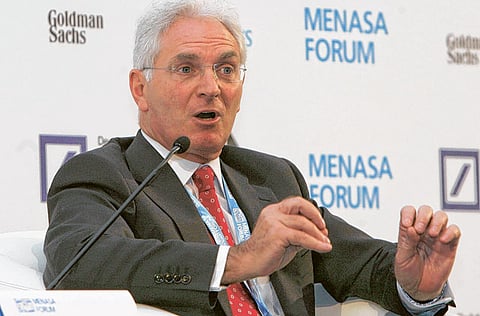
Dubai: Arab economies must become more transparent and implement corporate governance models, but "there is no one recipe," Dr Nasser Saidi, Chief Economist and Head of External Relations at the Dubai International Financial Centre Authority (DIFCA), said.
The variations in Arab economic structures and the diversity of companies in these economies make it difficult to create one role model to implement the already-agreed on principles of good governance.
"It is not one size that fits all," explained Saidi, who is also Executive Director of the Hawkamah-Institute for Corporate Governance at the Dubai International Financial Centre (DIFC).
Saidi explained to Gulf News that though there is a consensus among Arab countries on the "general principles of good governance, the translation of these "principles" to procedures and plans differs from one country to another.
This is a result of the existing differences in the financial environment and the variation of companies in these countries.
Also, it won't be possible to implement the same principles for companies that are listed on the stock market and others that are not.
"In some other countries, family-owned companies play an important role in their countries' economies. The implementation of the proper Hawkamah principles for these companies differs from the way it is implemented on the listed companies in the market," Saidi noted.
Business environment
Proper implementation of these principles requires taking into consideration the overall business environment in individual countries and the rules and regulations related to companies and their listing in the market, including the disclosure requirements, supervisory authorities and the regularities bodies.
"The working environment differs among the Arab countries, and it is important to implement the Hawkamah principles in a correct way," Saidi stressed.
Among the major characteristics of good governance are participation, consensus, accountability, transparency, effectiveness and efficiency and the following of the rule of the law, economists noted. And the international financial crisis has emphasized the importance of transparency particularly to the companies listed in the market, they added.
Earlier this month, the fifth regional annual corporate governance conference was held in Muscat, Oman. It was attended by scores of policymakers, representatives of stock markets and business leaders from 17 countries in the Middle East and North Africa.
Apart from Oman, the represented countries included the UAE, Saudi Arabia, Qatar, Kuwait, Bahrain, Algeria, Egypt, Iraq, Jordan, Lebanon, Libya, Morocco, the Palestinian National Authority, Tunisia, Syria and Yemen.
The meeting was organised by the Hawkamah Institute for Corporate Governance, the Organization of Economic Co-operation and Development and the Oman Capital Markets Authority.
Muscat declaration
The Muscat Declaration expressed the participants' conviction of the importance of good corporate governance for private and public sector development in the Middle East and North Africa.
Participants also expressed their recognition to the "importance of good governance for attracting and retaining local and foreign investments" and affirmed "the need for ongoing regional dialogue on improving corporate governance practices of all types of enterprises in the region," the declaration said. While the implementation procedure differs among the Arab countries, Saidi explained, there are fundamental issues that need to be followed, such as the International Financial Reporting Standards (IFRS).
"There is a need that all companies follow the IFRS and not only the companies listed in the markets," he said, adding that these standards are the basis for monitoring and rating of the different regulatory bodies and supervisory authorities.
However, if the companies' financial reports don't follow the rules and standards of the IFRS clearly, it will turn out to be difficult to compare the transparency of a company in one country with another company in another country.
Recommendations
- Encourage policy makers and regulators to focus on improving the transparency and disclosure of enterprises, both in terms of financial and non-financial elements, including, inter alia, disclosure on related party transactions, conflicts of interest, executive compensation and board structures.
- Encourage companies to provide greater non-financial disclosure, including on their risk management processes, environmental and social impact, and stakeholder relations.
- Advise regional banks to implement the recommendations of the regional Policy Brief on Improving Corporate Governance of Banks in the Middle East and North Africa.
- Request that international, regional and national organisations support efforts to raise awareness of good governance practices in the banking sector among representatives of bank boards, executives and regulators.
- Review the listing and other requirements for publicly held companies, alongside other relevant legal and regulatory requirements, to ensure that collectively, they provide the basis for an effective corporate governance framework.
- Request that a designated Taskforce comprising representative of regional stock exchanges be established in the context of OECD's Working Group on Corporate Governance in the Mena region in order to facilitate policy dialogue and exchange of good practices.
- Call for an analysis of the role of stock exchanges in improving corporate governance of listed entities with the view to increase investor confidence and attract long term investors and institutional capital.
- Support the launch of the Forum for Insolvency Reform (FIRM) in the region (created by the Hawkamah Institute for Corporate Governance, the OECD, the World Bank and INSOL International) and encourage it to provide support to policymakers in the region.


