Three reasons why talks hit a dead end
Absent some appropriate changes in mindset and behaviour, the latter interpretation may well prevail for three reasons that may seem counterintuitive to some
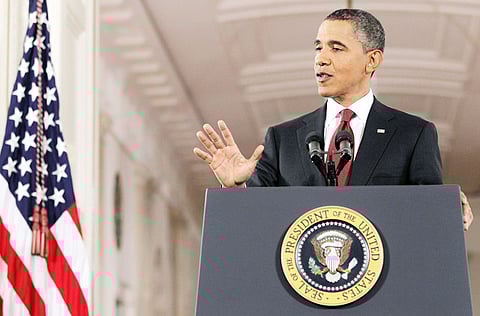
Obama's economic view is rejected on world stage," the New York Times declared on its front page. The Financial Times' headline was "G20 Shuns US on Trade and Currencies," while the Wall Street Journal proclaimed "US Gets Rebuffed at Divided Summit." In short, the media's reporting on the Group of 20 summit in Seoul was brutal.
The meeting of government leaders was certainly a disappointment for those looking for coordinated policy actions to place the world economy on a more secure path to high growth, job creation and financial stability. It also highlighted the growing leadership vacuum at the centre of the global system.
What comes next
The focus now shifts to what comes next. Will the summit be a catalyst for more constructive discussions outside the spotlights and beyond the attention of the world media? Or will it seriously undermine a G20 process that was successful in avoiding a global depression but has since failed to ensure a lasting economic recovery?
Absent some appropriate changes in mindset and behaviour, the latter interpretation may well prevail for three reasons that may seem counterintuitive to some.
First, the summit played down disagreements by producing a statement that has something for everyone. This attempt at short-term expediency can easily backfire. After all, it is hard for China, Germany, the US and others to make a solid case at home for compromises to meet global responsibilities when opponents can quote reassuring sections from the communique.
Second, what should have been a collective discussion on global rebalancing veered too much in a direction that placed the US on the defensive. And attempts at unilateralism by the US before the summit — through policy actions and widely circulated letters — served only to display an unusual degree of isolation and foster even more questioning of the world's biggest economy.
Third, with France set to assume the G20 leadership, the summit opens the door wide for a government that is naturally inclined to greater intervention. In the past, this has tended to irritate the US in terms of both content and process.
French leadership of the G20 also comes at a time when President Nicolas Sarkozy's government is eager to secure visible quick wins on the global stage.
This rather downcast analysis of what possibly comes next should ring alarm bells in Washington and in other capitals.
It is a call for intensifying international economic diplomacy with a view, first and foremost, to reaching rapid convergence on a common analysis of what ails the global economy. Without that, any other step can't be productive


