Regulators can help with selective disclosures
Releasing such details need not necessarily undermine banking industry
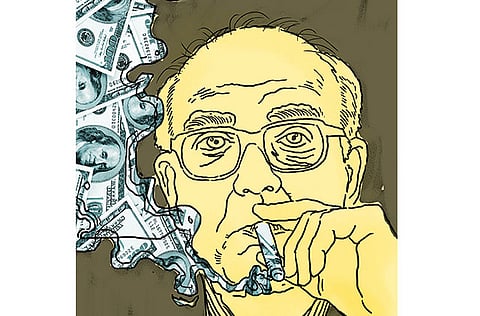
The Federal Reserve used to set monetary policy in rooms clouded by the smoke from Paul Volcker’s cigars. Over decades the central bank has moved from revealing almost nothing of those closed-door discussions - not even its target interest rate - to today’s “forward guidance” and press conferences.
Yet the Fed’s supervision of the US banking system has not enjoyed the same sunlight, and both banks and their critics have suggested that more scrutiny is needed. Bank executives complain that in some areas - notably the Fed’s annual stress tests - the central bank is too much of a “black box” and therefore unnecessarily harsh. But some former members of the Fed staff argue that the reverse is true.
Carmen Segarra, a former examiner at the Federal Reserve Bank of New York, claims she was fired for being too tough on Goldman Sachs. The New York Fed “categorically rejects” her allegations.
She has sought to back her claims with 46 hours of clandestinely taped meetings. The highlight is an exchange involving the Fed’s then senior supervisor of Goldman, Michael Silva, who is heard discussing with his colleagues how he is deeply concerned about a Goldman transaction and implies he is going to storm into the bank and demand answers, before venturing only a brief and mild question.
It is the case of the watchdog that didn’t bark, at least according to the snapshot provided by Segarra. “American taxpayers deserve regulators who will fight each day on their behalf, rather than cosy up to the very industry that they are meant to police,” said Sherrod Brown, a Democratic senator who called a hearing of the Senate banking committee to examine Segarra’s allegations.
Of course, there are times when supervisory information is so sensitive that its release could cause damage. A Fed email emerged detailing a 2008 call from Morgan Stanley, warning that it had been so severely damaged by the crisis that it would be unable to open for business the following Monday and if that happened Goldman would also be “toast”. If that communication had been released in real time there would have been even more panic around the US financial system.
But often unintended releases of information are absorbed without any trouble. When the Senate released information showing that JPMorgan’s secret supervisory rating had been cut last year, there were no lines of bank customers rushing to withdraw their money.
One place the transparency campaign could start is with the Fed’s so-called “Camels” ratings. In the 1990s academics were suggesting the ratings - for capital adequacy, asset quality, management, earnings, liquidity and sensitivity to market risk - might be made public. “Such disclosure could benefit supervisors by improving the pricing of bank securities and increasing the efficiency of the market discipline brought to bear on banks,” wrote Jose Lopez, an economist at the Federal Reserve Bank of San Francisco in 1999.
In other words, the stock and bond prices for the banks would be more accurate if they knew what the Fed thought about the strength of these banks and their management. Publishing the ratings would also be a check on the supervisors themselves, by allowing investors to know whether their assessments proved too optimistic or pessimistic.
Such scrutiny of the bank supervision process, notwithstanding the recent hearing in Congress, has been lacking. The Fed does have an inspector general, who is charged with examining the examiners. In October the IG released a summary report into the role of regulators in JPMorgan Chase’s $6 billion “London whale” trading fiasco.
The summary identified weaknesses in communication between regulators and a “missed opportunity” to look at the bank division responsible for the botched bets. We do not know what else the IG discovered because the full report, which reportedly contained disagreement about who was responsible for supervisory failures, has been kept secret. This despite the fact that the Senate has already published reams of confidential supervisory information about the episode.
A fuller discussion of what went wrong is in the public interest and could be achieved without compromising information that genuinely needs to be kept private. It is time for less smoke.
Financial Times


