Luxury real estate branding in Dubai: Why every ‘reinvention’ looks the same
Luxury is a legitimate aspiration. The challenge begins when it becomes the only story
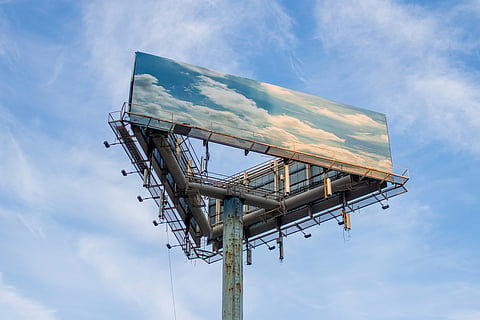
As brand strategists, we've seen category inflation play out across countless industries. For me, nowhere illustrates it more clearly today than Dubai real estate development.
Every industry has one inevitably overused shortcut: tech has innovation. Hospitality has escape. Communications has purpose, and real estate increasingly has “luxury”. And while Dubai has come to embody luxury on the global stage, the landscape and its offerings have now matured enough to warrant new narratives.
That isn't an argument against the word itself. Dubai has earned its place among the world's great luxury destinations, and many developments genuinely belong in that conversation. The problem begins when luxury stops functioning as a point of view and starts operating as a default.
When every new launch promises even more elevated living, curated experiences, iconic design, or yet another reinvention of luxury, the category begins overshadowing the brands competing within it.
Get updated faster and for FREE: Download the Gulf News app now - simply click here.
Drive along Sheikh Zayed Road, and the pattern is difficult to ignore. Individually, none of these campaigns feels particularly out of place. Together, they begin to blur into one another. Somewhere between the cranes and the copy, the conversation stopped evolving.
Categories that grow this rapidly inevitably develop a common vocabulary. Commercially, familiar language feels safe. But familiarity in branding has a cost.
Cover the logos on a dozen real estate billboards. How many could still be identified by their words alone?
Dubai today is not the Dubai of twenty years ago. Back then, much of the communication naturally centred on possibility and ambition. Today, Dubai no longer needs to prove itself. Residents and international investors alike aren't deciding whether they believe in the city.
Luxury no longer needs proving. Distinction does.
Luxury branding theorist Jean-Noël Kapferer argues that luxury is conferred through reputation rather than declared through communication. Reputation accumulates slowly. Declarations can be manufactured overnight.
Few industries invest in visibility as confidently as real estate. In Dubai, campaigns don't simply occupy media. They become part of the city's visual identity. Some of the industry's biggest media investments are still introduced by its smallest ideas. If media is the amplifier, surely the strategic thinking behind it deserves equal ambition.
This tendency isn't unique to Dubai. Across the region, luxury often gives way to different versions of the same shortcut. The specifics change. The instinct doesn't.
Alternate path
Every so often, a campaign reminds you that another route exists.
One that stayed with me this year came from Egypt. Wadi Degla Developments' Ramadan campaign centred on a song that asks a simple question: "Who's only just crossed into their thirties?" It answered it through the small, unmistakable moments that quietly announce adulthood: your parents’ advice suddenly making sense, midnight cinema screenings becoming a hard pass, and "okay" quietly replacing the need to win every argument. The campaign never really mentioned property at all. It sold the life that naturally leads to one. Home ownership wasn't the aspiration; it was the natural next step.
It earned emotional relevance before asking for commercial relevance, trusting the audience to connect the dots.
A cheeky opinion that's been doing the rounds in the real estate world recently is that "boutique developer" is just a polite way of saying "small developer." The branding question is far more interesting, scale-shaming aside.
There's something strategically admirable about developers willing to walk away from the luxury shortcut. Not because boutique is inherently better, but because it forces sharper branding decisions. If luxury is no longer your opening line, what takes its place? Architectural philosophy? Carefully curated retail? A stronger sense of neighbourhood? The conversation shifts from category claims to points of view.
That is where the next chapter of Dubai real estate branding begins.
Dubai may be one of the greatest branding case studies of the twenty-first century. Few places have reshaped global perception with such speed and conviction. It didn't become unmistakable by borrowing someone else's narratives. So why do so many brands within it still choose familiarity over identity?
The city has long outgrown the stories that first introduced it. Different neighbourhoods. Different philosophies of living. Different reasons to call one place home.
The opportunity is to reflect that richness, not to keep reaching for the category's safest line.

The writer is Social Media Director at Publsh Media Group
