Indian budget sets up the pathway to reform
Though sweeping changes were absent, individual policies can declog legacy worry
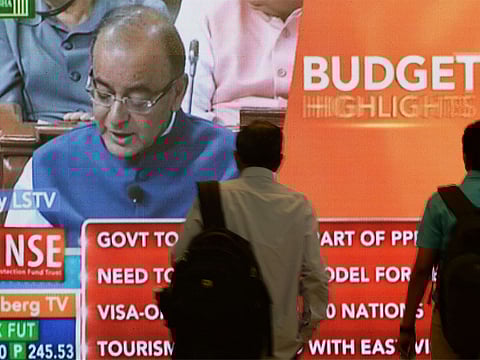
Expectations for Indian Prime Minister Narendra Modi’s first full-year budget were always going to be too extravagant to satisfy. No single document could possibly address all of the many roadblocks to growth, each of which was enumerated, examined at length and lamented in weeks of breathless coverage leading up to February 28.
What the budget can do is reveal in clear terms the government’s spending and revenue priorities. With luck, one can divine within those a strategic vision for the economy.
Viewed in that light, the new budget shows a welcome understanding of what really ails India: a dire lack of investment. The sharp decline in growth rate between 2010-14 can almost entirely be explained by a single factor — a dramatic 6 percentage-point drop in investment as a percentage of GDP, which stalled several big infrastructure and manufacturing projects midway.
Since investment occurs in cycles, any recovery will take longer than the period of decline itself. Perhaps the most serious indictment of Modi’s first nine months in power is that he has failed to reverse this trend, despite a radical improvement in business sentiment.
Talk of an economic “lift-off” for India and double-digit growth rates will never amount to anything until this challenge is addressed. Fortunately, Financial Minister Arun Jaitley’s two boldest proposals address this problem directly. First, he has chosen to relax the fiscal targets he set in his last budget, postponing by one year his earlier commitment to reduce the deficit to 3 per cent of GDP by the end of 2016-17.
In 2015-16, that will give him an extra 0.3 per cent of GDP to spend on public investment: Indeed, he announced an additional $12 billion of spending on infrastructure, equivalent to around 0.5 per cent of GDP. He will mop up the extra revenue through increases in the rates of service tax and excise duties.
With luck, the new spending should help “crowd in” reluctant private investors, particularly in key sectors such as roads, ports and railways. Of course, India needs to spend significantly more than an additional $12 billion on infrastructure. Jaitley also set up an off-budget National Infrastructure Investment Fund with a seed grant of $3.3 billion from the government.
The fund will raise additional money via debt and then invest in infrastructure. The government will also permit infrastructure finance institutions to issue tax-free bonds. Add up all of that, and assume that some private investment will now get off the sidelines, and there is a real chance that the investment cycle will take off. If infrastructure gets a boost, investment in manufacturing should follow.
Jaitley’s second bold decision was to reduce the corporate tax from 30 per cent to 25 per cent over four years, in a bid to attract private investment. This was accompanied by a promise to end exemptions, which encourage rent-seeking and mean that bigger companies only pay an effective tax rate in the low 20s.
A more transparent system with a moderate rate should be a huge boost to both domestic and foreign investors.
Several other measures build upon these moves. The government pledged to introduce a proper bankruptcy law for the first time, which will allow for orderly exits and a much more efficient allocation of capital. The Reserve Bank of India, too, will undergo reform.
The task of managing the government’s debt will be shifted from the central bank — which faces a conflict of interest as the arbiter of interest rates — to an independent agency. The monetary policy framework will also be made more transparent, with an independent committee setting interest rates. That should help the fight against inflation, a key obstacle to growth.
Critics of the budget have a point when they complain that it lacks a more sweeping vision for pro-market reforms — a sell-off of state enterprises, changes to land and labour laws, an end to wasteful subsidies. In Modi’s defence, India’s political economy may simply not be ready to have that vision spelt out so plainly.
Reading between the lines of the budget, though, one can discern a basic shift in the government’s priorities away from populism and in favour of investment, both private and public. That’s a good start — about as good as one could realistically expect.
Washington Post


