Artificial Intelligence can transform energy value chain
AI is no longer a distant innovation but an essential tool of the energy value chain
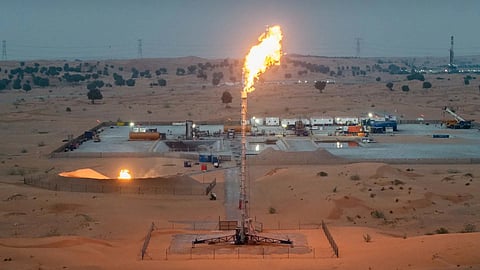
Artificial Intelligence has become a defining force shaping the future of the global energy industry, and the discussion has now moved decisively from whether to adopt it to how best to deploy it with purpose, efficiency, and responsibility. AI is no longer a distant innovation but an essential tool that will transform every part of the energy value chain, from predictive maintenance and energy optimization to emissions monitoring and production forecasting. The priority is no longer experimentation but strategic integration, ensuring that systems are intelligent, interconnected, and data driven so the industry can reduce emissions while still providing affordable, reliable, and secure energy to the world.
From adoption to execution
This new reality reflects a wider transformation across the Gulf and around the globe. Governments, national energy companies, and international operators now view AI as indispensable for advancing growth and decarbonization. The United Arab Emirates Energy Strategy 2050 captures this shift by embedding AI and digital infrastructure into the national plan for clean power expansion, nuclear capacity, and long-term energy security. The establishment of a Ministry for Artificial Intelligence signals that digital intelligence is now a structural component of national planning. The essential question facing every operator and policymaker is how to use AI ethically, effectively, and at scale to deliver measurable results.
Strong data foundations are central to that mission. Every discussion about AI eventually returns to the same truth: effective intelligence is impossible without reliable, organized, and connected data. Many organizations struggle because their data remains scattered across incompatible systems or held in isolated pockets. Progress requires interoperable and open standards that allow information to move securely and efficiently, enabling predictive maintenance systems, emissions monitors, geological models, and operational platforms to communicate seamlessly. Once that connectivity is in place, the sector can shift from reactive decision making to prescriptive intelligence that recommends actions, not just outcomes. This evolution strengthens safety, reliability, sustainability, and operational efficiency across the energy chain.
People, skills, practical gains
Human capability is just as critical. AI does not replace human intelligence but expands its potential. Engineers, planners, and decision makers increasingly need comfort with data, digital tools, and the ethical dimensions of emerging technology. The goal is not to turn the workforce into programmers but to cultivate professionals who understand how digital intelligence serves their mission. Universities, technical institutes, and corporate training programs must evolve to support this shift. Leaders must champion a culture that embraces innovation rather than fears disruption. Lessons from other industries demonstrate clearly that digital transformation succeeds only when human capability evolves alongside technology.
AI is already producing meaningful gains in energy operations. Predictive maintenance tools are reducing maintenance backlogs and preventing failures before they occur. Real time emissions monitoring is becoming a standard practice on both offshore and onshore assets. AI optimized turbines have delivered efficiency improvements and measurable reductions in carbon emissions. These examples show that when AI is applied thoughtfully, the environmental and financial impact is immediate and substantial.
Even as AI supports emission reduction, it also introduces a new challenge. The energy required to train and operate advanced AI systems can be extensive, prompting concern about the carbon footprint of the digital infrastructure itself. This emerging paradox demands careful strategy. The industry must favor efficient, specialized AI models designed for specific industrial tasks rather than large, generic systems that consume unnecessary resources. Responsible governance must ensure that data privacy, transparency, and environmental accountability are prioritized in every stage of AI development and deployment.
Scaling, security, accountability
Another obstacle lies in the widespread difficulty of scaling AI beyond pilot projects. Many initiatives fail because companies pursue AI for appearance or internal pressure rather than for meaningful business impact. Success depends on clarity of purpose, alignment with operational needs, and commitment to delivering measurable value.
AI also opens the door to greater transparency across global supply chains. A significant share of emissions across the value chain originates from small and medium sized enterprises that lack the capacity to measure or report on their environmental performance. AI-powered tools can change this by enabling suppliers to contribute real time sustainability data, allowing companies to understand their true emissions footprint across the entire supply chain. When reporting becomes easier and more accurate, sustainability shifts from a compliance obligation to a strategic advantage.
The growth of AI also brings heightened cybersecurity challenges. As operational systems become more connected and data volumes expand, vulnerabilities rise. Misclassified data, manipulated inputs, or targeted digital attacks can distort insights or disrupt essential operations. Cybersecurity must therefore be treated as a core element of every AI strategy. Reliable data classification, model validation, and constant threat monitoring are essential to maintain operational integrity and public trust.
Clearly, the transformative potential of Artificial Intelligence in the energy industry is undeniable, and its success will depend on thoughtful design, ethical governance, strong human capability, and a clear sense of purpose. When integrated with discipline and vision, AI will not simply support the existing energy system but will help create a cleaner, more resilient, and more sustainable energy future for generations to come. Yet the cost of inaction is rising.
- The writer is CEO, Sharjah National Oil Corporation (SNOC)


