
Casio G-Shock GA 2100 review: the CasiOak earned its cult status
Why this slim, tough G-Shock became a modern watch icon
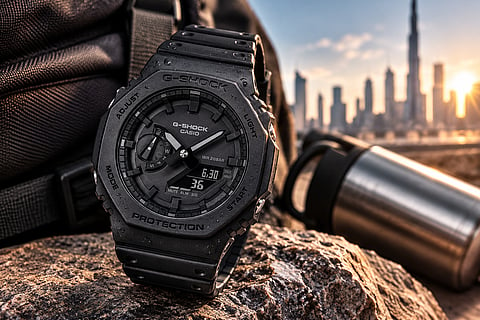
The Casio G-Shock GA 2100 has gone from an unusual slimline G-Shock to a modern watch world fixture. Introduced in 2019, its octagonal case quickly earned the unofficial “CasiOak” nickname and helped the model find an audience well beyond traditional G-Shock buyers. The appeal remains straightforward: this is a relatively slim, lightweight watch that retains the shock resistance and serious water resistance expected from the brand. For buyers who want one durable everyday watch without the bulk associated with some G-Shocks, the GA 2100 1A1 still makes a convincing case.
Key facts
Best for: Buyers who want G-Shock toughness in a slimmer, understated analogue digital design
Bottom line: The GA 2100 combines a distinctive octagonal case with low weight, 200 metre water resistance and useful everyday functions, without turning into an oversized sports watch.
What you get
The GA 2100 1A1 measures 42 by 25 by 11.8mm and weighs 30g, according to Casio. Those numbers explain an important part of its appeal. A case width above 42mm sounds substantial on paper, but the 11.8mm thickness and low weight make this a notably restrained G-Shock. Casio describes the model as slim and comfortable to wear.
Its construction uses Casio's Carbon Core Guard structure, with a carbon and resin case and bezel plus a resin strap. The watch is shock resistant and rated for water resistance to 200 metres. Mineral glass covers the dial. Casio specifies an approximate three year battery life from two SR726W cells.
The display mixes analogue hands with a small digital screen rather than committing fully to either format. Functions include world time across 31 time zones, a stopwatch, a countdown timer, five daily alarms, an hourly time signal and a full auto calendar. A hand shift function moves the hands temporarily when they obstruct the digital display.
The styling is unusually restrained for the brand. The all black GA 2100 1A1 uses an octagonal bezel and a relatively clean dial, with the digital section taking up only a small portion of the face. That combination is central to the CasiOak identity.
How it performs
The GA 2100's strongest practical feature is how much G-Shock specification Casio fits into an 11.8mm thick case. Hodinkee reported that Casio's development team specifically set out to create a thinner, more compact G-Shock while retaining the brand's shock resistant construction. The carbon case was instrumental in achieving the slimmer profile.
That matters for everyday wear. At 30g, the GA 2100 does not have the dense feel of a metal watch, while the comparatively thin case is easier to accommodate under a sleeve. In the UAE, the resin construction and low weight also make sense for casual daily use in hot weather, when a heavy watch can become more noticeable on the wrist.
Its 200 metre water resistance rating gives the GA 2100 considerably more flexibility around water than an ordinary splash resistant fashion watch. Casio also specifies shock resistance through its Carbon Core Guard construction, keeping the model aligned with the practical purpose of the wider G-Shock range.
The all black 1A1 colourway does involve a fit consideration. Hodinkee identified legibility as the chief weakness in its evaluation of this particular version. Buyers who prioritise maximum at a glance contrast may prefer another GA 2100 colourway with brighter hands or markers.
None of that explains the cult status by itself. The design does. Hodinkee reports that the “CasiOak” nickname originated with Steven Davila on the Scottish Watches Facebook Group, prompted by the watch's octagonal shape and perceived resemblance to the Audemars Piguet Royal Oak. Casio's designers, however, traced the octagonal motif back to the original G-Shock DW5000 rather than describing the GA 2100 as an imitation of the Swiss watch. More than 20 3D printed prototypes were reportedly used while refining the bezel.
The resulting watch reached buyers who might previously have considered a conventional G-Shock too bulky. That crossover appeal, combined with an accessible position in the G-Shock range, helped turn a straightforward resin watch into a collector favourite.
What we like
The 11.8mm case: Slim enough to make the GA 2100 noticeably easier to wear than many chunky sports watches.
30g weight: The carbon and resin construction keeps wrist weight low without abandoning G-Shock's shock resistant brief.
200 metre water resistance: A strong specification for an everyday analogue digital watch.
Distinctive design: The octagonal bezel gives the GA 2100 an identity that works outside purely functional or outdoor settings.
Who should buy this
The GA 2100 1A1 makes the most sense for someone who likes the durability and utility associated with G Shock but does not want a particularly thick or visually busy watch. It can serve as a casual everyday piece, a travel watch or a low maintenance option for active use, with world time, alarms, a timer and stopwatch available when needed.
It is also an appealing entry point for someone curious about the CasiOak phenomenon without moving into more elaborate members of the 2100 family. Buyers who need maximum dial contrast should consider a higher contrast GA 2100 colourway instead of the predominantly black 1A1.
Verdict
The CasiOak nickname helped make the GA 2100 famous, but the watch has lasted because there is a sensible product underneath it. Casio took familiar G Shock priorities, including shock resistance, 200 metre water resistance and practical digital functions, and packaged them in a 51g case measuring only 11.8mm thick.
Its octagonal shape gives watch enthusiasts something to talk about, while its lightweight construction makes the design useful beyond collector circles. The black on black GA 2100 1A1 favours subdued styling over maximum contrast, so it will not suit every wrist or preference. For buyers attracted to G Shock durability but put off by bulk, however, this remains one of the clearest explanations of why the 2100 series became such a significant modern G Shock.
Gulf News earns a commission on purchases made through links in this article, at no extra cost to you. Our editorial team selects products independently.


