Hormuz tanker traffic shows 'signs of recovery' — but Gulf oil flows remain far below normal
Wartime traffic patterns emerge at world’s most critical oil chokepoint
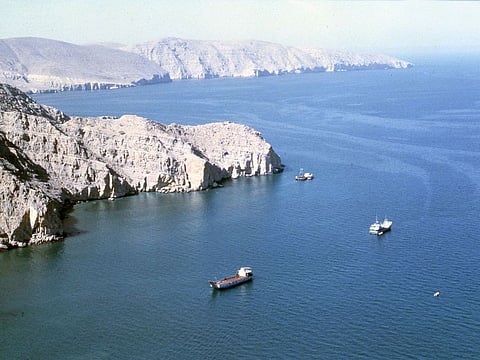
Tanker traffic through the Strait of Hormuz is "showing signs of recovery", with very large crude carriers (VLCC) moving through the strategic waterway.
More significantly, the tankers are moving in both directions — and during daylight hours, according to maritime intelligence firm TankerTrackers.com.
In an update posted early on Tuesday (Sept. 15, 2026), the tracking site said its analysis of satellite imagery captured as of Sept. 14 showed "bi-directional daytime" traffic by VLCC supertankers in the strait.
Increased volumes of crude oil, LNG, LPG
The company also reported increased volumes of crude oil, liquefied natural gas (LNG) and liquefied petroleum gas. (LPG) being transferred between vessels through "ship-to-ship (STS) operations" in the Gulf of Oman, outside the Strait of Hormuz.
The observations point to an increasingly complex effort by energy traders and shipping companies to keep Gulf cargoes moving despite continuing military and security risks.
Get it: Fast, verified news for FREE ... download the Gulf News app — simply click here
Satellite imagery suggests more supertankers are moving through the Strait of Hormuz in both directions and during daytime, while ship-to-ship transfers of crude, LNG and LPG are increasing outside the chokepoint.
However, the renewed tanker activity should not be interpreted as a return to normal.
Reuters reported Sept. 14 that commodity-vessel traffic through Hormuz remained "substantially below normal levels".
Only four such vessels exited the Gulf and 10 entered over the weekend, compared with a 10-day average of about 14 vessels a day.
Before the Iran war began on Feb. 28, roughly 125 vessel transits occurred daily.
Tankers are moving — but cautiously
The latest satellite observations are significant because slow-moving VLCCs are among the largest crude carriers in the global fleet and are most vulnerable to projectile attacks.
Their presence in both directions suggests that some operators are increasingly willing to accept the risks associated with crossing the chokepoint, at least under certain conditions.
That represents a change from periods earlier in the conflict when tanker traffic through Hormuz fell sharply as attacks, threats and insurance concerns made shipowners reluctant to enter the Gulf.
Volatile situation
Reuters reported in July that tanker transits had fallen to their lowest level in two months after renewed US-Iranian strikes and attacks on commercial vessels heightened the risks to shipping.
The situation has remained volatile.
On Sept. 14, Iran's PGSA, Iran's Gulf Strait Authority, issued an updated list of 77 vessels it accused of violating Iranian protocols in Hormuz, warning that ships on the list could face penalties including fines, detention or confiscation.
A commercial vessel was also struck by an unidentified projectile while transiting the strait over the weekend, according to maritime authorities and shipping reports.
STS transfers are becoming increasingly important
The second part of the TankerTrackers observation is also as significant as the VLCC movements.
Ship-to-ship transfers allow cargo to be moved from one tanker to another without the original vessel having to make a conventional port call.
The Gulf of Oman, immediately outside Hormuz, has consequently become an increasingly important staging area for vessels seeking to move cargo while limiting their exposure to the most dangerous parts of the Gulf.
STS operations can involve crude oil as well as refined petroleum products and gas cargoes, although LNG transfers require specialised vessels and equipment.
Reuters previously reported that oil transfers between tankers outside Hormuz had slowed following attacks on vessels, illustrating how quickly the STS network can be affected by security conditions.
The latest TankerTrackers imagery suggests those activities are now increasing again.
A fragile reopening, not a normal market
The latest satellite evidence provides an important distinction in the current tanker war.
Hormuz is not completely closed. But neither has it returned to normal.
Instead, the region appears to be developing a patchwork system in which some vessels transit the strait, others wait offshore, and cargoes are increasingly shifted between vessels in safer or more strategically advantageous locations.
That could allow a portion of Gulf oil and gas exports to continue despite the conflict.
But it also means the global energy market remains highly vulnerable to a single successful attack, a new Iranian restriction, an incident involving a commercial vessel or a decision by insurers and shipowners to withdraw from the route.
TankerTrackers' latest imagery therefore offers a cautiously positive signal for global energy supplies — but the numbers remain a long way from the prewar flow of ships through Hormuz.
For now, the world's most important oil chokepoint is operating in something closer to wartime traffic management than normal commercial shipping.
Why Hormuz remains critical
The Strait of Hormuz connects the Persian Gulf with the Gulf of Oman and the Arabian Sea.
It is the principal maritime exit for oil and gas produced by Saudi Arabia, Iraq, Kuwait, Qatar, the UAE and Iran.
Before the war, about one-fifth of global crude oil and LNG supplies passed through the waterway, making it one of the world's most important energy chokepoints.
There is no simple alternative for many cargoes.
Pipelines can bypass part of the route, including Saudi Arabia's East-West pipeline and the UAE's Abu Dhabi-Fujairah system, but their combined capacity cannot fully replace maritime exports through Hormuz.
That vulnerability has become even more obvious this week.
For shipping companies, the calculation is therefore no longer simply whether Hormuz is technically open. They must consider:
the risk of attack;
insurance and war-risk premiums;
whether vessels can obtain permission to transit;
availability of naval escorts;
the security of alternative routes;
the cost of waiting offshore; and
whether cargo can be transferred safely through STS operations.


