Snow Moon vs Hunger Moon vs Storm Moon: What's the difference?
The February celestial wonder stands out brilliantly amid a crisp winter night
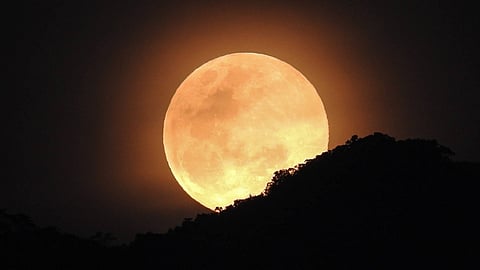
The Snow Moon, aka "Hunger Moon" or “Storm Moon”, is the full moon of February which has captivated humans for centuries.
While its name evokes images of frosty Northern Hemisphere winters, its beauty transcends seasons and borders, shining brightly even in tropical and desert skies.
Why is called such and how to catch its splendor?
Let's delve into the full story of this celestial phenomenon:
Where does the name “Snow Moon” come from?
The story of the Snow Moon begins not in modern astronomy books, but in the ancient traditions of indigenous peoples in North America.
February, often the coldest and snowiest month, brought heavy blizzards that made hunting difficult and food scarce.
Native American tribes, particularly those in the northeastern and midwestern regions like the Algonquin, tracked the lunar cycles to guide their lives through the harsh seasons.
To reflect this, they named the full moon the “Snow Moon”.
Why is it called it the “Hunger Moon” or “Storm Moon”?
Some tribes also called it the “Hunger Moon” or “Storm Moon”, emphasising the challenges of midwinter survival, when game was hard to find and bellies growled amid the drifts.
These names were part of a practical lunar calendar that aligned with nature’s rhythms.
European settlers later adopted and popularised these terms, blending them into the folklore we know today.
Interestingly, while the Snow Moon is tied to wintry imagery, its visibility is global — a reminder that the moon unites us all under the same sky, whether you’re gazing from a snowy field or a balmy beach.
Why is the Snow Moon such a big deal?
Beyond its poetic name, the Snow Moon holds profound cultural, spiritual, and astronomical significance.
In many traditions, full moons symbolise completion, abundance, and reflection — a time to release old habits and embrace renewal.
For Native American communities, it marked a period of storytelling around fires, strengthening bonds during the long nights.
In modern times, it’s a beacon for skywatchers, photographers, and romantics alike, often inspiring art, music, and rituals.
What makes the 2026 Snow Moon particularly noteworthy?
This year’s event coincided with the moon positioned in the constellation Cancer, near the stunning Beehive Cluster (also known as “Messier 44”) — an open cluster of about 1,000 stars that resembles a swarm of bees.
Visible to the naked eye under dark skies, this alignment added an extra layer of sparkle, making the moon appear as if it were dancing among a cosmic hive.
While not a supermoon (it was about 371,000km from Earth, slightly closer than average but not dramatically so), its brightness was amplified by clear winter air in the north, and in clearer tropical conditions, it offered crisp views of lunar craters and maria (the dark “seas” on its surface).
Astronomically, it’s a reminder of the moon's role in tides, ecosystems, and even human moods — studies suggest full moons can influence sleep patterns and wildlife behaviour, too.
When did the Snow Moon occur in February 2026?
The Snow Moon reached its peak illumination on February 1, 2026, at 22:09 UTC (Coordinated Universal Time).
This translates to different local times depending on your location: in countries in the east, it peaked at 6:09am local time on February 2, 2026.
Since there's only one full moon per month in February 2026, this was the definitive Snow Moon event.
The moon appears nearly 100% illuminated for about three days around the peak — from January 31 to February 3 — allowing ample opportunities for viewing before it began waning.
How to best observe the Snow Moon?
Observing the Snow Moon doesn't require fancy equipment; its brilliance makes it accessible to everyone.
Here's how to make the most of it:
Find a dark spot: Head away from city lights to reduce light pollution. In urban areas, try elevated spots like parks, rooftops, or beaches with open horizons. Rural areas or provinces offer even better views.
Time it right: The moon is most mesmerising at moonrise or moonset, when it’s low on the horizon and appears larger due to the “moon illusion”. Use binoculars or a telescope for close-ups of features like the Tycho crater or the Sea of Tranquility.
Weather check: Clear skies are key — check forecasts for low cloud cover.
Enhance the experience: Pair it with photography (use a tripod for steady shots), meditation, or a moonlit walk. Apps like Star Walk or SkySafari can help identify nearby stars and constellations.
If you're in a snowy region, the reflection off the ground can make the night almost as bright as day, adding to the magic.
For tropical, desert or city observers, the contrast against palm trees, high rises, or ocean waves creates a unique, ethereal scene.


