With Mandela gone, ANC faces acid test
South Africa’s ruling party must deal with growing divide between rich and poor
Johannesburg
When Nelson Mandela and the African National Congress (ANC) ascended to power in 1994, the two names were inextricably wed to each other and exemplified the ideals of fairness, inclusiveness and triumph against adversity.
But the glow, at least, surrounding the Rainbow Nation ideals championed by Mandela, has faded. With his passing, the ANC political party now running South Africa — the liberation movement Mandela was once synonymous with — is found wanting.
There is a widely felt sense that things with the ANC are not just unfinished, but left half-finished. With crime still unsolved, with greater gaps between rich and poor, with spirits often flagging, and without an inspiring new ANC leader, the question remains whether Africa’s oldest liberation movement can remain an effective force, or even remain in power. At Mandela’s funeral in Soweto, current President Jacob Zuma was booed, when his face came on screen.
Mandela preserved his own heroic status when he stepped down from the presidency and the limelight. True, there were public problems: the prosecution of his former wife Winnie, news of his early womanising, and some questionable behaviour of his relatives. But none of these diminished his central achievements.
Yet from the moment the ANC and Mandela began to decouple, the ANC’s stock began to fall — and none of its politicians could hold the various factions together.
Compounding problems
While Mandela’s passing on December 5 is unlikely to mean the end of the ANC, the party does face compounding problems. Today, deeply divided between varying ideologies and mired in accusations of corruption and cronyism, the ANC’s vision of a “free, united and prosperous people” appears foggier and more distant.
Mamphela Ramphele, a scholar and former girlfriend of “Black Consciousness Movement” founder Steve Biko, argues that, “People feel forgotten, that their voices don’t count. They feel disrespected and they say: ‘In the past we were poor but we had hope. Now we have lost hope.’”
Ramphele, who started her own party, Agang, to prevent what she feels will be a steady decline of Mandela’s dream, adds that, “People feel that it’s time for a change, they can no longer keep waiting.”
To be sure, the ANC-led government has had successes: It has helped more children get into school, cut crime, maintained economic growth, provided drugs for HIV, and dismantled the injustices of apartheid.
It also notched a rare achievement for a former liberation movement: It was democratically elected four times, behind three different presidents.
But too many South Africans have seen no change in their lives since 1994. Some one fifth of the population lives on about $1.50 (Dh5.50) or less per day.
As Richard Dowden, director of the Royal African Society, put it: “South Africa is now an archipelago of fortified islands of luxury, in a sea of poverty.”
Today, South Africa’s schools are viewed as among the worst in the world. Half of youth between 18 and 24 are in neither education, employment or training, making up what is being called a “lost generation” that will never pay the taxes needed to fund a growing social security bill.
Health departments are blighted by a lack of basic resources. In rural areas there are chronic shortages of doctors, and in some areas, crime goes unpunished because the local police chief is in the pay of the township gang lord.
Those who can afford to simply opt-out will pay the coin for private security firms, private health care, and private schools.
But those who cannot isolate themselves are becoming increasingly angry. They are listening to the dog-whistle politics of people like Julius Malema, the erstwhile and now ejected ANC youth leader, who has advocated for the nationalisation of mines and land.
Cronyism
Many analysts say it is the system by which loyal party men are given jobs in government — regardless of their ability — that is behind many of South Africa’s ills. Patric Mtshaulana, a lawyer and former political instructor for ANC fighters living in exile in Mozambique, believes that such handouts can lead to mismanagement and corruption.
“Some of these people left the country at a very early age and were staying in camps where they were taken care of like children and had everything supplied for them,” Mtshaulana says. “They go from nothing to suddenly handling a budget of millions.”
Political commentator Allister Sparks says that ANC leaders such as President Zuma are distracted from running the country by the battle to maintain cohesion among alliance partners who, without a common goal such as fighting apartheid, are squabbling.
“A stronger leader, as Mandela was, could give clear leadership and objectivity and because of his stature in the movement, the country and the world, people listened,” Sparks says.
Against such a backdrop, the ANC could be forgiven for casting around for a new Mandela, or someone like him.
Winnie Mandela has suggested that role be filled by Malema, the former youth leader, who she compares to her former husband in his early, outspoken days. Another name on many lips is Cyril Ramaphosa, the anti-apartheid activist-turned-business tycoon.
He was elected as Zuma’s ANC deputy president last year after his predecessor Kgalema Motlanthe launched, and lost, a leadership challenge.
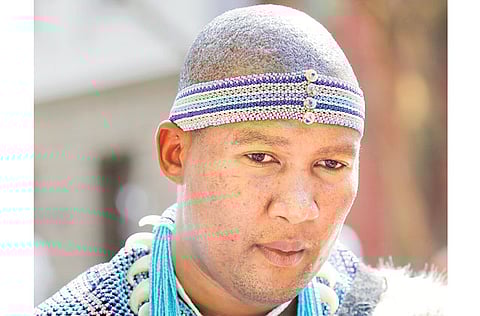
Ramaphosa, a respected and liked politician who led ANC negotiations to end apartheid, was Mandela’s nominated successor when he stepped down in 1999. But the ANC chose Thabo Mbeki instead. Among the Mandelas themselves, there are few contenders. Mandla Mandela, the former president’s grandson, is an ANC MP.
— Christian Science Monitor


