Australians related to Daesh militants return to Syria camp after release
34 Australian relatives of suspected Daesh militants turned back to detention camp
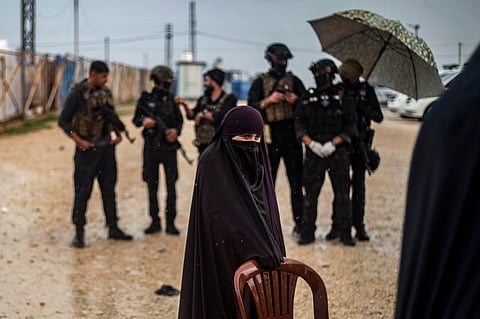
Thirty-four Australian relatives of suspected Daesh (Islamic State) militants had to return to Syria's Roj detention camp due to coordination issues with Damascus after Kurdish authorities released them on Monday, a Kurdish official told AFP.
Camp director Hakmieh Ibrahim had earlier said the women and children from 11 families were handed over to relatives "who have come from Australia to collect them".
They were seen boarding minibuses to reach the capital Damascus.
But they failed to reach that destination and had to turn back because of "poor coordination between their relatives and the Damascus government", said camp official Rashid Omar.
Representatives of the families were working to resolve the issue with Syrian authorities, he added.
50 nationalities
Camp director Ibrahim had said the families were "the last Australians in the Roj camp".
He noted that the facility still housed "2,201 people of around 50 nationalities".
Australian Prime Minister Anthony Albanese told public broadcaster ABC that his government was refusing to help the 34 Australians from the camp because, "as my mother would say, you make your bed, you lie in it".
"We have no sympathy, frankly, for people who travelled overseas in order to participate in what was an attempt to establish a caliphate to undermine and destroy our way of life," he added.
"It is unfortunate that children are impacted by this as well, but we are not providing any support."
Any of the citizens who made it back to Australia would face the "full force of the law" if they had committed crimes, the prime minister said.
Kurds control over Roj camp
Kurdish forces still control the Roj camp in Syria's northeast, where relatives of foreign militants are detained.
The Kurds withdrew from the larger Al-Hol camp in January under military pressure from Syrian government security forces, who took control of it.
Since then, thousands of family members of foreign Daesh militants have left that camp for "unknown" destinations.
The facility housed some 24,000 people, mostly Syrians but also Iraqis and more than 6,000 other foreigners.
Repatriation of relatives has been controversial in Australia, where some politicians have claimed they pose a risk to national security.
Others, such as Human Rights Watch, have in the past praised the government for rescuing Australian citizens from "horrific" conditions.
In 2023, Save the Children Australia launched legal action seeking the return of 11 women and 20 children from Roj.


