Trump touts Iran escrow deal as ‘win-win,’ channeling frozen assets into US farm exports and humanitarian aid
US president outlines Washington's vision for leveraging interim deal with Tehran
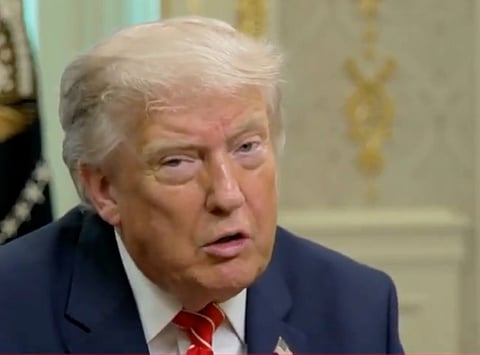
US President Donald Trump outlined his administration's vision for using an interim agreement with Iran as a foundation for broader diplomacy following recent regional conflict
In an interview at the White House, Trump stated: “They (Iran) have 300% inflation. They're making no money — so we're going to take some of the money... and we're going to have, exclusively, our American farmers provide [food], assuming we get to the position where we should get to."
A clip from the interview, conducted by CNBC in the Oval Office and shared by the White House's Rapid Response 47 account on July 2, 2026, circulated widely on social media, fueling debate among supporters and critics over the administration's approach to Iran and regional security.
Interim 60-day de-escalation deal
Trump’s comment comes amid ongoing US-Iran negotiations following what has been described as an interim deal to de-escalate hostilities, potentially involving the release of frozen Iranian assets.
The Trump administration has framed the approach as a “win-win”: using controlled escrow funds from Iranian assets, reportedly in the billions, to purchase US agricultural products like corn, wheat, and soybeans.
These would then support humanitarian needs in Iran while providing a major economic boost to American farmers.
Economic pressure
Iran has faced severe economic pressures, exacerbated by sanctions, regional conflicts (including the 2026 Iran-related war), currency devaluation, and internal mismanagement.
Official data shows year-on-year inflation hovering around 80-88% in mid-2026, with some measures and private estimates pushing higher amid food price spikes exceeding 100%.
While not literally 300%, hyperinflationary conditions have strained households, with reports of poverty affecting a significant portion of the population and shortages in key goods.
The administration's plan positions US Treasury-controlled escrow as the mechanism: funds would be directed exclusively toward American farm goods and medical supplies, preventing direct cash transfers to the Iranian regime.
Vice President JD Vance and Trump have touted this as a boon for US agriculture, with Trump noting calls from “very happy” farmers.
Reactions
Supporters view it as smart economic statecraft — using leverage from sanctions relief to open new export markets for American producers while addressing humanitarian concerns without enriching the regime unchecked.
Critics, including some Iranian opposition voices and U.S. opponents, argue the regime won't accept dictated purchases, that food aid could be diverted or sold at profit to fund proxies, and that the inflation figure is exaggerated. Iranian officials have pushed back, insisting they will decide how any released funds are spent based on market terms.
Protesters inside Iran have highlighted that their demands center on political freedom rather than just food, with videos showing citizens rejecting the narrative of starvation in favor of regime change.
This fits into Trump's broader "America First" foreign policy: prioritising US economic interests, using maximum leverage in negotiations, and avoiding open-ended foreign entanglements while claiming to deliver “peace through strength” and deal-making, as per the Rapid Response 47 account on X.
Whether this leads to a stable broader agreement remains to be seen, as regional dynamics, Iranian domestic unrest, and verification of any escrow controls will be critical.
For now, it underscores a classic Trump pitch: turning geopolitical pressure into prosperity for American workers — in this case, the nation's farmers.
The Rapid Response 47 account was launched early in the second Trump term as a proactive media counter, and regularly amplifies such moments to highlight policy wins and challenge mainstream coverage.


