US, Philippines unveil 4,000-acre supply chain zone in Luzon under Pax Silica push
Emirates reiterate support for Lebanon’s unity, sovereignty and long-term security
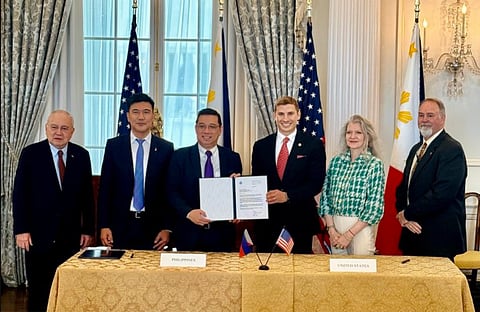
MANILA: The United States and the Philippines have announced plans for a 4,000-acre “Economic Security Zone” in Luzon (ESZ), a new industrial hub meant to strengthen supply chains for critical goods and deepen allied manufacturing ties, according to a US State Department fact sheet and a post by Under Secretary of State Jacob Helberg.
Get updated faster and for FREE: Download the Gulf News app now - simply click here.
The project, about 1,618.7 hectares (16,187,000 square metres, about 16.187 square km) is being described as the first “AI-native investment acceleration hub” under "Pax Silica", a US-led initiative aimed at building secure supply chains among partner countries.
Officials said the site is intended to help secure inputs vital to American supply chains while giving allies a platform to manufacture together more efficiently.
The announcement comes as Washington continues to reduce dependence on China-linked supply networks for strategic materials and industrial inputs, a goal that has taken on greater urgency amid wider geopolitical competition.
The Philippines, a longstanding US treaty ally, has also been positioning itself as a key manufacturing and logistics hub in Southeast Asia, especially through the "Luzon Economic Corridor" (LEC).
ESZ's mission
According to reports, the planned zone will be used to speed up investment, attract manufacturers, and support production tied to global demand and host-country advantages.
US officials said the effort reflects a broader view that economic security and national security are now closely linked.
The zone would be among the most ambitious US-backed industrial initiatives in the region and could become a test case for how Washington and its allies reshape critical supply chains in an era of rising strategic rivalry.
Pax Silica: It is a US-led international coalition announced in December 2025 designed to secure global supply chains for semiconductors, artificial intelligence (AI), and critical minerals. Aiming to reduce dependency on China, it unites partner nations to strengthen the entire tech stack, from mining to AI data centres.


