Day 8 of Sara Duterte Impeachment Trial: NBI says it has 'persons of interest' in alleged threat against Marcos
Investigators report progress on alleged threat case as Article IV takes center stage
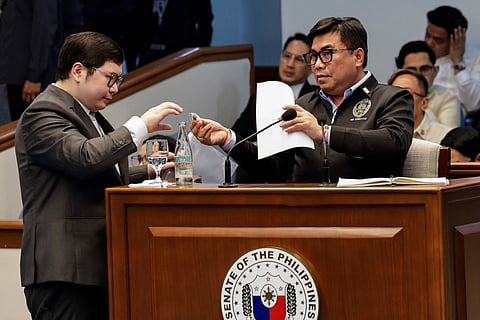
Manila: The impeachment trial of Vice President Sara Duterte entered its 8th day on Tuesday (July 21) with investigators revealing they have identified "persons of interest" in the probe into Duterte's alleged threat against President Ferdinand Marcos Jr., one of the key issues under Article IV of the Articles of Impeachment.
Key events on Day 8 (July 21, 2026):
NBI Director Melvin Matibag testified as the House prosecution's final witness for Article IV of the impeachment case.
The NBI now considers Duterte's alleged "kill" remarks against President Ferdinand Marcos Jr. to be more than just a threat, describing them as a "serious, active, and continuing" assassination plot.
Matibag testified that the bureau believes Duterte publicly announced a plan to kill President Ferdinand Marcos Jr., First Lady Liza Araneta-Marcos, Former House Speaker Martin Romualdez.
The NBI said the alleged plot has become a national security concern.
According to Matibag: "This is no longer merely a threat but a plan."
The bureau has expanded its investigation beyond the criminal complaints for Grave threats, Inciting to sedition currently pending before the Department of Justice (DOJ).
Matibag told senator-judges that the NBI has made "progress" and identified "persons of interest" as part of its investigation into who Vice President Duterte allegedly communicated with following her controversial public remarks.
He did not disclose their identities, saying doing so could compromise the ongoing investigation.
The testimony was presented as part of the prosecution's effort to support Article IV of the impeachment complaint, which accuses Duterte of grave misconduct and abuse of authority related to the alleged threats.
Matibag's testimony centred on allegations that Duterte made statements interpreted by authorities as a threat against President Marcos, First Lady Liza Araneta-Marcos and House Speaker Martin Romualdez, accusations that Duterte has repeatedly denied were intended as an actual assassination plot.
The NBI has created a special task force to investigate what it considers an ongoing threat against the President.
Defence lawyers requested additional time to complete their cross-examination of Matibag.
Because cross-examination was not finished, the House prosecution was unable to formally rest its case on Article IV and is expected to do so after questioning concludes.
Focus on Article IV
Tuesday's proceedings largely focused on Article IV, one of several impeachment articles filed by the House of Representatives.
Prosecutors sought to establish that Duterte's statements went beyond political rhetoric and warranted criminal investigation.
The defence, meanwhile, questioned whether the NBI had sufficient evidence to establish criminal intent and challenged aspects of the bureau's investigative procedures.
Article IV: Article IV of the impeachment complaint accuses Duterte of culpable violation of the Constitution, “Assassination Plot, Grave Threats and Inciting to Sedition Against the President" arising from her alleged threats against Marcos, the First Lady, and Romualdez.
Cross-examination expected to intensify
Defence lawyers continued scrutinising the NBI investigation, pressing Matibag on:
How the investigation began;
The legal basis for opening the probe;
The collection and preservation of digital evidence;
Whether investigators established that Duterte intended to carry out any alleged threat.
Legal observers expect cross-examination to continue as the Senate examines whether prosecutors can establish intent and direct participation.
Several court rulings emphasise that the essence of "grave threats" is the deliberate and serious intimidation of another with the infliction of significant harm that amounts to a crime.
Political and legal stakes
The alleged threat against President Marcos became one of the most politically explosive controversies after VP Duterte publicly made remarks that authorities later investigated as possible incitement or conspiracy.
The issue eventually became one of the articles cited by House prosecutors when they impeached the vice president.
A conviction would require the votes of two-thirds of all senators, or 16 of the 24 members, resulting in Duterte's removal from office and possible disqualification from holding future public office.
What happens next?
The impeachment court is expected to hear additional prosecution witnesses related to Article IV, including investigators and other government officials involved in the NBI probe.
Once the prosecution concludes its presentation, Duterte's legal team will begin presenting its defence, after which both sides are expected to deliver closing arguments before the Senate deliberates and votes on each impeachment article.
The trial remains one of the most consequential political proceedings in the Philippines in decades, with its outcome expected to shape the country's political landscape ahead of the 2028 presidential election.


