Top court hearing adjourned on third day as Pakistan political crisis continues
Court will focus on legality of deputy speaker's ruling
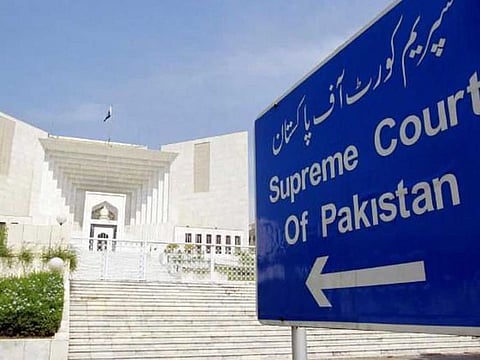
Islamabad: Pakistan’s top court adjourned till Thursday the hearing on the case that would set the country’s future political course and end the current crisis. The Supreme Court is discussing the legality of the dismissal of the no-trust vote against the prime minister and the subsequent dissolution of the Nation Assembly that prompted a sudden political turmoil in the country.
On the third day of the hearing on Wednesday, the government's lawyers presented their arguments. PTI's counsel Babar Awan after presenting his arguments also brought the issue of horse-trading allegations ahead of the no-trust vote. The judges, however, said that the court would not interfere in political and foreign policy issues and would remain focused on the legality of the deputy speaker's ruling. The chief justice said the court wants to wrap up the “important case” soon but only after hearing all parties.
Supreme Court Chief Umar Ata Bandial asked the government counsel Babar Awan for the minutes of the March 31 meeting of the National Security Committee (NSC). National Assembly Deputy Speaker Qasim Suri dismissed the vote of no confidence against Prime Minister Imran Khan in his April 3 ruling which mentioned the NSC meeting on the document (believed to be a diplomatic cable) which said that the “communication amounted to blatant interference in the internal affairs of Pakistan.”
‘Court cannot review speaker’s ruling’
President Arif Alvi’s counsel, Ali Zafar, insisted that any direction from the court on the matter of the deputy speaker’s ruling would exceed its jurisdiction. He said that just as judicial proceedings could not be debated in the parliament, courts also could not interfere in the proceedings of the parliament as he urged for “mutual respect” among institutions. In response, the chief justice asked if interference was not possible even if the Constitution was violated.
Court ruling to set the future course
Pakistan’s deputy speaker dismissed the no-trust vote against Prime Minister Imran Khan, termed it “unconstitutional” and linked the motion with “foreign interference” on the day voting was to take place. The opposition was certain they had the required numbers to oust Khan from office. If the court reverse the deputy speaker’s ruling, parliament would be restored. If the ruling is termed legal, the country would head to the polls. But some analysts believe that no matter what the verdict is, the court may still endorse the election since the process for the formation of an interim government has been initiated
Pakistan president asks ECP to set election date
As the political crisis continues amid the awaited Supreme Court verdict, Pakistan President Arif Alvi asked the Election Commission of Pakistan (ECP) to fix a date for elections under Article 224(2) of the Constitution. President’s Office statement said the election commission had been asked to propose a date within 90 days from the dissolution of the National Assembly “in order to carry out the mandate of the Constitution”.


