Pakistan’s new nuclear plant takes shape ahead of time
Chashma-5 reaches major construction milestone ahead of schedule with Chinese support
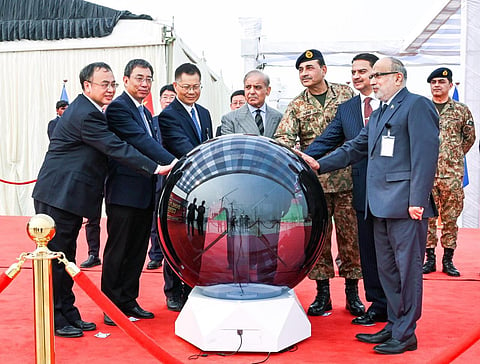
Dubai: Pakistan has moved a step closer to strengthening its electricity supply and reducing dependence on imported fuels as construction of its new 1,200-megawatt Chashma-5 nuclear power plant reached a major milestone ahead of schedule.
The project, being developed with Chinese assistance near Mianwali in Punjab province, is expected to begin generating electricity in September 2030, providing a significant boost to Pakistan’s energy security and its efforts to produce cleaner, more reliable power.
Prime Minister Shehbaz Sharif, accompanied by Chief of Defence Forces Field Marshal Syed Asim Munir, attended a ceremony on Tuesday marking the successful placement of the plant’s containment dome, a critical stage in the construction of a nuclear power facility.
The dome installation represents an important step towards completing the reactor’s main structure and advancing internal construction and equipment installation.
Addressing the ceremony, Prime Minister Sharif described the project as a major investment in Pakistan’s economic future, saying it would help provide dependable electricity to industries, businesses, hospitals and households.
Reliable electricity
The prime minister said the Chashma-5 project was more than a combination of concrete and steel, describing it as a promise of clean, reliable and affordable electricity for Pakistan’s people. He highlighted the importance of nuclear energy in a country that has long struggled with high electricity costs, dependence on imported energy and pressure on its power infrastructure.
Unlike conventional power plants that rely on imported fossil fuels, nuclear facilities can provide continuous electricity generation with relatively low operational carbon emissions.
Sharif said nuclear power offered electricity that did not fluctuate with international fuel prices in the same way as fossil-fuel-based generation and was not dependent on sunshine or wind conditions.
He said such dependable electricity was essential for factories, hospitals and other critical services that required an uninterrupted power supply.
The prime minister also emphasised Pakistan’s vulnerability to climate change, saying the country needed to pursue energy solutions that supported economic growth while protecting the environment.
Project ahead of schedule
Recalling the groundbreaking ceremony in July 2023, Sharif said the latest construction achievement demonstrated Pakistan’s determination to develop its energy infrastructure through sustained investment and international cooperation. “Today, less than three-and-a-half years later, the dome stands in place ahead of schedule,” he said.
He praised the engineers, technicians and workers from Pakistan and China who had contributed to achieving the milestone earlier than planned.
The prime minister expressed confidence that the same dedication would help ensure the plant’s timely completion and possibly allow it to become operational ahead of its September 2030 target.
He also acknowledged Field Marshal Asim Munir’s support for initiatives aimed at strengthening Pakistan’s economy and accelerating national development.
China’s role
The Chashma-5 project also highlights the expanding role of China in Pakistan’s civilian nuclear energy programme.
Shehbaz described the facility as another symbol of the longstanding strategic partnership between Islamabad and Beijing, particularly in energy, infrastructure and economic development.
He thanked Chinese President Xi Jinping and the Chinese government for their continued cooperation in developing Pakistan’s nuclear power infrastructure.
The prime minister said Chashma-5 would become the seventh nuclear power plant built in Pakistan with Chinese assistance, reflecting decades of collaboration between the two countries. He also praised Chinese and Pakistani engineers for working together under challenging conditions to keep the project on track.
The ceremony was attended by senior Chinese officials, representatives of the Pakistan Atomic Energy Commission (PAEC) and other organisations associated with the project.
16.6% of electricity
Speaking at the ceremony, PAEC Chairman Dr Raja Ali Raza Anwar said nuclear energy was already making an important contribution to Pakistan’s electricity supply.
He said the country’s existing nuclear power plants had a combined generation capacity of 3,530MW and were helping avoid approximately 15 million tonnes of carbon dioxide emissions annually.
According to the PAEC chairman, nuclear energy accounted for approximately 16.6 per cent of Pakistan’s total electricity generation despite representing only 8.6 per cent of the country’s installed power capacity.
The contribution increased to around 26 per cent during winter, highlighting the importance of nuclear power in meeting electricity demand when generation from some other sources declines.
The figures underline nuclear energy’s role in providing continuous baseload electricity and supporting a more diversified national energy mix.
What Chashma-5 means for Pakistan
Once operational, Chashma-5 will add another 1,200MW of nuclear generation capacity to Pakistan’s electricity system.
Based on the existing 3,530MW capacity cited by PAEC, the new facility would increase the country’s total nuclear power capacity to approximately 4,730MW, assuming existing plants remain operational.
The additional capacity could help Pakistan meet growing electricity requirements, support industrial activity and reduce reliance on imported fossil fuels for power generation.
It would also strengthen the country’s ability to produce low-carbon electricity as it seeks to balance economic development with environmental commitments.
However, the project’s eventual contribution to lowering electricity costs will depend on factors including financing, operating expenses and the wider power sector’s tariff structure.


