Pakistan PM Imran Khan encourages olive farming to ensure food security
Olive plantation best future investment and will earn valuable foreign exchange: Khan
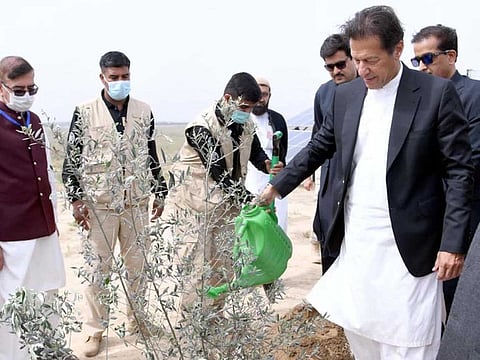


Islamabad: Planting an olive tree on Monday, Pakistan’s prime minister encouraged farmers to embrace the cultivation of olives to diversify and commercialise their crops while adapting to climate change.
“Large scale olive cultivation would prove to be one of the best future investments for the country that can help address the major challenges faced by Pakistan including food security, declining foreign exchange reserves, climate change, job creation,” said Prime Minister Imran Khan.
He planted a sapling of olive at Amangarh plantation suite in Nowshera, Khyber Pakhtunkhwa, where nearly 7,200 olive trees will be planted as part of the government’s 10 Billion Tree afforestation project. The project aims to produce 15kg of olives per tree with an average oil production of 1.8 litre per plant.
Ensure food security
The premier said that the country had immense potential of olive cultivation in Pakistan due to diverse and suitable landscape. “The olive plantation would help ensure food security and also help the country earn valuable foreign exchange.”
Ensuring food security for the growing population in a country of 220 million was one of the biggest challenges, he said. Olive oil could help cut Pakistan’s enormous edible oil import bill and also help meet the local demand. Pakistan spends approximately three to four billion dollars on the import of crude edible oils and oilseed every year. The country spent $4.64 billion in the first seven months of the fiscal year 2020-21, according to the Pakistan Bureau of Statistics, making Pakistan’s food security heavily dependent on imports.
Climate Change
The olive fruit that has been mentioned several times in the Quran as part of Allah’s blessing for the people is not only healthy but also has environmental benefits, the premier said. “Pakistan is one of the countries most vulnerable to climate change and plantation is critical for the safe future of youth.” The olive trees have the potential to mitigate climate change by storing carbon in the soil and the tree that can help mitigate climate change.
Green jobs
Besides ensuring food security and protecting nature, the “Olive plantation will help provide the youth with employment and business opportunities,” Khan said. Pakistan government’s environment-friendly policies have been globally acclaimed. Recently, World Economic Forum (WEF) appreciated Pakistan’s climate action plan particularly the country’s pledge to produce 60 per cent energy from renewable sources by 2030 and cancelled all coal-based projects, replacing them with hydro-electric projects, creating more than 85,000 green jobs, training 5,000 young people to be nature guardians and investing in green spaces and attracting $180 million funding.


