US relationship an evolving one
Obama's support for Security Council seat a logical outcome of India's growing clout
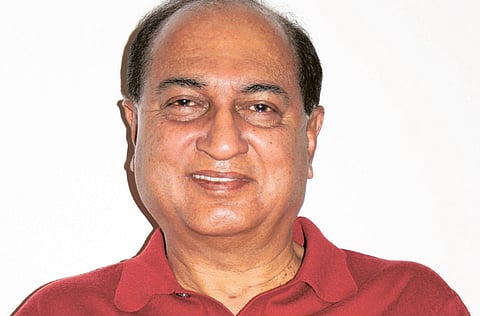
New Delhi: In the wake of US President Barack Obama's India visit, Gopalaswami Parthasarathy is one of the busiest former foreign diplomats around, given his popularity on panel discussions held on television news channels.
An expert on foreign affairs and diplomatic relationships, like many Indians, Parthasarathy is overwhelmed by Obama. Asked if the American President had Indian politicians eating out of his hands with his use of Hindi phrases like bahut dhanyawaad (Thank you very much) and jai Hind (Glory to India), Parthasarathy remarked, "Like Bill Clinton, Obama is a good communicator. He relates easily to large audiences and if our MPs were touched, I'm not surprised."
He brushed aside Congress leader Mani Shankar Aiyar's remarks that meetings between top leaders do not affect the common man.
"I have succeeded Aiyar in three jobs — as Consul General in Karachi, spokesman of external affairs and in Rajiv Gandhi's office. We have never agreed on anything. And in this case also I choose to disagree with him."
In an exclusive interview with Gulf News, Parthasarathy talks about the Obama visit and more.
GULF NEWS: When Prime Minister Manmohan Singh broke protocol and received US President Barack Obama, what signal did he send?
GOPALASWAMI PARTHASARATHY: Whether the Prime Minister goes to the airport or not is entirely his personal decision. This is the second time that he has gone to receive a visiting dignitary. The first was for King Abdullah Bin Abdul Aziz of Saudi Arabia in 2006. So, it's quite obvious that he enjoys the company of the visiting leaders and wishes to establish a greater personal rapport with them.
Obama said that US-India relationship had "limitless potential" to improve lives worldwide. What message does it convey to the world?
It basically means nobody has anything to fear in the India-US relationship. It is not directed against any country, including China and Pakistan. But that the potential for developing the resources and raising productivity and efficiency in both countries is such that the whole world benefits.
For example, in the case of Indian investments in the US, where we are the second fastest growing investors, the industry and the facilities set up there are available to the whole of Latin America. Similarly, American business investments here make India a hub of American investments in the neighbourhood.
Why are experts terming Obama's visit a win-win situation for Americans and no gain for Indians?
I absolutely disagree. The India-US relationship is an evolving one. The Americans are now used to either dealing with the allies who agree to everything they want or enemies whom they take on.
India is incapable of being their enemy because we are both democracies and believe in secularism. At the same time the Americans find Indians very difficult because we don't automatically agree to what they want. For instance, there will be differences in our approach to Iran and Myanmar. And just because Obama expressed a wish regarding these in India rather strongly, it does not mean we'll do everything he wants.
Did the President say in New Delhi what India wanted to hear on the first day of his visit to India (in Mumbai) on terrorists behind the Mumbai attacks?
If he had said it in Mumbai and repeated it in New Delhi, it would have had no impact. He wanted to reserve the entire ‘bang on' effect of his speech in the Parliament. It was smart because parliamentarians of all parties were present and it was important for him to convince them about his intentions than make a point with a few school children in Mumbai.
You mean Obama is smarter than we think?
I have great admiration for him and also for Michelle. It was very touching to see how coming from a humble background, she made her way up. She is a lesson for our parliamentarians here to be more relaxed in public and to be able to relate easily to children and not get tied on by their security.
Should Obama's support to India on the United Nations Security Council (UNSC) seat be seen as a diplomatic gesture or a concrete step?
I see his support on UNSC as a logical outcome to the way the relationship has developed. The only other country he has done it is with Japan. With them he could do it automatically because it is a military ally. India is not, and will not be a military ally. So, it has taken time for them to acknowledge that not everybody is going to fit into the way they want.
How does it help India if America declares Pakistan a state supporting terror groups as is many times ‘hoped' and at times ‘insisted'?
I have never advocated the declaration of Pakistan as a ‘terrorist state.' If you read Bob Woodwork's book Obama's Wars or many other American publications — nobody blames the elected civilian government in Pakistan for involvement in terrorism. Even writers in Pakistan blame their military establishment.
I believe that Pakistan should be persuaded through assistance and pressure to get its army to give up playing this role, because people trained by them to operate in Afghanistan or India are now creating problems in Pakistan itself. All this affects regional stability. Recently, even President Hamid Karzai's spokesman expressed disappointment that sections of the Pakistan establishment continue to aid those sponsoring terrorism and extremism in Afghanistan. This has now become a global issue.
When you say Pakistan should be pressurised, what do you think the US could do?
Pakistan responds to pressure from countries with which it has very wide and close links — primarily, the US, China and Saudi Arabia. And by pressure I mean to strongly tell the Pakistan military that what they are doing is unacceptable. Now, even Saudi Arabia faces threat from Al Qaida elements operating in the tribal areas of Pakistan.
What is the US unwilling to risk souring its relations with Pakistan?
The Americans are fed up with Pakistan, but they need it for transporting supplies to Afghanistan. It has a 100,000 soldiers there and in those circumstances they have to keep Pakistan in good humour.
But my view is that as the Americans start reducing their troops and their need for external supplies becomes less, they will be using the routes via Russia and the Central Asian Republics more extensively.
How much time should that take?
It might take another 2-3 years, which means they might start reducing their troops and not that they'll withdraw from Afghanistan in that time. The bases they are building in Badnam and Kandahar — it is obvious that even if they reduce their troops, they will retain a substantive presence of air power and Special Forces to fight terrorism in Afghanistan. They will not leave till they are sure that the next attack on New York or Washington does not come from the badlands of Afghanistan.
In the context of Indo-Pakistan relations, years ago you said, ‘It's advisable to move on this bumpy road with caution, without blowing the horn loudly or too often.' Where have we reached?
When we didn't blow the horn between 2005-07, the relationship under president General Pervez Musharraf progressed. In fact, he has even admitted that we were close to arriving on a framework for the settlement of the Kashmir issue. But when Musharraf left, though the civilian government wanted to take forward what had been achieved, they were prevented from doing so by General Ashfaq Parvez Kayani and the army who had other ideas.
Are you saying that India was better off with Pakistan during Musharraf's time?
I am saying he was a ruler who no Indian trusted when he took over after all he was responsible for the Kargil conflict. But once he exercised power and also had responsibility, he realized this perpetual conflict with India was giving a bad name to Pakistan internationally. It was leading to the strengthening of extremist groups within Pakistan and destroying its economic progress.
So, as a leader he took a decision to make peace with India. Whereas, though Kayani has power to coerce the civilian government, he has no responsibility. That's the difference.
With India no more in awe of the US, you think things are moving in the right direction?
As Asia grows — in the West Asia and the Gulf we have oil and energy rich countries with huge potential for growth in the foreseeable future — meaning at least for the next half a century and in our east, we have very fast growing economies. All these economies are being integrated. We would like to see a comprehensive economic co-operation agreement with the Gulf Cooperation Council (GCC) as we have with Sienna, because I regard the GCC and the Gulf countries very important to India. They have been very friendly, but I believe that attention time has not been paid to them by us. We more or less take the relationship for granted because it is so good. On the other side, we have Europe, America, a resurgent Russia and a rising China. It's a multi-polar world and we are reaching a situation where there can be rivalries, but no wars or major conflicts between major powers. So yes, we are right in developing our relations with the US and ensuring that nobody feels threatened by it, including the Chinese.
- May 13, 1940: Gopalaswami Parthasarathy is born in Chennai.
- 1962: Graduated with a degree in engineering from the College of Engineering, Chennai.
- 1963-68: Commissioned Officer in the Indian Army.
- 1982-85: Consul General in Karachi.
- 1985-90: Served as spokesman, Ministry of External Affairs and as Information Adviser in then prime minister Rajiv Gandhi's office.
- 1992-92: High Commissioner of India to Cyprus.
- 1992-95: Indian Ambassador to Myanmar.
- 1995-98: High Commissioner of India to Australia.
- 1998-2000: High Commissioner of India to Pakistan.
- 2000: Retired as Foreign Service Officer.
- Presently serves as a visiting professor in the Centre for Policy Research in New Delhi and Senior Fellow at the Centre for Strategic and International Studies.
Profile: A veteran on foreign policy


