Toxic nightmare of a river
Yamuna is dirtier than ever despite £600m spent to clean it
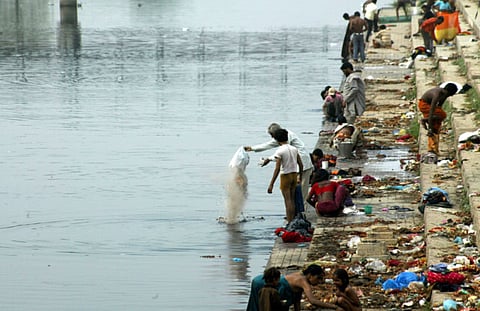
New Delhi
The Indian government has spent more than £600 million on schemes to clean up the revered Yamuna River, but it is now more toxic than at any other time in its long history, according to Indian MPs.
The Yamuna is worshipped along with the Ganges as one of Hinduism’s two great rivers.
For Hindus, its water once parted to allow Krishna and his father to flee from their would-be killers. It flows from the Yamunotri Glacier in the Himalayas down through Haryana to Delhi and on to Agra, past the Taj Mahal. But even before it reaches the Indian capital, most of its water is siphoned off into canals for irrigation and drinking water.
The growth in Delhi’s population to 22 million and the rise of illegal slums has led to a great increase in human waste and rubbish, much of which is dumped in the river.
More than 400 million gallons of sewage enters the river from Delhi’s drains each day without passing through the city’s treatment plants.
Human ashes, leather tanning chemicals, pesticides and painted religious idols all add to the toxicity. The Yamuna’s black, foaming water has been compared with the Thames during the Great Stink of 1858 and has long been an embarrassment to the Indian government.
Polluted and black
More than £600 million has been spent on sewage treatment plants, lavatories and waste pipes and plans have been drawn up to transform the river from a large latrine into an urban parkland with waterside paths and playgrounds. But the Indian parliament’s standing committee on urban development said in a report: “The Yamuna is dirtier than ever even after a huge amount of £620 million has already been spent to clean the river.
“The committee came to know that more than £145 million has been spent on cleaning the Yamuna river in the last two decades under the Yamuna Action Plan “By now, the Yamuna’s water — polluted and black — should have been cleaner. However, that has not happened.” The committee called on the government to speed up work on new “interceptor pipes” to take waste from the capital to sewage treatment plants before being returned to the Yamuna.
It also highlighted the drying up of tributaries and said less water should be diverted into canals to increase the flow — much of the solid waste that makes Delhi smell would be washed away if the river flowed faster.
Corruption
Manoj Mishra, a leading environmentalist and campaigner to save the river, said government officials had created the problem by allowing so much of the Yamuna’s water to be diverted into canals.
Haryana state took 60 per cent before it reached Delhi, the capital drew 10 per cent and Uttar Pradesh, India’s most populous state, took 20 per cent.
The remaining 10 per cent was “100 per cent sewage, waste water, an industrial cocktail in the city”, Mishra said.
“The hundreds of millions of pounds spent on cleaning the river have been lost to corruption and wasted on flawed treatment plants, awareness schemes, toilets and beautification — activities where the kickbacks are good.”
— The Telegraph Group Limited, London 2014


