New India rural employment law promises modern, digitally governed system
MGNREGA phased out as India launches Viksit Bharat employment mission
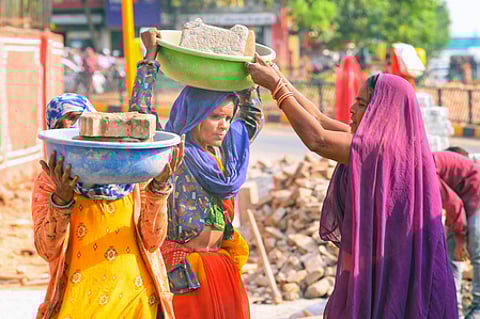
India on Monday unveiled a sweeping redesign of India’s rural employment architecture, replacing the Mahatma Gandhi National Rural Employment Guarantee Act (MGNREGA) with the Viksit Bharat – Guarantee for Rozgar and Ajeevika Mission (Gramin): VB-G RAM G Act, 2025. Officials described the new law as a modern, infrastructure-driven and digitally governed framework aligned with the government’s long-term development vision under Viksit Bharat 2047.
The new Act increases the statutory guarantee of employment from 100 to 125 days per rural household for adults willing to undertake unskilled manual work. It aims to simultaneously strengthen income security and create durable, productivity-enhancing assets through a nationally coordinated development strategy.
Under the revamped system, public works will be organised across four priority verticals — water security, core rural infrastructure, livelihood-related assets, and special projects designed to mitigate extreme weather events. All assets generated through the programme will be brought onto the Viksit Bharat National Rural Infrastructure Stack, enabling unified planning, monitoring and integration with geospatial platforms such as PM Gati-Shakti.
Officials said the new framework addresses long-standing structural weaknesses in MGNREGA and brings “a modern, infrastructure-focused, digitally governed system” that improves transparency and outcomes. Unlike the older model where works were scattered across categories without a national strategy, VB-G RAM G emphasises targeted infrastructure creation supporting agriculture, livelihoods and climate resilience.
Viksit Bharat – G RAM G Act, 2025: Highlights
Replaces the MGNREGA after nearly 20 years.
Guarantees 125 days of wage employment per rural household (up from 100).
Focus on infrastructure creation across four verticals:
Water security
Core rural infrastructure
Livelihood-related infrastructure
Climate-resilient works
Assets to be integrated into the National Rural Infrastructure Stack.
Mandatory Viksit Gram Panchayat Plans aligned with national digital platforms.
Stronger oversight: AI-based fraud detection, GPS monitoring, real-time dashboards.
Funding: 60:40 Centre-State; 90:10 for NE/Himalayan states.
Supports agriculture by allowing up to 60-day pause in works during sowing/harvest.
Aims to reduce misappropriation and improve transparency after Rs 193.67 crore losses in 2024-25.
Designed for the government’s long-term vision of Viksit Bharat 2047.
The Act also mandates Viksit Gram Panchayat Plans — village-level plans integrated with national digital systems — to ensure better local implementation and coordination.
Water, livelihoods and climate resilience
The government said the reforms will have broad impact across the rural economy. Water-related works, prioritised under the new law, are expected to strengthen irrigation and groundwater recharge, building on initiatives such as Mission Amrit Sarovar, which has created or rejuvenated more than 68,000 water bodies.
Core infrastructure such as roads, storage facilities and market-linked assets is expected to improve connectivity and income diversification. Climate-resilient works — including flood drainage and soil conservation — are aimed at protecting rural livelihoods during extreme weather conditions.
With the increase to 125 guaranteed days of work, officials said rural households will see higher incomes, boosting village-level consumption and reducing migration. Digital attendance, electronic wage payments and data-driven planning will also formalise and streamline the system.
Labour and farm sector implications
The Act includes provisions to support the agricultural sector. States may notify up to 60 days during peak sowing and harvesting periods when public works can be paused to ensure labour availability. Officials said the step is intended to stabilise production costs and prevent wage distortions, while allowing workers to shift to higher-paying seasonal farm work.
The government said labourers stand to benefit through higher earning potential and more predictable access to work. Biometric and Aadhaar-based verification for wage payments — already near 100 per cent in 2024-25 — will continue. Unemployment allowance remains mandatory if work is unavailable.
Why MGNREGA is being replaced
Explaining the rationale for overhauling MGNREGA, officials pointed to significant changes in rural India since the scheme’s launch in 2005. Poverty has dropped sharply — from 25.7 per cent in 2011-12 to 4.86 per cent in 2023-24 — alongside rising consumption, improved financial access and diversified livelihoods.
They argued that MGNREGA’s open-ended, demand-based model had become misaligned with present rural realities. The new Act shifts to a normative funding model, similar to other centrally supported schemes, while retaining the legal guarantee of employment. Officials said improved forecasting, mandatory unemployment allowance and shared Centre-State responsibility will ensure the 125-day guarantee remains intact.
They also noted persistent issues under MGNREGA, including non-existent works, machine usage in labour-intensive projects, misuse of funds, irregular attendance, and widespread misappropriation. In 2024-25 alone, states reported misappropriation worth Rs 193.67 crore.
Technology and oversight
To address these gaps, the VB-G RAM G Act incorporates AI-based fraud detection, real-time dashboards, GPS and mobile-based monitoring, weekly public disclosures and twice-yearly social audits for every Gram Panchayat. Oversight will be strengthened through central and state steering committees.
The programme also transitions from a central sector scheme to a centrally sponsored model with a 60:40 Centre-State funding ratio, 90:10 for North-Eastern and Himalayan states, and full central funding for Union Territories without legislatures.
Officials said the redesign balances the interests of farmers, labourers and states, framing rural employment as a driver of long-term economic transformation as India advances toward the goals of Viksit Bharat 2047.
with inputs from ANI


