India nuclear breakthrough as fast breeder reactor hits criticality: Why does it matter
Kalpakkam milestone boosts fuel self-reliance and advances thorium-based energy strategy
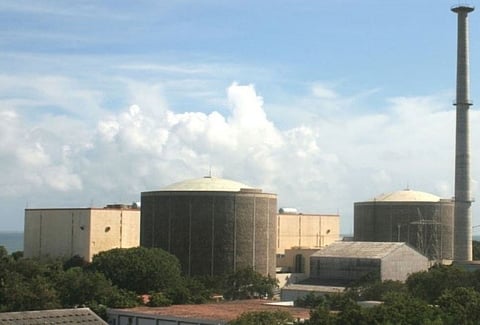
Dubai: India has taken a significant step towards long-term energy security after its most advanced nuclear reactor achieved a key milestone, marking progress in a decades-old plan to produce its own nuclear fuel.
The Prototype Fast Breeder Reactor (PFBR) at Kalpakkam in Tamil Nadu has attained “criticality” — the stage at which a nuclear reactor begins a self-sustaining chain reaction, a crucial step before it can generate electricity.
Prime Minister Narendra Modi described the achievement as a “defining step” in India’s civil nuclear journey, saying it advances the second stage of a three-part programme designed to unlock the country’s vast thorium reserves.
The milestone is particularly significant because India has limited uranium resources but one of the world’s largest deposits of thorium — a potential long-term fuel that could power the country for centuries if successfully harnessed, according to Indian media reports.
At the centre of that strategy is the PFBR, a reactor designed not just to generate electricity but to produce more nuclear fuel than it consumes — a capability that sets it apart from conventional reactors and underpins India’s ambition to build a self-sustaining nuclear fuel cycle.
The project has been years in the making. Construction began in 2004 and has faced multiple technical and regulatory delays before reaching this stage, reflecting the complexity of developing advanced nuclear technology indigenously.
The breakthrough comes at a time of global energy uncertainty, with geopolitical tensions and supply disruptions underscoring the importance of reliable domestic energy sources, NDTV said.
But what exactly has India achieved — and why does it matter?
What is “criticality”?
Criticality is the precise state in which a nuclear chain reaction becomes self-sustaining.
In simple terms, each atom that splits releases neutrons — and exactly enough of those neutrons go on to split other atoms, keeping the reaction steady.
Not increasing. Not dying out. Just stable.
This is the essential first step before electricity can be generated. Without criticality, a reactor cannot function.
How this reactor is different
Uses liquid sodium, not water
Runs on recycled nuclear fuel (MOX)
Produces more fuel than it consumes
Designed for thorium transition
What is the Kalpakkam PFBR?
The PFBR is a 500 MWe fast breeder reactor, designed to both generate power and produce more fuel than it consumes — something conventional reactors cannot do.
Unlike standard reactors that use water, the PFBR uses liquid sodium as a coolant. This allows neutrons to remain “fast”, which is critical for breeding new fuel.
It runs on uranium-plutonium mixed oxide (MOX) fuel, made partly from recycled nuclear material.
Surrounding the core is a blanket of uranium-238. When hit by high-energy neutrons, this converts into plutonium — effectively creating new fuel.
That is the defining feature of a breeder reactor.
Why is this important for India?
India has limited uranium but one of the world’s largest thorium reserves.
To solve this, physicist Homi Bhabha designed a three-stage nuclear programme:
Stage 1: Use uranium to generate power and produce plutonium
Stage 2: Use plutonium in breeder reactors like PFBR
Stage 3: Use thorium to generate long-term energy
The PFBR is the critical bridge between stages two and three.
Why thorium matters
India holds roughly a quarter of the world’s thorium reserves, mostly in coastal sands.
Thorium itself cannot directly fuel a reactor. But inside a breeder reactor, it can be converted into uranium-233 — a usable nuclear fuel.
This process could allow India to generate large-scale, long-term energy domestically, reducing dependence on imports.
What happens next?
Reaching criticality is not the end — it is the beginning.
The reactor will now undergo low-power testing and safety checks before being connected to the grid.
Once operational, India will become only the second country after Russia to run a commercial fast breeder reactor.
More such reactors are planned, forming the backbone of India’s long-term nuclear energy strategy.
Why it matters
This is more than a technical milestone.
It marks progress in a decades-long plan to achieve energy security using domestic resources — a vision first outlined in the 1950s.
A self-sustaining reactor today could pave the way for a thorium-powered energy future tomorrow.


