India: Jaishankar defends Russian oil purchases, challenges Europe on arms exports
Foreign minister says energy decisions were driven by cost and availability
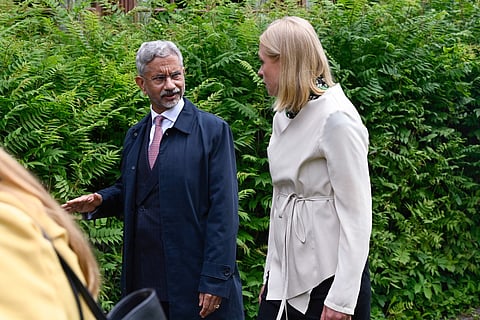
India’s External Affairs Minister S. Jaishankar has strongly defended New Delhi’s decision to increase imports of Russian crude oil after the outbreak of the Ukraine war, arguing that the move was driven by energy security needs and helped stabilise global markets during a period of severe disruption.
Speaking at the Kultaranta Talks in Finland on Thursday, Jaishankar rejected suggestions that India had been overly sympathetic to Moscow and said the country’s energy purchases were guided by cost, availability and national interest.
“I buy oil based on cost and availability,” Jaishankar said during a panel discussion on emerging powers and global geopolitics.
His remarks came in response to questions about India’s position on the Russia-Ukraine conflict and criticism from some Western countries over its continued purchases of Russian crude following sanctions imposed on Moscow.
Why India turned to Russian oil
Jaishankar said India’s energy choices must be viewed in the context of the market upheaval that followed the start of the war in 2022.
According to the minister, European countries moved aggressively to secure supplies from the Middle East after reducing their reliance on Russian energy, leaving India to seek alternative sources.
“At that point in time, much of the oil available in the market was Russian because Europeans were essentially buying oil from the Middle East, which was our traditional supplier,” he said.
“So circumstances pushed us in a certain direction.”
The minister added that the United States itself had recognised the importance of India’s purchases at the time and had encouraged New Delhi to continue buying Russian crude to prevent a major shock to global energy markets.
“At that time, the US specifically asked India to buy Russian oil to stabilise the oil market,” he said.
India subsequently became one of the largest buyers of discounted Russian crude, a move that helped shield domestic consumers from surging energy prices while maintaining fuel supplies for one of the world’s fastest-growing economies.
Challenge to Europe
Jaishankar also pushed back against what he described as selective criticism from Europe, arguing that Western countries had overlooked their own actions while questioning India’s policies.
Drawing attention to India’s security concerns, he noted that European-made weapons had been supplied to countries that have used them against India.
“No European country has been attacked with Indian weapons. I wish I could say that for European weapons vis-a-vis India,” he said.
When asked to elaborate, Jaishankar was more direct.
“Europe sells weapons which are used to attack India. Not just now but for many years. We Indians have never done anything to endanger Europe. I think that’s a reasonable point.”
‘Don’t pretend this is about principles’
The minister also questioned what he described as shifting Western positions on Russian energy.
He noted that while some countries criticised India’s purchases of Russian crude, the same governments had previously encouraged those imports to help keep global markets stable.
“Let’s not pretend that this is about some great principles,” Jaishankar said. “I don’t think hypocrisy is appropriate here.”
He pointed to changing US policies over recent years, arguing that governments had adopted different approaches as circumstances evolved.
Energy security remains the priority
India has consistently maintained that its energy procurement decisions are based on affordability, availability and national welfare rather than geopolitical alignment.
New Delhi has also continued to call for dialogue and diplomacy to resolve the Ukraine conflict while resisting pressure to join Western sanctions on Moscow.
Jaishankar said India’s energy basket remains diversified, noting that Russia is a major supplier of crude oil while the United States is the country’s largest source of natural gas.
The comments are the latest indication that India intends to continue pursuing an independent foreign policy, balancing relationships with Russia, the United States and Europe while prioritising its own economic and security interests.
- With inputs from IANS, ANI


