India is preparing to launch its delayed census next year - here's why it matters
First census in 16 years will be conducted digitally and include questions about caste
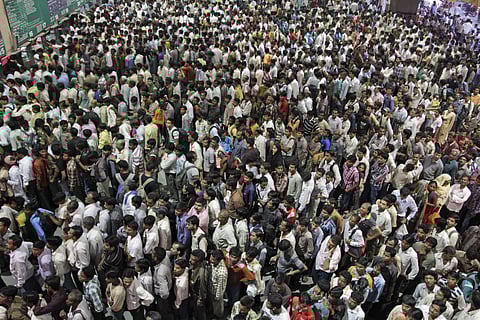
The Home Ministry announced plans to conduct a two-stage count ending March 1, 2027 in a statement Wednesday night.
Also Read: Does India need a caste census?
India’s last official census in 2011 counted 1.21 billion people. The country’s population is now estimated to be well over 1.4 billion, making it the world’s most populous country, according to the UN’s Department of Economic and Social Affairs.
The once-in-a-decade population survey was originally due in 2021 but was delayed by the COVID-19 pandemic and logistical hurdles.
Census data for Ladakh and snowed-in areas of Jammu and Kashmir, Himachal Pradesh and Uttarakhand will come out on October 1, 2026, the statement said.
India has no official data on the number of people belonging to a particular caste. In the absence of figures on the socio-economic status of individuals in each caste, multiple states governed by Prime Minister Narendra Modi’s opposition have conducted their own surveys in an attempt to illustrate the wide disparities that exist in Indian society.
Some politicians argue that an official census count would allow the government to redistribute resources more effectively and tailor affirmative action policies as needed.
Here’s a look at what goes into India’s census and why it matters.
The census shapes welfare policies and representation
The official count of the country’s people is used to allocate many of India’s welfare programmes and other policies.
It could also pave the way for redrawing the political landscape of India as seats are added to the lower house of Parliament and state legislatures to represent a larger population.
Under the 2023 Women’s Reservation Bill, a third of those seats will be set aside for women.
A massive count
The Indian census is said to be the largest peacetime mobilisation in the world.
Almost 2.7 million people were hired to implement the 2011 census, visiting more than 240 million households.
The Home Ministry said the new census will be carried out in two phases and conclude by March 1, 2027. The government will spell out the details and schedule of the exercise later this month.
They’ll collect information about houses and their occupants, such as sex, age, marital status, religion, mother tongue, language, literacy and economic activity — as well as caste.
New questions about caste are controversial
The next census will be the first to consider the caste status of most Indians.
Caste is an ancient system of social hierarchy in India and is critical to Indian life and politics. There are hundreds of caste groups based on occupation and economic status across India, particularly among Hindus, but the country has limited, or outdated data on how many people belong to them.
Since independent India’s first census in 1951, it counted only Dalits and Adivasis, members of marginalized groups known as scheduled castes and tribes.
But India also has quotas that reserve government jobs, college admissions and elected offices for a swathe of lower and intermediate castes that are recognized as Other Backward Classes. India’s current policy caps quotas at 50%, with 27% reserved for OBCs. A count of these groups will likely lead to calls to raise the quotas.
Successive Indian governments have resisted updating caste data, arguing that it could lead to social unrest.
The announcement on the census comes months ahead of a crucial election in India’s poorest state of Bihar, where caste is a key issue. Modi’s party runs a coalition government in Bihar.


