Giving your baby the gift of health for the future
More parents choosing to bank their infant's stem cells
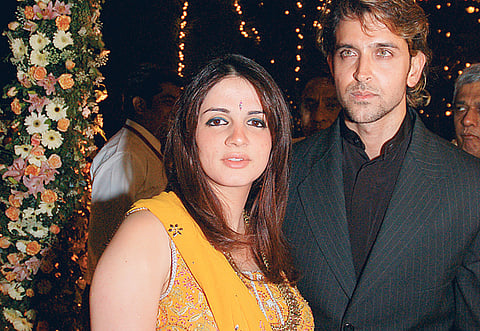
New Delhi: Considering it the best gift to their children, parents are queuing up to preserve their baby's umbilical cord stem cells.
The popularity of such preservation is driven by the increasing awareness in the country about its potential to ensure the lifelong health of children.
The move has gained momentum and awareness after some Bollywood stars took the steps. When Sanjay Dutt signed up for it, he joined Kajol-Ajay Devgun, Hrithik Roshan, Raveena Tandon and Madhavan. This acknowledgement by the film industry has helped doctors educate the public on the benefits of stem cell banking.
According to researchers, blood and tissue from a baby's umbilical cord are a rich source of stem cells, which have the potential to treat a range of serious ailments through the innovative concept of stem cell therapy. These include thalassaemia and leukaemia.
Safe procedure
Expectant parents are provided with a kit, which they give to their doctor before the birth. The procedure is simple and safe.
Believed to be a ‘once in a lifetime opportunity', the child's blood and cord tissue, which are usually discarded, are collected immediately after birth. The sample is tested and processed and the stem cells are preserved for potential future medical use.
The cells last for 21 years and if they are needed, the family can approach the bank and retrieve the preserved stem cells. It proves a great asset and provides a secure future to the child and also the siblings. Currently, around 100,000 people have banked stem cells in India.
Arun Wazir, a banker, said: "I learnt about stem cell banking from a friend and searched the internet. It amazed me when I read about many successful stem cell treatments across the world. But for satisfaction, I contacted people who had gone in for such a therapy."
Once convinced, Wazir made the decision and registered himself and his wife six months before their son was born. "We are in favour of one child and would like to give him maximum security," he said.
One of the first successful cases that made history was of Senthil Kumar and Sarojini, a poor couple, from Coimbatore. Their 18-month-old daughter, Thamirabharani, was diagnosed with thalassaemia. The blood disorder left the infant, born in 2000, at the mercy of blood transfusions.
Fearing a repeat of the disorder, Sarojini aborted her next two pregnancies. Kumar, a carpenter, began to think Thamirabharani would neither have a good life nor a sibling. But when Sarojini became pregnant for the third time, her tests showed the fetus had healthy blood cells. A doctor advised her to have the baby, as the cord blood from a healthy baby could be used for their daughter's treatment.
LifeCell International, which banks cord blood cells, offered to store the stem cells for the couple for free. And in 2009, a group of doctors and specialists in Chennai registered the first successful treatment of thalassaemia. Stem cells extracted from Thamirabharani's brother's cord blood during birth were transplanted in Thamirabharani and she has been leading a normal life.
Dr Rajesh Malhotra said: "In the last few years there's been a surge in cord blood-banking...there's a sea [of] change in the attitude of urbanites. And they are willing to make a health investment for their children."
Hope: dental banking
For those who have missed an opportunity with their first child can still have hope. Dental stem cell banking is another option.
Fast emerging as an alternative to umbilical cord stem cells, a child's milk teeth (which are going to go anyway) can be used. The advantage is that if stem cells extracted from one tooth are rejected, one can always turn to a different tooth for an alternative.
The cost of preserving stem cells is between Rs70, 000 (Dh5,806) to Rs100,000.
The medical community estimates that while earlier the number of samples collected in a year used to be about 500-700, now each blood bank claims to collect around 6,000-8,000 samples. The number of stem cell banks across the country is now around 10.

