COVID-19: India is nowhere near ‘herd immunity’ yet, says ICMR director
Dr Balram Bhargava feels rollout of vaccination led to complacency among public in India



Kolkata: As India continues to grapple with the ‘second wave’ of coronavirus infections, statistics emerging out of the country continue to keep the medical fraternity and the common man across the globe on tenterhooks, even as the establishment in the second-most populous nation in the world tries to look for ways and means to contain this raging scourge. To give just one example of how severe this ‘second wave’ has been in India’s case, just consider this one bit of statistics: While it took the country roughly 140 days to reach its 150 millionth case from the first reported positive case in the ‘first wave’, in case of the ‘second wave’, India reached its first 150 millionth case in just 43 days!
To discuss the crisis threadbare, Gulf News caught up with Dr Professor Balram Bhargava, Secretary, Department of Health Research (Ministry of Health and Family Welfare, Government of India) and Director-General of Indian Council of Medical Research (ICMR), for an exclusive chat. Following are excerpts ...
GULF NEWS: How important is it to have a nationwide lockdown at this stage and ideally for how long should it be?
DR BALRAM BHARGAVA: National lockdown is not a solution as the trend is varying in different districts. It will be better if the state governments apply the curbs according to the situation in their respective states and based on the districts-specific positivity rate.
Lockdown restrictions should remain in place in all districts where the rate of infection is above 10 per cent of those tested. Currently, three-fourths of India’s 718 districts have what is known as a test-positivity rate above 10 per cent, including major cities such as New Delhi, Mumbai and the technology hub of Bengaluru.
Several states have introduced varying levels of curbs on economic activities and public movement to stop the spread of the virus, which are mostly being reviewed and extended on a weekly or fortnightly basis. The high positivity districts should remain (shut). If they come to 5 per cent from 10 per cent (positivity rate) then we can consider opening them, but that has to actually happen. And that won’t happen in six to eight weeks. In Delhi, where the positivity rate had reached around 35 per cent at one point, it has now fallen to less than 10 per cent because of the lockdown.
Is it already a bit late to declare a nationwide lockdown?
The National Task Force on COVID-19 had made the recommendation to the government to lock down certain areas with a 10 per cent positivity rate or higher. On April 26, that is more than 10 days after the task force meeting, India’s Home Ministry finally wrote to the states, asking them to implement strict measures for “large containment areas” in the hard-hit districts.
Are there any signs of herd immunity in India now?
Answer: Cannot really say that right now because for herd immunity to set in, 80 per cent of the population should have antibodies — either through vaccination or through exposure to the virus. We are nowhere near that figure at this point in time.
How severe are the signs of a community spread in India?
There are some places or districts where clusters of cases are happening and those can be minimised through strict restrictions and avoiding social gatherings. However, we cannot resort to any gross generalisation in such a vast and geographically diverse country like India.
Where do you think India went wrong in preempting the ‘second wave’? What could have been done better to prevent the severity of this crisis?
Considering the surge in the number of cases in the other parts of the world, such as the United Kingdom, United States, Brazil etc, it was expected that India would also see a ‘second wave’, but no one could estimate that the surge in India’s case will be of this magnitude and impact. In fact, in January-February 2021, the number of new cases in India had come down significantly and with it, the mortality rate was also drastically reduced.
It was around that time that the rollout of vaccines happened in India.
Now, as the vaccines were made available to the public, it led many people to believe that the epidemic was going to be over soon. It gave rise to a feeling of complacency among a large section of the population and many thought that they could again move around freely [without adhering to the protocol]. Moreover, it was also an attempt to regain the momentum for all the stalled economic activities that the country had suffered because of the pandemic. In the meantime, spread of newer variants with a higher transmission rate added to increased number of cases within a very short time.
Could vaccination for the 18-44 age-group have started earlier?
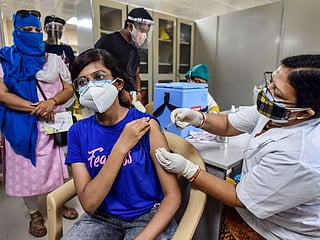
Nationwide Vaccination campaign was rolled out on January 16, 2021, for emergency use. Rationalising the vaccination drive was important, keeping India’s vast population in mind. In a huge country like India with a 1.3 billion population, it is a herculean task to vaccinate everyone within a short time. However, all attempts are being made so that all those who are eligible to get vaccinated receive the jab at the earliest. Vulnerable groups were prioritised and the first phase started with health-care professionals and frontline workers as they needed to be protected first for obvious reasons, followed by the 60-plus age-group due to their high vulnerability. And later, the drive was extended to the 45-plus age-group with comorbidities.
So the vaccination drive had to be conducted in a phased and calibrated manner, depending upon the availability of vaccines and other resources.


