‘I will return this year’: Sheikh Hasina vows comeback, says Bangladesh democracy under threat
Minorities are under attack and Awami League will rise again, she says
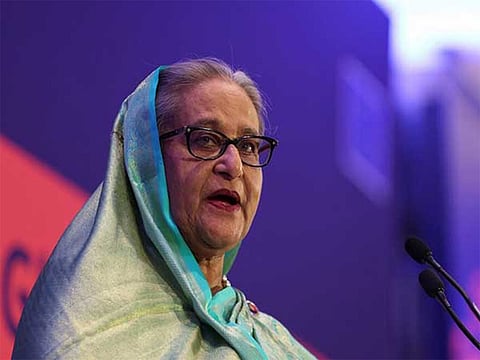
Dubai: Nearly two years after being forced into exile, former Bangladesh prime minister Sheikh Hasina says she is determined to return home this year, insisting her political struggle is about restoring democracy rather than reclaiming power.
In an interview with NDTV, Hasina said she was not intimidated by the death sentence hanging over her or the ban on her Awami League party, arguing that politically motivated legal action would not stop her return.
“My return is tied to the political rights of the people and the restoration of democracy,” she said, adding that she had survived repeated assassination attempts and decades of political turmoil.
Hasina maintained that the Awami League remained deeply rooted across Bangladesh despite the ban imposed by authorities.
Marking its 77th foundation anniversary last week, party supporters held events despite arrests and heavy security.
She dismissed suggestions that the party’s revival depended on the shortcomings of the current government, saying the Awami League had repeatedly overcome bans and political repression throughout its history.
The former premier launched a blistering attack on Bangladesh’s current leadership, accusing the interim administration led by Muhammad Yunus and the subsequent BNP-led government of dismantling democratic institutions, weakening the economy and allowing extremism to spread.
Hasina’s key claims
Calls legal cases against her politically motivated.
Insists Awami League remains a powerful political force despite the ban.
Accuses current government of undermining democracy and rule of law.
Claims attacks on minorities have increased since her removal.
Rejects reports of secret talks with BNP.
Says restoring democracy, not regaining power, is her primary goal.
She also alleged that minority communities were facing increasing insecurity, claiming attacks on Hindus, Buddhists, Christians and other religious groups had intensified since her removal from office.
According to Hasina, assaults on temples and places of worship, intimidation of minority leaders and violence against vulnerable communities represented a betrayal of the ideals on which Bangladesh was founded after the 1971 Liberation War.
Attacks on minorites
She argued that attacks on minorities were not merely assaults on specific communities but on Bangladesh’s independence and secular identity itself.
Hasina denied reports of secret negotiations with the BNP aimed at lifting the ban on the Awami League, saying constitutional rights and justice could not be secured through backchannel deals.
She called for the withdrawal of what she described as politically motivated cases against party leaders, restoration of political freedoms and an independent judicial process.
Reflecting on her exile in India, Hasina said being separated from Bangladesh remained deeply painful despite staying in touch with her family. She said she closely follows developments in the country every day and remains committed to rebuilding democracy.
“My struggle has not stopped,” she said, expressing confidence that the Awami League would eventually return to power through public support.


