Former Norwegian premier stopped by new US entry controls
Kjell Magne Bondevik dismayed at being made to wait for a long time because he paid a visit to Iran
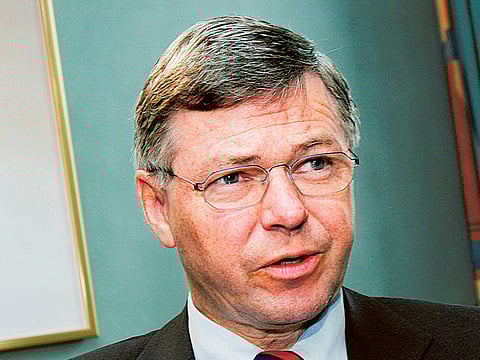
Oslo, Norway: During his two stints as prime minister of Norway, a steadfast US ally and a Nato member, Kjell Magne Bondevik met with Presidents Bill Clinton and George W. Bush.
A Lutheran minister, Bondevik travels frequently for his job at the Oslo Centre, which promotes peace, democracy and human rights, and he went to Washington this week for meetings associated with the National Prayer Breakfast, at which President Donald Trump spoke.
So Bondevik was startled Tuesday when federal agents pulled him aside at Washington Dulles International Airport and questioned him over a visit he paid to Iran. Photographs of his visa, which allowed him to enter Iran from December 2014 to January 2015, were widely circulated online.
“I was asked why I had stamps from Iran and what was the purpose of my visit to the United States,” Bondevik said in a phone interview late Friday, after returning to Oslo. “I explained to the officer who I was and that I had been to Iran for a conference on extremism.”
Norwegians do not ordinarily need a visa to enter the United States, and Bondevik carries a diplomatic passport that identifies him as a former prime minister of Norway. So he was surprised that the agents would not let him move on. Among the travellers he waited with were visitors from Iran and Somalia, two of the seven Muslim-majority countries that were on Trump’s travel ban.
Bondevik’s wait at the airport, which was first reported by the Washington-area news outlet WJLA, has gotten widespread attention in the wake of Trump’s travel policy.
It was actually Trump’s predecessor, Barack Obama, who signed a 2015 law imposing tighter visa restrictions on foreigners who have travelled to Iran, Iraq, Syria and Sudan within the past five years.
But the policy, which took effect in January 2016, includes exceptions for people who have visited those countries for business, government, humanitarian or journalistic reasons, so it is not clear why Bondevik was stopped.
Bondevik said he could understand the need for safety precautions, but he was dismayed at the length of his wait. He notified the Norwegian ambassador in Washington of his concerns.
“The explanation alone should be more than enough to let me pass,” he said. “Surely they can’t seriously believe that a former prime minister of Norway has sinister intentions” or is “planning to perform misdeeds in the US.”
A spokesman for the Norwegian Ministry of Foreign Affairs in Oslo confirmed that Bondevik holds a diplomatic passport and had been in touch with the ministry about this matter, but he declined to comment further on the incident.
Bondevik, in the interview, said he had travelled to the United States in January 2016, with the Iranian visa in his passport, without incident.
“I do not wish to dramatise this event, or cause unnecessary harm to relations between Norway and the US, but I did react to the manner in which this was conducted,” he said.
In an interview with Norwegian television, he urged the US government not to damage the image of the United States, and he described Trump’s travel ban as overly broad and frightening.
Norway, the home of the Nobel Peace Prize, has a long history of protecting refugees, and Trump’s 120-day ban on refugee admissions — and an indefinite ban on Syrian refugees — has been widely criticised in Norway.
“I am concerned about the signals from the Trump administration,” the Norwegian minister of foreign affairs, Borge Brende, told the newspaper VG this week. “Norway’s position is clear, refugees must be treated equal regardless of religion, nationality and the colour of their skin.”
In comments on the website of the newspaper VG, Norwegians expressed shock at the treatment of Bondevik. “How can it take an hour to ask some questions?” asked Morten Milsem.
Henning Kilseth said it was “totally ridiculous to be suspicious of a former Norwegian prime minister.”
Ole Edvard Antonsen noted Bondevik’s work as a Christian minister and asked whether the United States had become “a nation built on fear.”
Bondevik was prime minister from 1997 to 2000 and again from 2001 to 2005. Along with the conference associated with the National Prayer Breakfast, he was in Washington for other meetings. As a result of the questioning, he said, he ran late.


