Canada ex-central banker Mark Carney launches PM bid to replace Trudeau
Carney says he has experience to manage crisis and will propose big ideas for reform
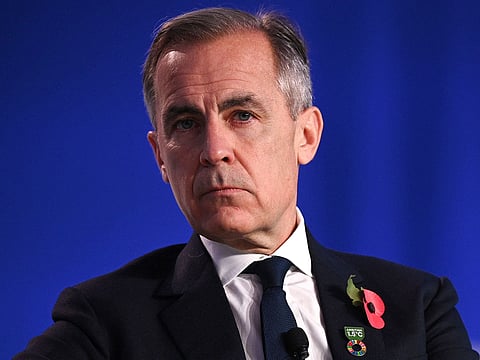
Former central banker Mark Carney kicked off his bid to replace Justin Trudeau as the head of Canada’s Liberal Party and the country’s prime minister, saying he has the experience to manage a crisis and to deal with Donald Trump’s protectionism.
He made the announcement at a small community centre in his childhood neighbourhood in Edmonton, the capital of the oil-rich, conservative province of Alberta. Carney, 59, said he’ll propose big ideas for economic reform - and he levelled some criticism at Trudeau’s government, arguing the government spends too much, invests too little and taxes the middle class too heavily.
“I am going to be completely focused on getting our economy back on track,” Carney said, highlighting his role as Bank of Canada governor during the global financial crisis and Bank of England governor through the UK’s divorce from the European Union.
Who is Mark Carney?
Born in the remote Northwest Territories, Mark Carney grew up in Alberta and was educated at Harvard and Oxford.
Spent time in the Canadian public service and more than a decade at Goldman Sachs Group Inc. in London, Tokyo, New York and Toronto, working as an analyst, then in sovereign risk, debt capital markets, corporate finance and investment banking.
In February 2008, at the age of 42, he became governor of the Bank of Canada. Within months, Lehman Brothers collapsed and the global financial system was in crisis. Carney had a seat at the table of key policymakers who helped steer the response.
Later served as chair of the Group of 20’s Financial Stability Board, which led to an even bigger stage.
In 2013, he became the first foreigner to become governor of the Bank of England - joining in time for the Brexit debate and leaving as Covid-19 began spreading globally.
Appointed to both central bank roles under Conservative administrations, Carney warned of the impacts of Brexit before the UK’s divisive referendum, and has sketched out a liberal worldview since leaving the BOE in 2020.
Hired by Trudeau in September as a special adviser to the Liberal Party on economic growth.
He’s special envoy on climate action and finance for the United Nations and is set to publish a book this year titled The Hinge: Time to Build an Even Better Canada.
Carney has never run for political office.
Leadership role
His entry into the leadership contest has the potential to upend Canada’s election this year. The Conservative Party, led by Pierre Poilievre, has built up a lead of more than 20 points over the Liberals in public opinion polls - a key reason the prime minister resigned earlier this month. Carney is the most recognisable person in the Liberal race who hasn’t been a part of Trudeau’s unpopular government.
The leadership contest comes as Trump threatens aggressive tariffs against Canada. “This is a very serious situation,” Carney told reporters of the possible trade war. “All of us need to stand up for Canada. We need to be united.”
About Trump, Carney said: “He’s a negotiator, he’s transactional.”
A period of high inflation, elevated interest rates and shrinking gross domestic product per capita has left many Canadians feeling poorer. Poilievre, who has seized on those economic concerns to build his political base, has attacked Carney as a supporter of a controversial carbon tax that Trudeau’s government brought in.
Poilievre has also sought to tie Carney to Trudeau, noting that the ex-banker gave the prime minister advice on economic issues. The Conservative chief posted a video Thursday morning calling Carney the “ultimate Liberal insider,” with clips showing Trudeau and former Finance Minister Chrystia Freeland describing their close links to Carney, and Carney expressing support for Trudeau.
‘Not the usual suspect’
Carney used his speech to fire back at Poilievre, suggesting the Conservative leader uses catchy slogans but lacks serious ideas and real-world experience. Poilievre has been a member of Canada’s Parliament since 2004, when he was 25 years old.
“I know I’m not the usual suspect when it comes to politics, but this is no time for politics as usual. No, it’s not the time for lifelong politicians such as Pierre Poilievre,” he said.
In a late night talk show appearance this week, Carney implied he would do things differently than Trudeau. He criticised the government’s lack of focus on some of the bigger challenges facing the country, and suggested he’d try to lighten the financial burden of climate measures on Canadian consumers.
Taxes are too high, Carney said, but he stopped short of making any detailed policy proposals in his speech.
In a leadership contest due to conclude March 9, Carney will be up against Freeland and other candidates. The winner will become prime minister but may face a confidence vote soon after Parliament returns on March 24, which would trigger a national election. The new leader could also choose to call the election before that happens.
Liberal lawmakers have started publicly lining up behind Carney or Freeland, who also hails from Alberta and appears to be his main competitor for the job.
George Chahal, a Liberal lawmaker from Calgary, said in a phone interview that Carney’s strong understanding of the economy “gives him the credentials and the experience to tackle the issues that Canadians are facing today, and the ones that are being proposed by President Trump on tariffs.”
Carney said he’s focusing on politics and has resigned all of his corporate roles, including as chair of Brookfield Asset Management Ltd. and Bloomberg Inc. He has also stepped aside as the United Nations special envoy on climate finance.
Before a globe-trotting career in finance, Carney grew up in Edmonton, where his family had moved from the remote Northwest Territories.


