‘You are not alone’: UAE Nepali community steps up relief efforts for disaster-hit Nepal
Community groups, volunteers, donors in UAE are making ways to support families affected
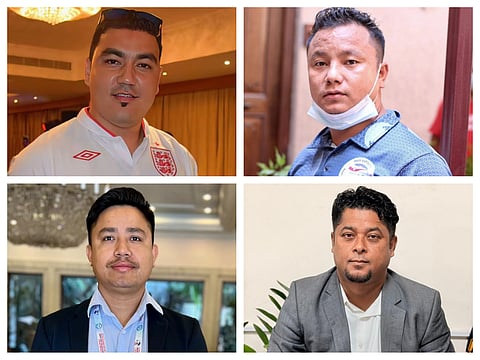
Dubai: As rescue teams continue searching through debris and isolated communities in flood-hit parts of Nepal, Nepali expatriates living and working in the UAE are turning their concern into action.
The August 26 disaster, which struck the Bhote Koshi River and affected areas including Rasuwa, Nuwakot and communities along the Trishuli, has caused widespread destruction and left thousands dead or missing. Rescue and relief operations have remained under way.
For the UAE’s Nepali community, the common message is that affected Nepalis should not feel they have been forgotten.
Get updated faster and for FREE: Download the Gulf News app now - simply click here.
Relief effort
The Nepal Association Non-Resident Nepali Association National Coordination Council (NRNA NCC) UAE has transferred a total of NPR 1,135,249 to the official bank account of the NRNA International Coordination Council for rescue, relief, and rehabilitation assistance.
Bhim Malla Thakuri, president of Nepal Association NRNA NCC UAE, has noted that the campaign has brought together voluntary contributions from office bearers, businesspeople, NRNA activists, well-wishers, and members of the Nepali community in the UAE.
“At this difficult time of national crisis, your generosity, compassion, solidarity, and commitment to helping fellow Nepalis have provided great hope and encouragement to the families affected by the floods and landslides,” remarked Thakuri.
Volunteers on the ground
Getting help to the right families has been another challenge. Prem Bahadur Shahi, youth coordinator at NRNA NCC UAE, has bared that his focus has been on staying connected with affected families and understanding what assistance they require.
“We just need some basic details about the family, their location, the damage, and what kind of help they need,” Shahi told Gulf News.
Once information has been received, it is checked with people on the ground before assistance is arranged.
“Some of our leaders have already visited affected areas and provided direct help. We will continue working with local people and volunteers to reach families in remote areas.”
Shahi has urged families to stay strong. “We may be far from Nepal, but our hearts and support are always with you.”
Making sure aid reaches those who need it most
For community organisations involved in relief work, one of the biggest concerns has been ensuring that assistance is based on need.
Jivan Singh Thakuri, president of Gulmi Welfare Society UAE, has stressed that priority should be given to families whose homes have been destroyed or seriously damaged, people who have been displaced, and vulnerable groups such as children, elderly, and persons with disabilities.
His organisation, a community and non-profit group formed by expats from Nepal’s Gulmi district residing in the UAE, has been among those supporting the wider relief effort.
The group has donated NPR 20,800 and mentioned that affected families can approach local ward offices, local government authorities, or relief teams working in disaster-hit areas.
Basic details, including the affected person’s name, address, contact number, family size, and the nature of the damage, can help relief teams establish what support is required. Where available, identification documents, ward recommendations, and photographs of damage can assist with verification.
“If people have lost their documents in the disaster, genuine victims should not be denied urgent assistance simply because they cannot provide documentation,” exclaimed Thakuri.
Verification before distribution
According to Thakuri, the relief process should begin with information gathered directly from affected families and then verified through local representatives, ward authorities, volunteers, or field teams.
Families can then be prioritised based on the severity of the damage and urgency of their needs. Relief may include food, clothing, medical supplies, and other essentials.
“We maintain proper records of the assistance provided to ensure transparency and avoid duplication,” shared Thakuri.
For remote communities, the group has maintained close cooperation between local authorities, community representatives, volunteers, and field teams.
“Our priority is to distribute assistance based on actual need and the level of damage, not on influence or personal connections.”
Official relief channels
For his part, businessman and donor Bishnu Prasad Pudasaini has highlighted that the most effective response is one that works through established government mechanisms.
Pudasaini, founder and CEO of Hydrojet Group of Companies, has urged affected families to report their losses to local government authorities, ward offices, district administration offices, or relevant disaster-management authorities.
“The first priority is to identify the most urgent needs and the extent of damage. This assessment is important because relief and rehabilitation need to be based on actual needs on the ground,” explained Pudasaini.
Moreover, he has pointed to Nepal’s one-door system for relief distribution, designed to reduce duplication and allow assistance to be coordinated through authorised channels.
Reaching isolated communities
As the immediate rescue operation continues, another challenge is how to make sure assistance reaches communities that are hardest to reach.
“Relief should be guided by verified needs rather than simply by accessibility. The government has established mechanisms involving local and district authorities, security agencies, and disaster-management bodies to coordinate rescue and relief operations,” stated Pudasaini.
He has emphasised that his role as an individual donor was to support the official government relief mechanism and allow authorised agencies to identify the communities most in need.
“My contribution of NPR 5,151,111 is intended to support the national relief effort at a time when affected families urgently need assistance.”
The scale of the disaster means that the UAE community’s support has been unlikely to end with the first wave of emergency assistance. While rescue operations have offered moments of hope, thousands remain missing and families face the loss of homes, belongings, and livelihoods.
‘We remain connected’
Meanwhile, the response from the UAE has carried an emotional significance for the Nepali community. Thakuri has underscored that the solidarity shown by the UAE, Nepalis living in the country, and other supporters demonstrated that distance had not weakened the community's connection with Nepal.
Similarly, Pudasaini has encouraged those able to help to contribute through official and transparent channels, where resources can be coordinated and directed towards genuine needs.
For Shahi, the message to families living through the aftermath of the disaster is that they are not facing the crisis alone.
As Nepal begins the difficult transition from rescue to relief and, eventually, reconstruction, the UAE's Nepali community is making clear that its support has been intended to remain with those affected for the road ahead.