Al Ain's Jebel Hafeet: UAE’s iconic mountain of peace, adventure, and heritage
A haven for peace, family memories, and rare wildlife.
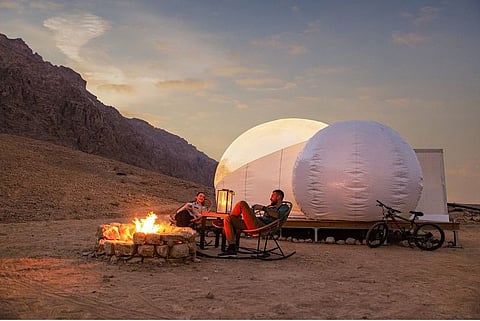
Abu Dhabi: The temperature drops first. Somewhere along the climb, the air through the window turns cooler, the city thins out behind you, and the noise goes with it. By the time the curves tighten, you’ve stopped thinking about the drive and started thinking about the view.
That is the Jebel Hafeet in Al Ain experience. The road runs 11,7 kilometres and winds through 60 curves, each one opening a wider view over Al Ain and the desert beyond. For many residents it is less a tourist attraction than a familiar escape, somewhere to go with friends and family, or alone, to slow down.
For Fatima Zahrah Seedat, 23, the drive is half the point.
“There is something about the drive up the mountain, feeling the temperature drop as you drive higher,” she said.
She describes leaving the city’s noise behind and arriving somewhere that offers “a rare kind of peace.” At the top, the reward is “the most breathtaking view of the whole city, especially at night.”
Childhood memories
Rising to 1,240 metres, Jebel Hafeet is Abu Dhabi’s highest peak and the second highest in the UAE after Jebel Jais. It sits on the emirate’s southern edge, close to the border with Oman and the green city of Al Ain. From Abu Dhabi, the route runs along the E22.
For Mohamad Walid Haidar, 20, the mountain has always been a destination.
Growing up in Sharjah, he would travel to Al Ain every now and then to meet family friends there. “Jebel Hafeet has always been a go-to spot for family trips,” he said. It is also where he stayed up all night to watch his first sunrise, a memory he counts among his best from childhood.
Things have changed since then. Now that he drives, Walid has been up the mountain “more times than I can count,” and it is still his favourite place to hang out with friends in Al Ain.
He no longer waits in the back seat. He is the one at the wheel.
Part of a routine
Fatima’s family had a routine. Because it was winter, they packed camping chairs, karak, a football, games and blankets, drove to the top and settled in. They talked, played and looked out over the lights below.
What stayed with her was not only the scenery, though. “I remember enjoying being in their presence at that moment in time,” she said. The mountain was the setting, but the memory is about the people.
Different hours up there bring out different feelings, she said. Hers is the golden hour: “Personally nothing beats a good sunset drive up the mountain.” It is easy to see why. As the light fades, the view over Al Ain turns to a carpet of lights, and the air cools further.
The Bronze Age in the UAE
The pull of the mountain is far older than the asphalt. Archaeologists have found more than 500 tombs, around 5,000 years old, which mark the start of the Bronze Age in the UAE.
People have been drawn to this ridge for a very long time, and the rituals of today, however modern with their karak and camping chairs, continue a much older habit of gathering here.
Al Ain itself rewards a longer stay. The city’s UNESCO-listed oasis is still watered by traditional falaj irrigation systems, which have nourished its date palms for centuries. Visitors who want to be more active can hike or mountain bike around the desert park, and tourism operators describe Bedouin-style camping under Al Ain’s night skies.
Wildlife in the mountain
The mountain is also home to some remarkable wildlife. Jabal Hafeet National Park shelters some of the UAE’s rarest plants, including the Dwarf Palm, found nowhere else in Abu Dhabi or the wider Arabian Peninsula.
Its animals include the Arabian Tahr, Blandford’s Fox and Brandt’s Hedgehog, along with the UAE’s only concentration of the globally threatened Egyptian Vulture. The Arabian Caracal has also been sighted here for the first time in 35 years, according to the Environment Agency – Abu Dhabi (EAD).

