Chrome finally gets vertical tabs — and it could change how you browse forever
Google shifts tabs to a sidebar, tackling tab overload and modern workflows
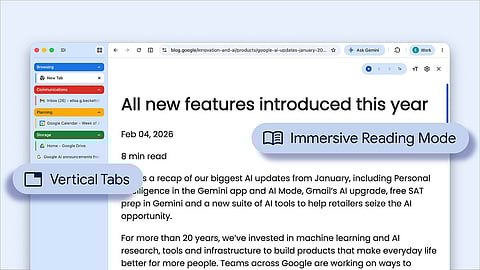
Google has begun rolling out a long-awaited feature in its Chrome browser that allows users to switch from the traditional horizontal tab layout to a vertical sidebar, marking a notable update to one of the browser’s core interface elements.
The feature, which has been under testing for several months, enables tabs to be displayed along the side of the browser window rather than across the top. The change is designed to improve navigation and organisation, particularly for users who manage large numbers of open tabs.
According to reports by TechCrunch, the vertical tabs feature is now gradually becoming available beyond experimental versions of Chrome, where it had previously been limited to developer and beta builds.
In the new layout, tabs are presented in a scrollable list on the left side of the screen, allowing users to view full page titles instead of truncated labels. The sidebar can also be collapsed, offering flexibility for those who prefer a more compact interface.
The introduction of vertical tabs reflects a broader shift in how web browsers are adapting to modern usage patterns. As users increasingly rely on browsers for multitasking and productivity, the number of simultaneously open tabs has grown significantly, often making navigation more difficult within the traditional horizontal format.
Industry observers note that several competing browsers, including Microsoft Edge and Mozilla Firefox, have already introduced similar vertical tab options in recent years. Google’s adoption of the feature brings Chrome in line with these developments, while also integrating it into its widely used platform.
Get updated faster and for FREE: Download the Gulf News app now - simply click here.
The update is part of a wider set of changes aimed at enhancing Chrome’s functionality as a productivity tool. Recent additions include split-screen capabilities and improved document handling, as well as deeper integration of artificial intelligence features through Google’s Gemini platform.
The decision to introduce vertical tabs also represents a departure from Chrome’s long-established interface design. Since its launch, the browser has maintained a consistent layout with tabs positioned at the top of the window, a format that has remained largely unchanged for more than a decade.
While the new feature remains optional, its gradual rollout suggests that Google is continuing to refine how users interact with the browser, particularly as workflows become more complex and screen sizes continue to expand.
For users, the change offers an alternative way to manage browsing activity, with a focus on improving visibility and organisation without altering the underlying functionality of the browser.
As the update becomes more widely available, it is expected to provide greater flexibility for users seeking more efficient ways to navigate an increasingly complex online environment.


