Flip phones face decline: Will Samsung and Apple’s foldables change the game for good?
A report suggests flip phones market share fell by 65 per cent
Are you a fold or a flip person?
Well decide soon, the second option might...be seeing a slight decline.
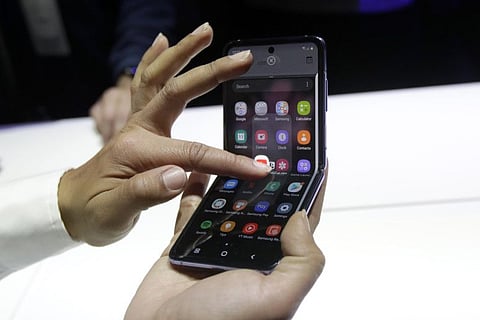
When foldable phones first hit the scene around 2020, it was the clamshell designs, the pocket-friendly 'flip' phones. There was much nostalgia around the Motor Razr and the Galaxy Z Flip phones seemed to command a certain respect, as they folded down to a fraction of a traditional smartphone’s size while still packing flagship specs. Their charm and lower price were clearly a win, and that's what made them the entry point for so many into the world of foldables.
Well, the story is changing now. Market data now points to a pivot. Research from Counterpoint shows that book-style foldables, the larger, tablet-like devices that open horizontally, are about to overtake their clamshell siblings.
In 2025, book-style devices accounted for 52 per cent of the foldable market; by the end of 2026, projections suggest that share could jump to 65 per cent. Revenue numbers tell the same story: Mordor Intelligence reports that book-style models captured 62 per cent of the segment in 2024, highlighting their premium positioning.
So, what's driving this shift? It's utility. No doubt, flip phones are portable and offer a sense of novelty. Yet, on the other hand, book-style foldables double as full-sized tablets. You can multi-task, with gaming, streaming and essentially, productivity is just a lot of fun on a single device. The larger displays finally justify their higher price tags, turning foldables from 'fun gadgets' into serious tools for everyday life, according to the analysis.
Apple enters the Fold
Hello, Apple. It's difficult to not be swept away in all the buzz, but Apple isn't letting you dig your feet into the ground.
Rumours of an 'iPhone Fold' suggest a wider, book-style device that could rival Samsung’s Galaxy Z Fold line. With all the leaks and conversations about the cameras, Apple’s ecosystem expertise and developer engagement could push the category into a new era. So, you'll get more apps and features, that are optimised for larger foldable displays.
Leaks suggest Apple’s foldable iPhone could feature a four-camera system, split across its inner, outer, and rear surfaces. The outer cover display is expected to house a hole-punch front camera, while the inner folding display may include an under-display camera, a first for an iPhone.
Notably, the under-display camera is not expected to support Face ID, with Apple reportedly opting for Touch ID instead. What stands out is the reported resolution: the under-display camera could be 24 megapixels, which would surpass current Android implementations that typically use much lower resolutions to hide the camera beneath the screen.
On the back, the foldable iPhone is said to feature a dual-camera system comprising a main camera and an ultra-wide lens, both reportedly 48 megapixels. A telephoto lens is not expected, bringing the total camera count to four.
Chip, performance and connectivity
Under the hood, the foldable iPhone is widely reported to run on Apple’s A20 chip, manufactured using TSMC’s 2nm process. The move to 2nm is expected to deliver notable gains in both speed and efficiency, with reports suggesting performance improvements of up to 15 per cent and power efficiency gains of around 30 per cent compared to the A19.
The Flip isn’t dead… yet
But hold on.
Despite the rise of book-style foldables, clamshells aren’t disappearing. Flip phones are now compact companions with clever features like external screens for quick notifications, AI-assisted selfies, and hands-free video calls.
A simple scroll through Reddit and reviews would give you a glimpse into the fondness for the flip. It's ideal if you want pocketability, and less screen time. Reddit threads are full of users praising the flip form factor for its one-handed convenience, discreet usability on commutes, and surprisingly capable photography.
But there’s no denying the trajectory. For OEMs like Samsung and Google, book-style foldables now represent the long-term growth engine, while flips are increasingly positioned as niche or complementary devices.


