Play your cards well
A helpful crash course on reading race cards and, in most cases, the future
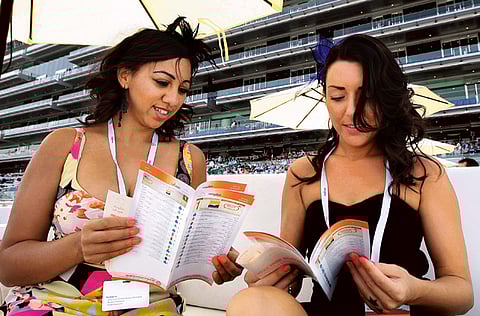
It helps to know that the number given next to the horse's name is its saddlecloth number in the race, while the small number in brackets tells us which stall it will start from. The suffix in brackets after the horse's name tells you where it was bred. Age, colour and sex are next on the top line. The most common colours are: B. Br or Bay (brown); Bl (black); Ch (chestnut); Gr (grey / white). Sexes: C = colt; F = filly; M = mare (filly aged 5+); H = horse (colt aged 5+); G = gelding castrated male.
Below the name of the horse you will see three names in smaller print. These are the sire (father), dam (mother) and dam's sire. These are also given with suffixes (country codes) denoting where they were bred. Whereas a sire can father well over 100 foals per year, a dam can produce just one per year, so when we talk about "half bother/sister" in the horse world, we always refer only to horses born to the same dam. Owner, trainer and breeder are given below the names of sire, dam and dam's sire.
The name of the jockey is printed on the right, in the corner below the weight the horse carries. This is made up of the jockey's weight plus the saddle.
The most common equipment are: B = blinkers; V = visor; CP = cheek pieces; TT = tongue tie; SR = shadow roll. A "1" next to any of these letters means this equipment is used for the first time on the horse. For example, "B1" means that the horse will be racing with blinkers for the first time.
More on abbreviations and terms are available at www.emiratesracing.com
Globeform ratings
Globeform is an international horse racing publication, founded by Geir Stabell in 1991, when he was the first handicapper to compile ratings comparing thoroughbred racehorses in Europe, North America, Japan and Hong Kong. The ratings were later expanded to cover top races in Australia. The ratings are figures expressing how good the horses are, and they are unique in that they make it possible to directly compare form of racehorses running on different continents.
The higher the number, the better the horse. The best horses in the world each year are sometimes rated 130 plus. When Stabell feels a horse is likely to improve, that horse gets a rating with a "p" attached, indicating the capability of a better performance.


