Football is still No. 1 sport for UFC legend Khabib Nurmagomedov
After retirement, Khabib continues to influence the sport from outside the cage
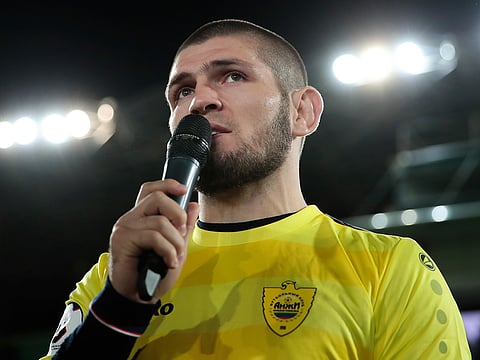
Dubai: He is widely regarded as one of the most dominant fighters in the history of mixed martial arts, but for Khabib Nurmagomedov, the world of combat sports has never replaced his first love. Football, the retired UFC lightweight champion admits, remains his number one sport.
Speaking at the World Sports Summit in Dubai on Tuesday, the 37-year-old reflected on a passion that has stayed with him long after his fighting days came to an end.
“I was watching football all my life and this sport for me is still number one,” Khabib said. “When I was young, my dream was to become a football player. I’m just joking when I say I became a fighter accidentally — but in my heart, it was always football.”
Despite that childhood dream, fate and family shaped a different path. Growing up in Dagestan under the guidance of his father, the late Abdulmanap Nurmagomedov, Khabib was immersed in combat sports from an early age. That discipline eventually carried him to an unmatched professional MMA record of 29 wins and zero losses before he announced his retirement in 2021.
“My father was very strict, straight, and disciplined,” Khabib recalled. “I am happy because I listened to him all my life.”
Today, Khabib continues to influence the sport from outside the cage. He runs gyms in Dagestan that are home to hundreds of aspiring fighters, many of whom dream of following in his footsteps. But he also voiced concern about the direction of modern fight promotions, particularly their emphasis on trash talk over talent.
“I feel very bad for U.S. promotions,” he said. “There are so many hungry fighters coming who don’t like to talk trash. They just come, smash people, and take money. Promotions like trash talking — I understand it’s business — but at the end of the day, this is sport.”
Khabib believes politics and marketing trends have led to unfair treatment of deserving athletes. “In the last couple of years, they cut so many fighters who didn’t even lose,” he said. “They finished their contracts and didn’t get new ones. This is not fair, and somebody has to talk about this.”
Following his retirement and his father’s passing, Khabib naturally stepped into a leadership role as a coach, continuing his family’s legacy. He described how the transition felt inevitable.
“When I was growing up, I was always the youngest in the gym,” he said. “My father always brought me to the strongest teams. When I finished my career, I became the oldest. Somebody had to lead. My father passed away, and I took the leadership and kept continuing his legacy.”
Still, coaching has brought its own challenges. Khabib admitted he finds it emotionally draining, often more difficult than fighting itself. “I like being a fighter more than being a coach,” he said candidly. “Coaching squeezes me. When I corner my guys, they’re very close to me. I cannot stay calm when somebody is trying to break their face, arms, or legs.”
Comparing combat sports to football, he highlighted the physical and emotional toll unique to fighting. “Football players can play at night and post a happy selfie the next day,” he said. “In our game, when somebody smashes you, you’re never going to do this.”
As for a comeback, Khabib remains firm. Retirement, he insists, was a clear and final decision. “When I retired, I never thought about coming back,” he said. “Sometimes I miss competition, but in my gym I have the best fighters in the world. When I want high-level competition, I just go there.”


