How the UAE built a water system that performs when it matters most
Long-term planning and desalination innovation are strengthening water security
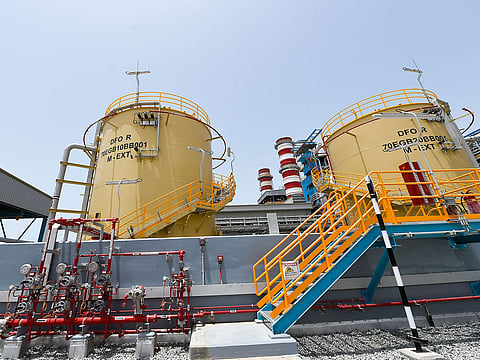
Desalination is the backbone of the UAE’s potable water supply. For decades, this dependency has been shaped into one of the country’s most carefully managed strategic strengths. Sustained investment in infrastructure, technology, and long-term planning has produced a water and energy system built for a full range of conditions. Understanding why that system holds up requires looking at the decisions made well before they were deemed necessary.
The National Water Security Strategy 2036 is the clearest expression of that thinking. Its objectives go beyond ensuring adequate supply on a regular day. The strategy sets specific targets for emergency storage, network interconnections between water and electricity entities, and distribution capacity designed to function under crisis conditions. That level of specificity reflects a planning culture that anticipates disruption rather than merely assuming continuity. Resilience in water supply is clearly illustrated when ordinary conditions no longer apply.
Technological shift
On the production side, the technological shift from thermal desalination to seawater reverse osmosis (RO) has been the defining structural change of the past decade. RO plants consume considerably less energy than thermal alternatives and, critically, they can operate without being coupled to a co-located gas-fired power plant. That decoupling is an operational advantage.
This means water production is no longer dependent on the status of a specific generation unit elsewhere in the chain. The system gains flexibility, and in infrastructure of this scale and complexity, flexibility under pressure is what resilience means. The UAE’s sustained commitment to expanding RO capacity is the clearest evidence that this logic has been understood and acted on.
Integrating renewable energy into the desalination system extends the same thinking into energy resilience. Solar-powered reverse osmosis (RO) is often discussed in sustainability terms, and those benefits are well established. From an operational perspective, increasing the share of locally generated renewable energy can reduce exposure to price volatility, fuel logistics constraints, and long term dependency on imported energy sources. The UAE’s solar expansion is enabling this shift, and many next-generation projects under development are being designed to accommodate higher levels of renewable integration. Approached this way, water security and energy diversification are mutually reinforcing priorities.
Sustained operational readiness
Alongside technology and policy frameworks, sustained operational readiness plays an important role. Infrastructure resilience is reinforced through maintained reserve margins, regularly tested emergency restart procedures, pre-positioned critical spare parts, and industrial control systems that are protected with the same rigour as physical assets.
This also depends on the frontline expertise developed through years of operating these facilities: engineers who understand the interdependencies between assets, maintenance teams who anticipate failure modes before they occur through disciplined mid-to-long term preventative maintenance planning, and control room operators who can read a system under stress. That knowledge is built through experience rather than documentation and manuals, and it is one of the strongest arguments for sustained, long-term operational presence in a market.
The UAE’s Independent Water Project (IWP) model creates institutional conditions for sustained, long-term commitment. Offtake agreements spanning 25 to 30 years align operators, developers, government entities and financial partners around performance over the full lifecycle of an asset rather than short-term outcomes. This structure shapes how assets are invested in and maintained, how teams are built and retained, and how supply chains are managed over decades of operation. The partnerships underpinning the UAE’s water infrastructure have been tested over time, with trust built through consistent delivery within a stable, long-term framework.
Long term consistency
The UAE Energy Strategy 2050, the Net Zero by 2050 pathway and the National Water Security Strategy 2036 share a common quality beyond their individual ambitions: long-term consistency combined with an ability to adapt as conditions evolve. The infrastructure being commissioned today was planned years in advance, and the investment decisions being made now will shape system performance well into the next decade. The UAE has demonstrated agility in refining priorities, accelerating delivery where needed, and responding pragmatically to new challenges and technologies. This continuity of purpose, paired with nimble policy execution, creates the conditions for long-term sustained operational presence. It enables operators and partners to commit for the long-term, investing deeply in capability, preventative maintenance planning, and system resilience – not merely participating in a market, but helping to strengthen it over time.
The UAE stands out as one of the most consistently structured and well-executed systems. The coherence of its approach is evident in how design decisions, technological choices, institutional structures and operational disciplines have been layered deliberately over time, with a clear focus on performance resilience and reliability under pressure. That clarity of purpose is not common across all markets, and it is visible in how the system has been built and continues to evolve.
- Niko Cornelis is Country Manager GCC, ENGIE


