Health care sector poised for an exponential growth
Dubai Health Care Strategy 2017-2020 invites private investment in health care facilities
Dubai: As the UAE enters a new era in health care that is largely driven by mandatory health insurance and medical tourism, the demand for hospital beds and patient care has multiplied exponentially.
Government health care organisations such as the Dubai Health Authority (DHA) are looking at coping with the increasing demands by entering into public-private investments to augment facilities.
The 2017-2020 DHA health strategy focuses on inviting private sector investment into building the primary, tertiary and secondary level health care facilities in Dubai.
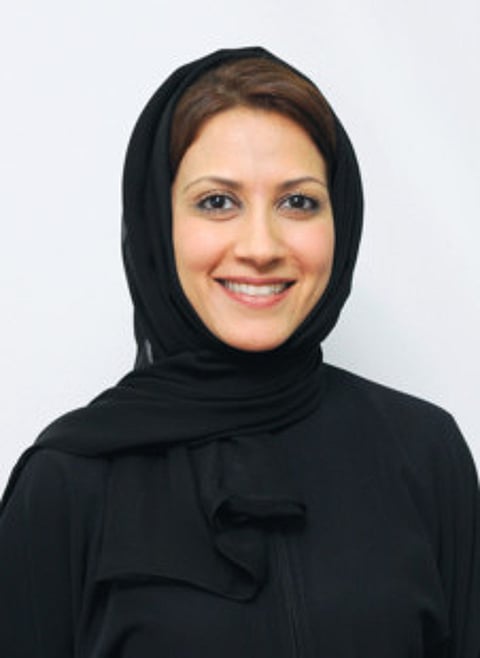
Describing the evolution of this sector and need for public-private partnerships to sustain future growth, Dr Ibtesam Bastaki, director of Investment and Partnership at the DHA, said: “If one was to examine the rate of growth of population in the UAE, by 2025, at the current rate, we can expect a gap in inpatient beds, in price-positioning and in specialities. Therefore, there certainly is potential and our aim is to foster and promote health investment in areas where there are a lack of services or where there are opportunities for growth.”
Dr Raza Seddiqi, CEO of the Arabian Health Care Group, seconded that. He elaborated on the current scenario. “At present in the UAE, there are about 13,500 beds — 8,500 in government and 5,000 in private hospitals — and these are meant to cater to a population of almost 10 million. This means that there is only one bed for 600 people. The gap is already present and will widen unless more investment from the private sector comes into the health care sector. This is the need of the hour.”
The reason for this skewed ratio is the sudden accessibility to health care facilities by all classes of people in the community. Ever since health care insurance has become mandatory in Abu Dhabi and Dubai, a large section of blue-collar workers have open access for treatment in some of the leading hospitals.
Dr Seddiqi added: “There is currently a need for about 3,000-4,000 hospitals beds additionally to bridge this gap.”
Private sector investors are being invited as medical tourism goes big in Dubai with a target of attracting 500,000 medical tourists per year by 2020. As of now, there is a traffic of 1,000 medical tourists per day into the UAE.
Dr Seddiqi said the math for substantial profits in this sector is very clear.
“The time is ideal for investors to focus on tertiary care hospitals. If one was to imagine that out of the 1,000 patients coming into the UAE every day, 200 are to stay for five days in the country for treatment, it would mean 1,000 patient nights per week. The demand is huge and those who invest now will see the benefits,” he said.
Industry pundits also forecast big spending on the part of these medical tourists. If a medical tourist comes into the city and spends $5,000 on a medical procedure and hospital charges, it is likely that his family accompanying him for that period is also likely to spend $5,000 on shopping, hotel stay and travel in that period. Thus, the health care sector is likely to create a non-oil, parallel economy giving the hospitality sector a much-needed boost.
Other factors triggering a sudden boost in the health care sector are the growing needs of a semi-permanent expatriate population, the rise in the number of people above 60 years in the population who need a special kind of spending, the disposable income that those staying for long have and their intention to spend on luxury and wellness.
DHA’s investment focus for the next 2-3 years
Innovations in primary care
Ambulatory care
Urgent care clinics
Mental health
Chronic disease management
Tertiary care for diabetes, cardiology and oncology
Diagnostic health and remote monitoring
Rehabilitation and physical therapy
Home-based care
Long-term and extended care
DHA’s investment focus for the next 3-5 years
Prevention and pharmacy beyond-the-pill
Precision medicine and genetics
Population health management
Nursing homes and palliative care


