New Audi TTS driven
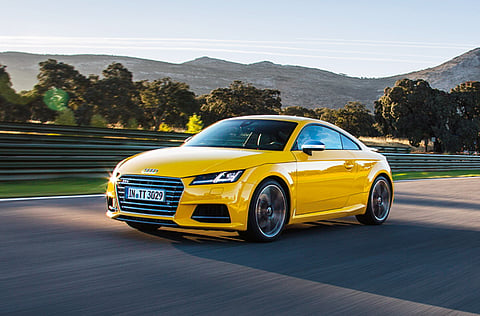
Lapping the Spanish Ascari circuit in the all-new Audi TTS
Power is still courtesy of the familiar VW Group 2.0 TFSI engine, which in our European-spec TTS serves up 306bhp, and 380Nm of torque from as low as 1,800rpm. The engine has been beefed up with sturdier innards, while the turbo now spools up to a 1.2 bar, compressing up to 1,000kg of air per hour. In simple terms: this thing is properly quick in a straight line. Zero to 100kph split is smashed in 4.6 seconds, which is incidentally the same as the original R8 4.2, and the top speed is limited to 250kph. But spec-sheet chatter is one thing; how do these figures translate in the real world?
In Dynamic mode, which is the only way to drive the TT in my opinion, the whole car tightens up. The suspension gets stiffer (although not unpleasantly so), the steering is rendered heavier, the double-clutch six-speed auto holds gears for longer and the mechanical burble of the engine is garnished with some tasty pops and crackles on the overrun. It’s all very nice, but somehow it just isn’t exciting enough. More on that later.
Audi representatives at the launch spoke at considerable length about the look of the new aircraft-inspired dashboard and air vents as well as the customisable hi-res 1,440-pixel digital display that apparently affords the feeling of being in a cockpit (the TT is the only car in its class with fully digital instruments) and the cabin does look good. But the pachyderm in the room is the exterior styling, which feels a bit safe. Bland even. Save the aggressive front end with the optional LED matrix headlights, there isn’t a great deal to write home about.
As a driving machine though, there isn’t much to fault about the new TT either. It’s not a car that will send you hunting for roundabouts and off-ramps on the way home like a Porsche Boxster or a Cayman would, but it gets the job done with a stony-face effectiveness that you’d expect from something like a Volkswagen Golf R (see page 32).
Power is still courtesy of the familiar VW Group 2.0 TFSI engine, which in our European-spec TTS serves up 306bhp, and 380Nm of torque from as low as 1,800rpm. The engine has been beefed up with sturdier innards, while the turbo now spools up to a 1.2 bar, compressing up to 1,000kg of air per hour. In simple terms: this thing is properly quick in a straight line. Zero to 100kph split is smashed in 4.6 seconds, which is incidentally the same as the original R8 4.2, and the top speed is limited to 250kph. But spec-sheet chatter is one thing; how do these figures translate in the real world?
In Dynamic mode, which is the only way to drive the TT in my opinion, the whole car tightens up. The suspension gets stiffer (although not unpleasantly so), the steering is rendered heavier, the double-clutch six-speed auto holds gears for longer and the mechanical burble of the engine is garnished with some tasty pops and crackles on the overrun. It’s all very nice, but somehow it just isn’t exciting enough. More on that later.
Audi representatives at the launch spoke at considerable length about the look of the new aircraft-inspired dashboard and air vents as well as the customisable hi-res 1,440-pixel digital display that apparently affords the feeling of being in a cockpit (the TT is the only car in its class with fully digital instruments) and the cabin does look good. But the pachyderm in the room is the exterior styling, which feels a bit safe. Bland even. Save the aggressive front end with the optional LED matrix headlights, there isn’t a great deal to write home about.
As a driving machine though, there isn’t much to fault about the new TT either. It’s not a car that will send you hunting for roundabouts and off-ramps on the way home like a Porsche Boxster or a Cayman would, but it gets the job done with a stony-face effectiveness that you’d expect from something like a Volkswagen Golf R (see page 32).


