
From Tradition to Modern Elegance: Seema Gujral's journey in bridal fashion
Seema Gujral on instinct, craftsmanship and bridal pieces made to last generations
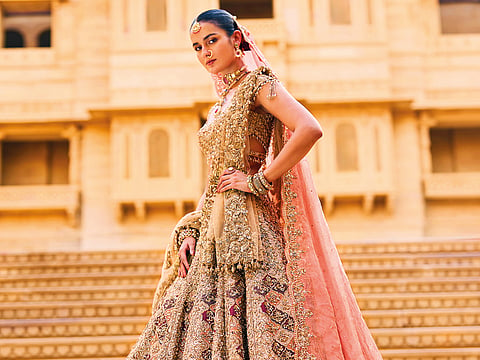
A bride may arrive at Seema Gujral’s New Delhi flagship carrying a phone filled with references. There will be lehengas saved from Instagram, celebrity wedding photographs, family opinions, colour palettes and a growing list of ideas about the woman she is expected to become for her wedding. Gujral’s first task is to look beyond the screen. She asks what the bride naturally reaches for, which colours make her feel most like herself and how she wants to feel when she enters the room. The answers begin to reveal the outfit beneath all that influence.
“My advice to brides has always been to start with themselves rather than with trends or expectations,” Gujral says. “Your wedding outfit should feel like an extension of who you are.”
It is a clear philosophy from a designer whose own career began without a formal fashion education or any certainty that she would eventually lead one of India’s recognised couture houses. Gujral was young when she established a production unit with three people. Confidence, she recalls, arrived after the work had begun.
“I don’t think the confidence came before I started. It came from doing the work and becoming more curious with every step,” she says.
In those early years, Gujral saw herself in the women she hoped to dress. She understood their search for clothes that felt current and still carried the beauty of Indian workmanship. Her education took place inside the production process. She experimented with colour, embroidery, silhouettes and construction, learning how a small adjustment could alter the way a garment looked and moved.
The absence of formal training made her attention more instinctive. She learnt through repetition, close observation and direct involvement with the clothes. Each new technique led her deeper into the work. Certainty developed gradually, alongside skill.
That hands-on beginning still shapes the label. Gujral’s bridal wear is recognised for dense embroidery, crystals, pearls, zardozi and scalloped details. The visual richness is supported by construction that allows the bride to walk, sit, dance and spend several hours celebrating without feeling overwhelmed by her clothes.
“For me, it is always about balance,” she says. “We love intricate surface embroidery and rich craftsmanship, and the work itself can be incredibly detailed and substantial. At the same time, the garment has to be constructed in a way that allows the bride to feel comfortable and confident throughout the celebration.”
The test of a successful outfit extends beyond its first impression. Gujral pays attention to the way it sits on the body, responds to movement and appears from every angle. She describes the house style as glamorous and wearable, rooted in Indian craft and relevant to the woman wearing it now.
A world of its own
Gujral cannot identify one bride or collection that established the label’s identity. It formed over time as her ideas became clearer and certain elements returned season after season. Intricate Indian craftsmanship, glamour and wearability became its foundation.
The opening of the flagship at The Dhan Mill in New Delhi gave that identity a physical home. The space brought the clothes, craftsmanship and client experience together. For Gujral, it marked the moment when the name on the label expanded into a world that brides could enter.
“It was the first time the entire world of Seema Gujral could be experienced in one place, from the craftsmanship and collections to the way we interact with our clients,” she says. “It made me realise that we had evolved beyond being simply a fashion label into a complete brand experience.”
A flagship also brings designer and client into closer conversation. Bridal couture is unusually intimate. A bride is choosing an outfit for an event that carries family history, cultural expectations and the knowledge that its photographs will follow her for decades.
“A bridal outfit carries so much emotion because it is never only about fashion,” Gujral says. “There are family traditions, expectations, photographs that will stay with you for the rest of your life and, of course, the bride’s own idea of how she imagined this moment.”
The pressure can encourage a bride to perform a version of herself that feels unfamiliar. Gujral tries to remove that expectation during consultations and fittings. Her team spends time understanding what the bride enjoys wearing, where she feels comfortable and which details hold personal meaning.
“The most important thing is to make the bride feel that she does not have to become someone else for her wedding day,” she says. “The outfit should still feel like her, just in a very special moment of her life.”
Social media has made this conversation more complicated. Brides often arrive with highly specific references drawn from dozens of weddings and campaigns. Gujral treats those images as a starting point. She asks whether the bride is repeatedly drawn to a particular silhouette, embroidery technique or colour. She also asks about the feeling she wants the outfit to create.
Once those preferences become clear, passing fascination becomes easier to identify. Gujral believes the bridal looks that remain memorable are the ones that appear truthful to the women wearing them.
The complete wardrobe
The Indian bridal wardrobe has grown alongside the scale of the modern wedding. When Gujral began, much of the attention centred on one statement lehenga for the ceremony. Her team now designs for the mehendi, sangeet, wedding and reception, with each occasion requiring its own balance of movement, impact and formality.
Comfort has become part of the design conversation. Brides want to take part in their celebrations, dance freely and remain present through long evenings. Richness still matters, and many Seema Gujral pieces contain extensive embroidery and handwork. The ease comes through construction, fit and proportion.
Gujral also thinks about the life of a garment after the wedding. Separate elements can be styled in new ways. A blouse may return with another skirt. A dupatta may be worn with a simpler outfit. A beautifully made lehenga may eventually belong to another generation.
“I think about longevity rather than simply versatility,” she says. “A beautifully crafted piece should transcend a season. It can be restyled, individual elements can be worn differently, and eventually it may even become an heirloom.”
Colour has followed a similar move towards individual choice. Ivories and pale pastels remain popular, while bridal reds and deep maroons retain their emotional and visual force. Gujral is also exploring antique golds, champagne, earthy green and rust, shades that gain depth when placed against intricate handwork.
Brides now feel freer to select colour through instinct instead of following a single definition of bridal dressing. The expanded palette gives Gujral another way to respond to personality. A soft ivory may suit one woman’s sense of ceremony; another may find herself in a saturated red or burnished metallic.
The groom’s wardrobe has also become a larger part of the house. What began as a developing category has grown into complete menswear wardrobes created alongside womenswear. Gujral sees this as evidence of a wider change in the way couples plan their weddings. Grooms are paying closer attention to fit, colour, styling and craftsmanship. Their clothes are becoming a genuine expression of personality.
“For us, the aim is never simply to make the groom match the bride,” she says. “It is about creating two individual looks that feel considered together.”
This approach allows the couple to share a visual language without appearing identical. Colours may speak to each other, embroidery may carry a related detail and the level of formality may connect the two outfits. Each person retains a separate presence.
Hands behind the clothes
Every heavily worked surface carries the time and knowledge of artisans whose skills have passed through generations. Gujral believes designers have a responsibility to respect that labour and help it remain relevant. Preservation, in her view, requires active use and continued exploration.
“The technique may be traditional, but the expression can still feel completely contemporary,” she says.
A familiar form of embroidery can change through an unexpected colour, material or placement. Traditional handwork can move onto a modern silhouette without losing its integrity. Gujral sees evolution as essential to the survival of craft because it keeps artisans and their knowledge connected to the way people dress today.
That commitment becomes more demanding as a fashion house expands. Growth requires structure, while bridal clients continue to expect individual attention. Gujral maintains consistency through standards of craftsmanship, finishing and care. The designs do not need to resemble one another. The quality behind them must remain recognisable.
Every bride brings a different body, story and idea of beauty. Consultations, customisations and fittings protect that individuality. Gujral believes the personal connection becomes more valuable as the business grows because couture loses meaning when the client disappears from the process.
The story around the ceremony
Her latest collection, EVER AFTER, gathers these ideas into the house’s most expansive bridal offering to date. Photographed against the architecture of Samode Palace, it imagines a wedding as a complete emotional landscape. The ceremony forms one part of a longer experience shaped by anticipation, rituals, family gatherings and memories.
“With EVER AFTER, I wanted to create more than a bridal collection. I wanted to create an entire world around a wedding,” Gujral says.
The collection approaches that world as a modern fairytale, moving through bridal reds, regal metallics, ivory, green and softer shades. Bridal and groom couture appear together, joined by clothes for the celebrations surrounding the main ceremony. Floral and paisley motifs carry the language of Indian decorative traditions, while geometric arrangements and linear patterns sharpen the surface.
The scale gives Gujral room to address different personalities within a single collection. Some pieces embrace the grandeur of a traditional bridal entrance. Others offer a lighter expression for the events around it. Craftsmanship provides the connection across the wardrobe.
After more than three decades, Gujral remains interested in discovery. A new collection gives her a reason to test another embroidery technique, colour or silhouette. Familiar skills return in altered forms, and each bride presents a new question about identity, movement and memory.
Her measure of success reaches far beyond the wedding photographs. Years later, she wants a woman to open the garment and remember the day through feeling: the people in the room, the atmosphere before the ceremony and the particular version of herself who wore it.
“If the piece remains beautiful enough to be worn again, reinterpreted or passed down to another generation, then it has become more than couture,” Gujral says. “It has become part of her family’s history.”


