
Iftar recipe: Braised lamb tagine with prunes and quail egg
This Moroccan dish is always a big hit, especially during Ramadan
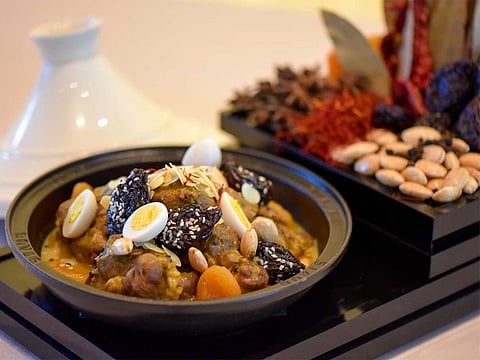
The history of Moroccan tagine is always highly debated. One of theories is that tagine was first introduced in Morocco by the Phoenicians who visited the area in the 12th century. There is another theory however that attributes it to the Tonac civilisation that lived in Mexico between 800 and 600BC. This theory based its assumption on the statuette of Al Tagin, the god of rain of that civilisation. However, the most plausible evidence attributed it to North Africa and its first settler’s, the Berber.
More than any other dish, I consider the tagine the most important and popular Moroccan dish. As Moroccans, we believe that no other country’s dish has reached the exalted height of the Moroccan Tagine. The Tagine is aromatic, stimulating fragrant, zesty, and can be spicy or sweet. It is known for being an inviting dish due to its savoury ingredients, which may include, depending on the genre of the Tagine, lamb or poultry stew, almonds, and hard-boiled eggs. These ingredients when mixed with others, and when cooked in the clay plate and covered with a cone-shaped clay top, produce an enticing aroma that compares to no other and reminds me of my childhood.
I was blessed and honoured to learn how to cook this special dish in my mother’s kitchen. Her kitchen was full of love, aromas and passion when she was preparing some of the most famous Moroccan dishes. She combined specialities and flavours of the Mediterranean, Arabic, Andalusian and Berber cuisines and that is what inspired me now as a chef to create this irresistible Moroccan dish.
How to make it
Recipe serves 10
Ingredients
Method
— Adil Mabchour is the chef de cuisine at Armani Hotel Dubai.


