The Drama is already 2026's most talked-about film and the backlash might be missing the point
Zendaya’s new film is already dividing audiences before its full release
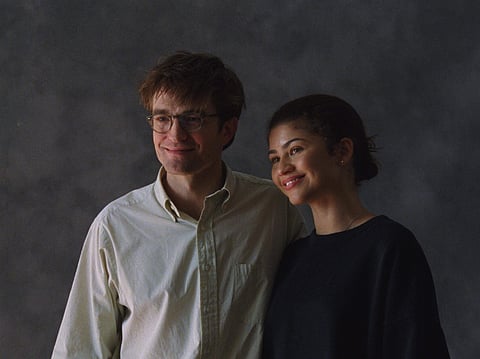
Dubai: There are films that entertain, films that provoke, and then occasionally a film comes along that does both so effectively that people cannot stop arguing about it. The Drama, starring Zendaya and Robert Pattinson, is firmly in that third category, and it has not even been widely released yet.
This contains spoilers for the movie
Directed by Norwegian filmmaker Kristoffer Borgli, the film follows Emma and Charlie, a glamorous young couple just one week away from their wedding in Boston. During a drunken dinner with friends, they dare each other to reveal the worst things they have ever done. What Emma confesses stops everything cold: as a teenager, she planned to carry out a school shooting. She did not go through with it. But now Charlie knows, and the question the film spends the rest of its runtime asking is whether love can survive that kind of knowledge.
The reviews say the movie is making noise
Early critical reception has been quietly enthusiastic. Reviewers who have seen it describe The Drama as a sharp, unsettling and often darkly funny film that refuses to be pinned down to a single genre. It sits somewhere between romantic comedy, psychological thriller and Scandinavian social satire, recalling the provocative work of directors like Ruben Östlund, whose Triangle of Sadness skewered class and privilege, and Thomas Vinterberg, whose Festen upended a family dinner with a single confession.
Borgli himself is no stranger to this territory. His previous film Dream Scenario, starring Nicolas Cage, demonstrated a gift for taking an outlandish premise and wringing genuine emotional complexity from it. The Drama does something similar, using the spectre of a crime that never happened to ask uncomfortable questions about guilt, culpability and whether a person can truly be judged for something they only thought about doing.
The film has already been described as 2026's first great cinematic conversation-starter, and that feels accurate. It is the kind of film people will want to discuss the moment they leave the cinema.
The backlash explained
Not everyone is on board, and their concerns deserve to be taken seriously. Tom Mauser, whose son Daniel was killed in the Columbine school shooting in 1999, told TMZ that using such subject matter as the foundation for a romantic comedy is "awful." He expressed particular concern that casting someone as widely beloved as Zendaya in the role humanises perpetrators of such violence and risks normalising it, even though her character never carries out the attack and no violence is depicted in the film.
It is a legitimate and painful perspective, and one that the filmmakers will have anticipated. A24, the studio behind the film, has been careful about early screenings, possibly to control the conversation around the twist before reviews go live.
Why the film may be more responsible than it appears
What the backlash arguably underestimates is what the film is actually doing with its premise. Borgli is not glorifying or trivialising school shootings. If anything, The Drama makes a pointed and serious observation: that there are likely thousands of people walking among us who came close to committing violence and did not, people who pivoted back to ordinary life and whom nobody would ever suspect. That is not a comfortable thought, and the film does not try to make it comfortable.
The dramatic tension between Emma and Charlie also works precisely because the film refuses to offer easy answers. Charlie cannot simply be reassured. The audience cannot simply be reassured. And that unease is entirely the point.
Zendaya herself acknowledged the complexity when speaking on Jimmy Kimmel, noting that "everybody has their own kind of feelings leaving the theatre" and that the film sparks conversations that continue long after it ends. That is not a defence of the subject matter so much as a description of what good provocative filmmaking actually does.
A film worth seeing
The Drama joins a lineage of films that have approached the subject of school shootings with genuine artistic seriousness, from Gus Van Sant's Elephant, which won the Palme d'Or at Cannes in 2003, to Lynne Ramsay's We Need To Talk About Kevin. What sets it apart is the genre it arrives in. Nobody expects a romantic comedy to go here, and that is precisely why it lands so hard.
Some audiences will love it. Some will walk out. Both reactions suggest the film is doing exactly what it set out to do.
The Drama does not have a release date for the UAE yet, but keep an eye out for official channels to report on that.
Areeba Hashmi is a trainee at Gulf News.