Pompeii Out Of Time review: Tom Hiddleston’s teary docu-series brings Vesuvius’ forgotten victims back from the ashes
The docu-series recreates the agony of the last few hours and the choices made
In the darkness you could hear the crying of women, the wailing of infants, and the shouting of men. Some prayed for help. Others wished for death.
---Pliny The Younger on the destruction and death in Pompeii
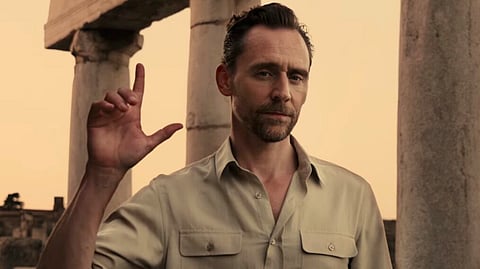
The latest docu-series, Pompeii out of Time, hosted by a tearful Tom Hiddleston, attempts to reconstruct the last moments of the city pulverised by Mount Vesuvius---but not with a birds-eye glimpse, through actual people, as strange as that sounds.
As the series notes, Pompeii was far more than just a city pummelled by a volcano; there were communities, businesswomen, blacksmiths, living, breathing people, many of whom faded away from history and many who died trying to leave the city. Today, it is a tourist site, a ghostly ruin preserved with a sense of death and tragedy as Vesuvius glares down at it, aware of the destruction that it can wreak.
A walk through the city will show you the amphitheatres, Roman baths, bakeries, and the Forum, the centre of public life.
But who were the people? What were they like? And what of the survivors, the ones who escaped through the suffocating haze of ash and darkness, leaving all their possessions behind to start a new life again?
Did they all just become statistics, reduced to the trauma of the ‘eruption of Vesuvius?’
Well, Pompeii Out of Time attempts to change that. For once, Pompeii earns a rare human treatment, even if it’s a tad cheesy and a little too dramatic (we could’ve done without Hiddleston tearfully walking through a hailstorm of supposedly black pumice).
And let's be clear on one thing: This is not really a documentary about what happened to Pompeii. It is a documentary about what it means to imagine the people to whom it happened.
The docu-series begins soulfully, with Hiddleston jogging our memories about the horror of Pompeii and how it was wiped out in two days — but not just buried alive, as we were made to believe. Then he slips into a rather cheeky, flippant format for a while, letting us know that he was 17 when he visited the dead city. Cue a few photos. Hiddleston looks good as ever.
Throughout the docu-series, he meets with different experts, who are labelled ‘helpful classicist’ (Hiddleston, himself is labelled an amateur classicist), a geoscientist, and a psychologist as well to explain the scale of trauma, and even a lesson on ‘fight or flight’ when hot ash is raining down upon you.
With the help of these renowned experts, Hiddleston reconstructs the last few hours of Pompeii. He even has a watch for a countdown, just in case the tension and the horror of magma falling on a town weren’t enveloping the audience fully.
Not only does he try to bring the city back to life, Hiddleston is also determined to walk in the shoes of its people. He finds three figures to anchor his story, with the help of inscriptions: a boy named Avianus, a businesswoman named Julia Felix, who supposedly ran an entertainment centre or spa, and a nameless soldier.
Stories are crafted around each one of them, some of them delving into eye-rolling clichés, of course. Avianus has issues with the blacksmith he’s working with and seems to set off the legacy of ‘You’re not my dad’, which will be carried forth by his Hollywood descendants. Yet, after many more such trite dialogues, punctuated by Vesuvius erupting in the background, Avianus rushes to save his mother.
At this point, the factual details blur into fiction, because you can only deduce so much from inscriptions. The documentary has to fill in the gaps, and that is where its greatest weakness and its greatest strength lie.
Ironically, these little bits of human tales breathe life into Pompeii again, even if much of it is left to the imagination. The emotional truth of these stories can still be heavy, even when the specific details cannot be verified.
But, despite the cheesiness and a whole lot of cringe, including Hiddleston acting as if he were sitting right next to the exploding volcano (yes, the board actually shakes), the docu-series does make you hope a little for the survivors. A tad simplistically, perhaps, but Hiddleston brings forth the idea of community and rescue, even when each second weighs like a rock.
There is Avianus’s short-lived journey with his mother, and then his finding a new family after the ashes and dust settle. There is the story of Julia and her determination to wish well for everyone else, except herself.
Somehow, it doesn’t quite matter if every detail is true or not. It is the attempt to give these people names, personalities and emotional lives that keeps them from becoming mere archaeological remains. It just keeps the people of Pompeii alive.
In one of the most searing scenes, Hiddleston walks us through the modern plaster casts of the people, frozen in their last moments.
Pompeii returns, with this documentary, momentarily. It recreates the agony of the last few hours, traces the possible choices of people in the face of disaster, and tries to return names to the faceless in history.
It’s partially successful, as it ends on a note of hope and sincerity. If you were looking for strong, serious archaeological answers and incisive new investigations, well, maybe this isn’t for you.
If you just wanted to see a story on Pompeii that’s at least far better than the Kit Harington one in 2014, maybe you should give this a try.
Just try to keep up with Tom Hiddleston staring you down as if you personally lit a matchstick to Vesuvius.
Pompeii Out of Time is streaming on Disney+


