Japan’s character craze is more than Hello Kitty
Meet the latest cute characters that are coming to life in Japan
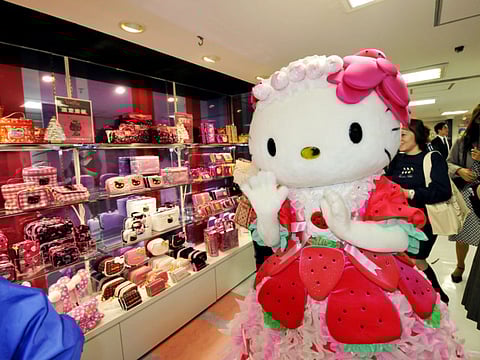
Hello Kitty, whom many learned last week is a girl and not a cat, may be the queen of Japan’s cute characters, but she’s hardly the only one.
There are thousands, and they are ubiquitous: Long-time favourite Doraemon (who really is a cat) has a daily quiz in a national newspaper. Little monster Pikachu hosted a theme cafe in Tokyo this summer. Stress-relieving Rilakkuma (“relaxed bear”) dangles from teenage girls’ school bags.
Characters are not just for kids in Japan, but a part of business and social life. Some see Japan’s cute-craze, known as “kawaii,” as a sign of immaturity, but others say it’s rooted in a harmony-centred way of life that goes back to ancient animist traditions.
Japanese used to worship many gods, and portrayed ghosts as comical characters. In what is seen as the origin of Japanese manga, or comics, a set of 12th-century scroll paintings humorously portray frogs, rabbits and other animals in human activities, from sumo wrestling to temple worshipping.
Hello Kitty and Doraemon now face hordes of newcomers, many launched by municipal governments to promote tourism and local products. Regular “character summits” choose a national favourite. The market reached 2.3 trillion yen ($23 billion) last year, according to think tank Yano Research Institute Ltd.
Here are a few that have risen above the crowd:
The cat that’s not
Created 40 years ago, Hello Kitty is made up of just a few simple strokes: two dots for eyes and a tiny circle for a nose, and no mouth. In contrast to expressive American characters such as Mickey Mouse and Garfield, Hello Kitty doesn’t show emotions, and the simplicity has attracted fans from children to street fashion devotees. An article in the Los Angeles Times last week created an internet firestorm when it explained that the character is not a cat — many insisted she must be. Despite her cat-like ears and whiskers, she is a “cheerful girl with a gentle heart,” says the official website of her theme park, Sanrio Puroland. Born Kitty White in the suburbs of London, she weighs the same as three apples, enjoys baking cookies and dreams about becoming a poet or pianist.
A lovable bear that’s free
Goofy black bear Kumamon is perhaps the most successful of the mushrooming new characters that seek to promote a locality in Japan. Its name means a native of Kumamoto, a prefecture in southern Japan, and the character was introduced on March 12, 2010, the day Japan’s high-speed bullet train entered full service in the south. The prefecture doesn’t charge a licensing fee to use Kumamon’s simple image, and experts say that has been a key to success. As the bear’s popularity grew, more and more companies wanted to cash in. Today it appears not only on Kumamoto souvenirs, but also on innumerable products including instant cup noodles, snacks and cosmetics.
Not a bear but a pear
A hyperactive Asian pear from the city of Funabashi, just outside Tokyo, has taken Japan by storm in the past year. Funassyi, a combination of Funabashi and the Japanese word for pear, is an exception to Japan’s more typically laid-back characters. In a bright yellow, stretchy bodysuit, the pear-fairy jumps up and down frantically and talks in a rapid-fire, high-pitched voice, shouting “nashi!” (pear) at the end of each sentence. Funassyi is not an authorised city mascot, but the product of an entertainer from Funabashi. Its popularity exploded after a tea commercial last year. Funassyi appears regularly on TV and is releasing a CD from Universal Music Japan. The character reportedly earned 200 million yen (Dh7.3 million) last year.
Japan’s all-time favourite
Doraemon, a blue robotic cat from the 22nd century, started as a manga (comic) character in 1969. It has a four-dimensional pocket in its stomach with a seemingly endless supply of items to help its friends. Among them are a “time machine” and “anywhere door” that allows them to travel wherever and to any time period they wish. Doraemon is popular in many parts of the world, including Asia and Latin America, but the television cartoon series didn’t debut in the US until this year. Adaptations for an American audience included simplifying the names of two boy characters from Nobita Nobi to “Noby,” and Gian to “Big G,” and replacing Japanese yen with US dollars.
A stress-relieving bear
The “relaxing bear” is usually seen lounging on a yellow bean bag, sometimes nibbling on snacks, demonstrating an ultimate stress-free lifestyle. The roommate of a 25-year-old female office worker, Rilakkuma’s gentle words such as “sleep and reset” and “let’s worry when that happens” have been compiled in a series of popular books, serving as remedies for stressed-out Japan. Created by San-X, a Tokyo-based character-oriented stationary and gift company, Rilakkuma has raked in more than 10 billion yen ($100 million) from stationary, clothing and book sales since its 2003 debut.
Video-game megastar
A chubby yellow mutant rodent, Pikachu is the most popular of more than 400 monsters in the Nintendo video game series Pokemon. The series started in 1996 as a pair of game titles for hand-held player Game Boy, and has evolved into playing cards, animation, video games and movies. Pikachu makes frequent public appearances in Japan, especially during summer school break. Besides the theme cafe in Tokyo’s fashionable Roppongi Hills shopping complex, hundreds of Pikachus swarmed into Yokohama in mid-August in a “Pikachu outbreak” event.
The next big thing?


