'It was a lesson': Meryl Streep reveals she almost passed on The Devil Wears Prada and doubled her ask
Streep admitted she had a hunch the film would be a hit and decided to test the waters
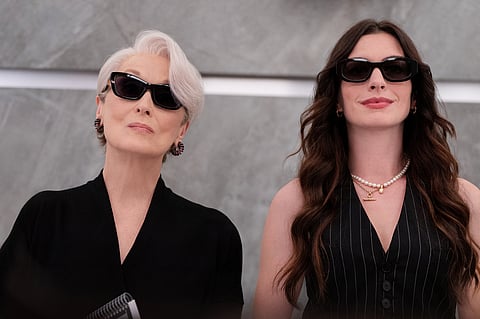
Meryl Streep nearly hung up her heels before stepping into one of the roles that practically rewrote the definition of toxic bosses.
The Oscar-winning legend, now 76, revealed she was 'ready to retire' when The Devil Wears Prada came her way in 2006. Speaking on TODAY with Jenna & Sheinelle on April 29, Streep shared that she initially turned it down outright.
“They called me up and made an offer, and I said, ‘No, not going to do it,’” she said during a joint interview with co-stars Anne Hathaway, Emily Blunt and Stanley Tucci.
So why walk away from Miranda Priestly before she even met her?
Streep admitted she had a hunch the film would be a hit and decided to test the waters instead. “I knew it was going to be a success and I wanted to see if I doubled my ask…” she revealed.
And it worked. “They went right away and said, ‘Sure,’” she added. “And I thought, I'm 50, 60, it took me this long to understand that I could do that.”
That moment, she said, was a turning point. “I was ready to retire, but that was a lesson.”
At 57, Streep originally brought icy fashion queen Miranda Priestly to life in The Devil Wears Prada. Two decades later, she’s back in the designer spotlight, reuniting with Hathaway (43), Blunt (43) and Tucci (65) for the much-anticipated sequel.
About The Devil Wears Prada
The Devil Wears Prada was essentially a battlefield, disguised as a fashion comedy, and at the crux was Streep's Miranda Priestly, an editor-in-chief who could destroy self-esteem with a single raised eyebrow and a 'that’s all.'
The 2006 film follows Andy Sachs (Anne Hathaway), a freshly graduated journalist who takes a job at Runway magazine thinking it’s a stepping stone to “real writing.” Instead, she lands in a world of impossible deadlines, and an assistant job that feels suspiciously like emotional endurance training. Her boss, Miranda (Meryl Streep), is immaculate, and somehow always ten steps ahead.
The film was a raging success as it worked as a savage workplace satire on one side, and a surprisingly tender coming-of-age story on the other, complete with Chanel boots and existential crises.
The film was a runaway hit at the box office, earning approximately $326 million worldwide against a modest budget, proving that audiences were very ready to watch fashion be weaponised as psychological warfare.
The impact was just as profound: Miranda Priestly became shorthand for terrifying bosses. Lines like 'That’s all' and the cerulean sweater monologue have lived far beyond the film, endlessly memed, quoted, and repurposed in office Slack channels everywhere.
Nearly two decades later, it still feels relevant, because corporate chaos, impossible expectations, and questionable work-life balance sadly never go out of style.


