How Jimin changed BTS’ DNA: In every way possible – the heart, soul and artistry behind the star
On Jimin's birthday, here's looking back at how he shaped the band
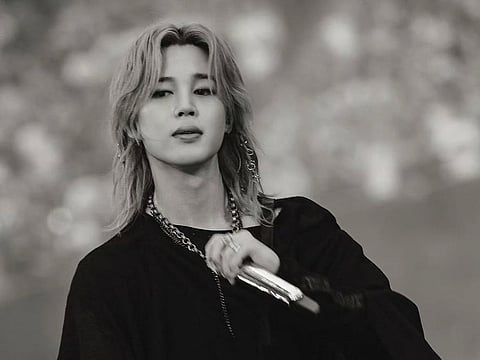
Jimin changed BTS’s DNA.
Read that twice.
ARMY has long known that Jimin trusts his gut, and never was that instinct more consequential than in the studio, as DNA was taking form. The members were combing through instrumentals, hunting for the track’s heartbeat, when HYBE co-founder Bang Si-hyuk brought them a melody. It landed badly. The verdict among the seven was unanimous: this could not be the song.
As Beyond the Story: 10-Year Record of BTS recounts, the task of delivering that verdict fell, naturally, to leader RM. “Between [the members] we went, ‘What’s this? This is bad,’ ‘This is unbelievable,’ ‘We need to tell him we can’t use this.’ So, RM told the company, and I was scheduled for a recording and went to the company, too,” Jimin remembers.
The message had been delivered. But Bang Si-hyuk wanted to hear it from someone else, and he found Jimin in the recording booth. The question came without warning: “Do you not like it either?”
“When Bang Si-hyuk did that, I panicked, but what was I supposed to do? I say, ‘Yes,’ and he tells me to go home for the day. That I didn’t need to do the recording, and to go home.”
One word, and the song was torn down and rebuilt. DNA, the world now knows, emerged from that unmistakable opening whistle onward. It shattered records and carried BTS onto the stage of the 2017 American Music Awards for their U.S. award show debut.
It is one story about one song. But it reveals something larger. Jimin is threaded through BTS so deeply that you only notice him when you imagine the band without him, and then you can’t.
The first to reach out
Within BTS, there is an unwritten rule: when something breaks, Jimin is already there.
When Jungkook, the youngest, wept over a mistake he was sure he had made on stage, Jimin reached him first. He wrapped him in a hug and told him no one had noticed. When V and Jin clashed bitterly moments before a crucial concert, Jimin went straight to Jin. When Suga sank to his knees, undone at the sight of his parents in the audience, it was Jimin who crossed the stage, held him and brought him back.
So it is little wonder that the words ARMY and his bandmates choose for him are always the tender ones. When Jimin stood beside RM through a storm of controversy, RM summed him up in a single line: “He really is the cutest thing in the world.”
To the world, he is the playful one who loses spectacularly at the games on Run BTS!, and is loved more for it. But the warmth he spends so freely on others comes from a man who spares himself nothing.
Jimin is a perfectionist to the bone. In the early years he doubted every note, turning again and again to Jungkook to ask whether he’d sung it right. Even now, a misstep that no one else can see will shadow his face. In the 2021 Butter remix dance practice with J-Hope and Jungkook, he is dejected, certain he has fallen out of step, and already resolved to get it right.
The body that tells the story
Nowhere does that hunger burn brighter than in his dancing.
Where Jungkook and J-Hope strike with power and precision, Jimin flows. He fuses contemporary dance with hip-hop and shifts from silk to steel within a single phrase. Love, longing, bitterness and rage pass through him one after another. The moment the music begins, the gentle Jimin disappears, and something fierce takes his place.
His gaze will pierce you in 2.0. He can do the '3.33' dance break of Fire, that ARMY waits for with bated breath. When Jimin steps forward, stadiums erupt. He can bare his teeth at the haters in MIC Drop and, with the next song, break apart in the twirls and balletic turns of FAKE LOVE.
Some of his most devastating storytelling has needed no lyrics at all. At the Melon Music Awards, clad in white, he danced to an instrumental of I NEED U. He gave form to his character from the HYYH era of the BTS Universe: a figure crushed by despair and resentment, still fighting to live. Later, in his solo stage for Black Swan, a song about an artist’s terror of losing his passion, he told the whole story through restraint. Small, deliberate steps gave way to body rolls, then to flips and flowing lines that made exhaustion look like grace.
His solo albums have pushed him further still. On FACE, Set Me Free Pt.2 unleashes thunderous vocals and ferocious choreography as Jimin claims his freedom. On MUSE, he arrives softer and surer, an artist at ease in his own skin.
A voice of his own
Kpop will be ended. So read the cryptic tagline that heralded FACE in March 2023.
By then ARMY had already lived through the solo era’s opening chapters. There was the metallic, psychedelic bite of J-Hope’s Jack In The Box, RM’s reckoning with fame and adulthood on Indigo, and Suga’s slow, song-by-song healing on D-DAY. Jimin had spent years watching his brothers bleed honestly into their music. Now it was his turn, and he chose to go dark.
FACE is restless and searching. It is the work of an artist trying on styles the way a painter tests colours, looking for the one that matches his soul. Not every experiment lands; at times he is still learning to write a darkness that is wholly his own. But the album tells a story, flaws and all, and it deepens with every listen.
On Set Me Free Pt.2, he lashes out, not in Suga’s voice or RM’s but in his own sharp, scathing register. He vows to stop hiding and to stand firm against whatever life throws at him. The steely layers of auto-tune and hard-edged rap can grate at times, but the defiance is unmistakable. Like Crazy, which climbed to No. 1 on the Billboard Hot 100, turns to the weight of fame. Where RM reaches for wordplay, Suga conjures an alter ego to slay, and J-Hope swings between wistfulness and cynicism, Jimin asks his questions plainly. He hears voices he cannot place and wonders whether, having gone this far, he can still find his way back to himself. His audience becomes his diary.
Yet the album’s true heart is Alone, criminally overlooked. In husky, half-whispered vocals, Jimin lays a lonely heart bare. You hardly need the lyrics for it to land in your chest. Loneliness speaks every language.
FACE was an opening, not an ending. With MUSE, he turned away from the shadows for sunlight and fear and embracing warmth, finding a soulful, pop-tinged language of love that is distinct from Jin’s swooning romance, V’s jazz and blues, and Jungkook’s genre-hopping. Smeraldo Garden Marching Band bursts with playful sweetness, a world away from the angst of Set Me Free Pt.2. Closer Than This, set to a video stitched from the members’ happiest moments, became a pledge to ARMY as he left for military service: he would never let them go.
Be Mine takes a bolder, sleeker turn on romance and stands among the album’s highlights. Who, which lingered on the charts for weeks, revisits his favourite method of asking longing’s questions directly over hooks that stick.
Jimin was away in uniform when MUSE arrived. Even so, through the silence, the two albums trace who he has become: an artist who refuses to repeat himself and is fearless in reinvention.
Storm and stillness
Each of the seven made BTS what it is. But on Jimin’s birthday, it is worth reckoning with what he alone has given. There is the arm that finds a crying bandmate first, and the yes that rewrote a hit. There is the falsetto that plunges without warning into depth, and the dancer who slips seamlessly between his members yet still owns every stage he touches.
Jimin may still wonder what makes him matter. ARMY has never wondered. He is the storm, the summer rain and the stillness after, sometimes in a single performance. The lights will never swallow him.


