UAE HR leaders chart the future of work
Personalised benefits, AI and culture put people at the centre of UAE workplaces
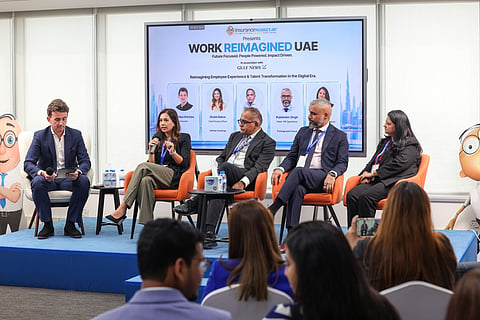
HR leaders and workplace strategists called for a shift in how organisations approach people management, with benefits, culture, retention and technology becoming increasingly important to business performance.
Speaking at InsuranceMarket.ae’s Work Reimagined UAE: The Next Era of HR, Culture & Employee Experience, industry experts said HR must move beyond administrative support to play a more strategic role in productivity, employee experience and workforce planning. The event was part of a four-part leadership series jointly presented by InsuranceMarket.ae and Gulf News.
Shalni Babur, Chief People Officer at Alfred Holdings, InsuranceMarket.ae's parent company, said the function itself has been redefined. "HR's role, which was initially seen as an administrative function, then became a strategic partner, is now becoming more of an architect of the organisation."
Employee benefits are one area where this change is particularly visible. A standard package may not meet the needs of a diverse workforce, Babur said.
"One size employee benefits doesn't fit all. Employees are no longer expecting the same employee journey. They want customised, tailored experiences. They want employers to understand who they are as an individual, what they're looking for, and what that looks like further down the line. That individualisation is very important in 2026, and it keeps things relevant for them."
Personalisation, she added, depends on genuinely listening, not just collecting data.
"It's not just about getting a survey in place and ticking a box; it's about understanding the feedback employees give and putting in the effort to close that loop with them. This makes them feel heard and valued, and that's very important," Babur said.
Insurance as a retention tool
Medical insurance is a major component of employee benefits in the UAE, but Rachit Jhamb, Director of InsuranceMarket.ae’s B2B Division, said employers should look beyond the annual premium.
"For many organisations in the UAE, benefits only get management's attention once a year, at renewal, because that's when the cost is on hand. But the UAE job market has changed significantly. Today, we're not only competing for customers, we're competing for good people. Getting good people on board is difficult, but keeping them is even harder."
He said the value of medical insurance is often viewed differently across an organisation. Employees see the benefit, finance sees the cost, HR handles the administration and leadership focuses on the annual renewal.
“But the discussion we need to have is: what are we trying to achieve, rather than what are we providing?”
Cost remains important, but Jhamb said it should be assessed alongside its wider impact.
"Whenever you're thinking about renewal of medical insurance, don't just think about cost. Cost is important, but retention, productivity and risk need to be part of that decision too."
Jhamb also cautioned against cutting benefits simply to lower premiums, arguing that understanding claims patterns and employee needs leads to more effective programmes.
Culture and retention go together
Building trust is another critical part of workforce culture, particularly in organisations with different generations, nationalities and working styles.
Balaji Nagabhushan, Group Chief Administrative Officer, Tristar, said trust takes time and must be built through the employee’s experience at the organisation.
"Patience is very important to build trust. It's not that the moment you hire them, they need to trust you and you need to trust them. It's a question of how you build a relationship, how you actually take care of them while they're with the organisation, and slowly earn that trust," said Nagabhushan.
Retention, he said, starts with understanding whether employees are satisfied and see a future within the organisation. Career growth is a key part of that equation.
Market competitiveness also influences retention, particularly when employees can earn substantially more elsewhere.
Jhamb said the cost of losing experienced employees can be significant.
“Depending on seniority and role, we’ve seen the company incur 50 to 200 per cent of an employee’s cost when they decide to leave.”
The impact goes beyond recruitment costs, with companies also losing institutional knowledge and productivity while spending time replacing and training employees.
Internal mobility can help retain talent
Keeping experienced employees also means showing them a path forward inside the organisation. Babur said AI can help surface internal opportunities based on an employee's experience and capabilities.
"With AI, it's easier to feed in an employee's CV and experience, tell it what projects they've worked on, and it will highlight what other roles and projects within the organisation suit that person - roles they might not have even thought of themselves," said Babur.
She said AI can also help organisations identify relevant learning opportunities, prepare employees for new roles and retain institutional knowledge.


