VTB selling first perpetual bonds
Perpetual bonds sale aimed at boosting capital
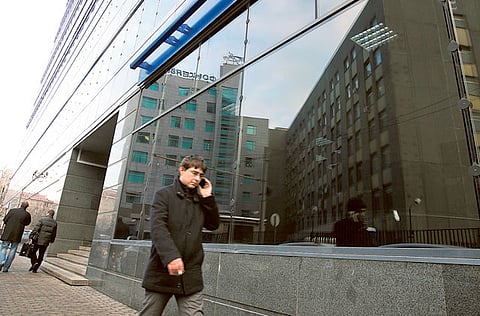
Moscow: VTB Group, Russia’s second-biggest bank, is selling the nation’s first perpetual bonds as the lender replenishes regulatory capital that was depleted by acquisitions last year.
State-run VTB plans to hold meetings with international investors this week about an issue of dollar-denominated perpetual bonds, or debt without a maturity date, a banker with knowledge of the matter said July 20. The extra yield investors demand to own VTB’s 2020 dollar notes instead of similar- maturity debt of Banco do Brasil, which sold perpetual bonds in January, was 223 basis points on July 20.
After being shut out of international markets following its 1998 default, Russian bonds are being sought amid rising prices for oil — its chief export — and as investors seek alternatives to securities from euro-area nations mired in the debt crisis. Until the sale by VTB, which may use the proceeds to boost so-called Tier 1 capital after buying lenders including OAO Bank of Moscow, the country’s longest-dated bonds were 30- year sovereigns.
“They are absolutely going for this to raise their Tier 1 ratio,” Leonid Slipchenko, a banking analyst at UralSib Financial Corp., said by telephone July 20. “This is a positive move by VTB because there had been much speculation that they may be placing shares or may have to sell something to improve their capital adequacy.”
VTB, based in Moscow, will start accepting bids for 25 billion rubles ($780 million) of three-year domestic bonds from today to July 25, according to regulatory filings. VTB, which also bought OAO TransCreditBank in 2011, spent 11.4 billion rubles on a share buyback in April this year.
VTB hired UBS AG, Citigroup Inc. and its VTB Capital unit to organize the sale of the perpetual bonds, said the banker, who asked that his name not be used because the information isn’t yet public. The company plans to meet investors in Singapore, London and Boston today, Hong Kong, Switzerland and New York on July 24 and Luxembourg on July 25, according to the banker.
Alexey Ulyukayev, a first deputy chairman of the central bank, said July 19 in an interview with the Izvestia newspaper that share sales may be a way for state-run banks to raise funds. VTB’s Tier 1 capital stood at 9.6 per cent at the end of the first quarter, according to bank financial statements.
“VTB needs capital,” Alex Kantarovich, an analyst with JPMorgan Chase & Co. in Moscow, wrote in a report received on July 20. “A perpetual bond may be the way to addressing this problem.”
“Russia and VTB are trying to follow Brazil, which has developed a deep domestic bond market with many products,” said Zina Psiola, chief executive of Granite Investment in Zurich, which has about $90 million in assets including Russian bonds. “Russia has a limited amount of products. But that is changing as the market is opening to more foreign investors later this year.”
Russia’s financial regulator said on June 28 that it will give Euroclear Bank SA and Clearstream International SA, operators of the world’s largest bond settlement systems, direct access to the sovereign debt market. Euroclear expects to start settling trades in Russia’s local debt as early as September, Philippe Laurensy, Euroclear’s head of sales for central and northern Europe in Brussels, said in a June 29 phone interview.
Russia is rated Baa1, the third lowest investment grade at Moody’s Investors Service. The cost of protecting Russian debt against non-payment for five years using credit-default swaps rose six basis points to 192, up from this year’s low of 160 on March 19.
The swaps cost nine basis points less than contracts for Turkey, which is rated three levels lower at Ba1 by Moody’s. The contracts pay the buyer face value in exchange for underlying securities or the cash equivalent if a government or company fails to adhere to its debt agreements.
The extra yield investors demand to hold Russian debt rather than US Treasuries rose two basis points to 257 today, according to JPMorgan EMBIG indexes. The difference compares with 183 for debt of similarly-rated Mexico and 201 for Brazil, which is rated one step lower at Baa2 by Moody’s.
The ruble slipped 0.9 per cent to 32.0399 against the dollar as of 10:16 a.m. in Moscow. Russia’s currency has gained 5.1 per cent since the start of June. Non-deliverable forwards, or NDFs, which provide a guide to expectations of currency movements and interest-rate differentials and allow companies to hedge against foreign-exchange changes, showed the Russian currency at 32.8525 per dollar in three months.
State-backed issuers such as OAO Sberbank and Russian Agricultural Bank, which have both sold dollar bonds this year, may follow VTB with perpetual bond offerings, according to Andrey Lifchits, who helps manage $50 million in Russian bonds at Spectrum Partners Ltd. in Limassol, Cyprus.
“Banks need to raise capital, and they can do it via perpetuals,” Lifchits said.


